


Solar Panels Without Battery Storage: Unlocking Simplicity for Global Homeowners
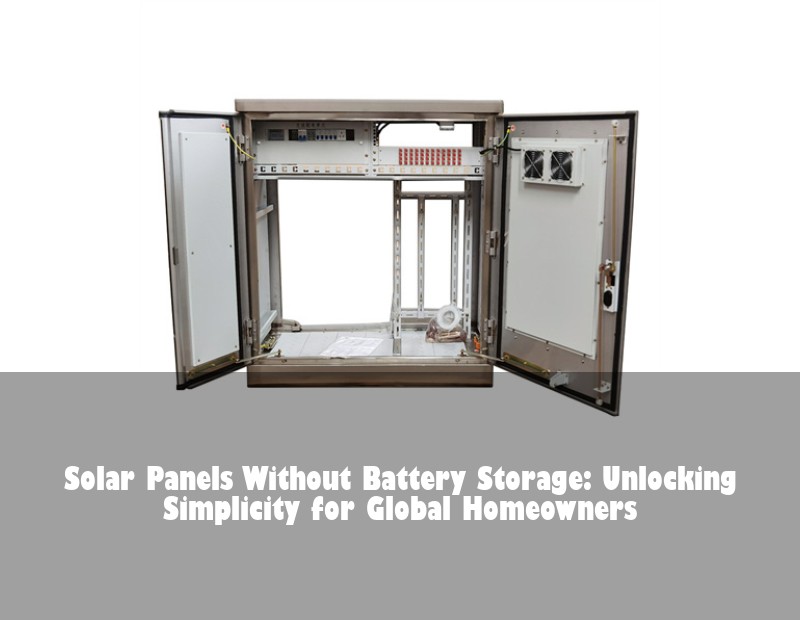
Table of Contents
- The Silent Revolution in Solar Adoption
- By the Numbers: Battery-Free Solar Dominance
- Real-World Success: Berlin Suburb Case Study
- Top Advantages of Non-Storage Solar Systems
- How Grid-Tied Systems Work Without Batteries
- The Evolving Landscape of Solar Independence
The Silent Revolution in Solar Adoption
You're a homeowner in Barcelona, staring at rising electricity bills while southern sun bathes your rooftop. The conventional wisdom says you need batteries to harness solar power effectively - but what if that's not entirely true? Across European suburbs from Lisbon to Helsinki, a quiet transformation is underway. More homeowners are choosing solar panels without battery storage, favoring grid-tied systems that prioritize simplicity and immediate cost savings.

Image source: Unsplash - Typical residential solar installation
By the Numbers: Battery-Free Solar Dominance
Recent market analyses reveal a striking pattern: In Germany, the EU's solar leader, 72% of residential PV installations operate without storage. Why? Let's break down the economics:
| System Type | Average Installation Cost | Payback Period | Maintenance Complexity |
|---|---|---|---|
| Solar with Battery Storage | €15,000-€25,000 | 10-14 years | High (dual system monitoring) |
| Solar Without Battery Storage | €7,000-€12,000 | 6-8 years | Low (single-system oversight) |
The data speaks volumes, doesn't it? According to the International Energy Agency, grid-tied systems without storage account for 68% of Europe's residential solar growth. The financial logic is clear: Eliminating batteries slashes upfront costs by 35-50% while maintaining 80-100% self-consumption potential through net metering programs.
Real-World Success: Berlin Suburb Case Study
Consider the Müller family in Potsdam (Brandenburg), who installed a 7.2kW solar array without batteries in 2021. Their setup:
- Energy Generation: 6,800 kWh annually (104% of household needs)
- Grid Feedback: Sells surplus to local utility at €0.12/kWh
- Cost Savings: €1,240/year on electricity bills
- System Cost: €9,800 after state subsidies
"We break even in 7 years," explains homeowner Anja Müller. "The grid acts as our 'virtual battery' - we feed excess midday power back and draw at night. Why pay for physical storage when infrastructure exists?" Their experience mirrors Germany's broader success, where Fraunhofer ISE reports show 58% of solar homes operate battery-free while maintaining 90%+ energy autonomy.
Top Advantages of Non-Storage Solar Systems
Choosing solar without batteries isn't just about cost. It's a strategic decision with multiple benefits:
- Instant ROI Activation: Without waiting for storage ROI, energy savings start month one
- Regulatory Harmony: Aligns perfectly with Europe's robust net metering policies
- Scalability Freedom: Batteries can always be added later as needs evolve
- Reduced Carbon Footprint: Fewer lithium batteries mean lower manufacturing emissions
As solar expert Dr. Lena Vogel notes: "For urban Europeans with stable grids, batteries often become expensive insurance against rare outages. The smarter play? Start panel-only, then add storage selectively when battery prices drop further."
How Grid-Tied Systems Work Without Batteries
Modern grid-tied systems are marvels of efficiency - let's demystify the process:
- Solar panels convert sunlight to DC electricity during daylight hours
- Inverters transform DC to household-ready AC power
- Smart meters track energy flow in real-time with two-way communication
- Excess electricity feeds into the grid, spinning your meter backward
- At night or during low production, grid power seamlessly supplements needs

Image source: Unsplash - Grid-tied solar inverter
The Evolving Landscape of Solar Independence
With bidirectional EV charging and smart grids emerging, the role of solar without batteries is evolving. New IRENA studies show vehicle-to-grid (V2G) integration could let electric cars act as temporary storage for solar homes. Imagine: Your EV stores daytime solar excess, then powers appliances at night - all without dedicated batteries. For now though, the choice remains clear for millions: solar panels without battery storage offer the fastest path to energy freedom.
Ready to explore your battery-free solar potential?
What energy independence milestone could solar panels without battery storage help you achieve this year? Share your vision with our community!
 Inquiry
 Online Chat