


Unlocking Energy Independence: The Rise of Lithium Ion Battery Energy Storage Systems
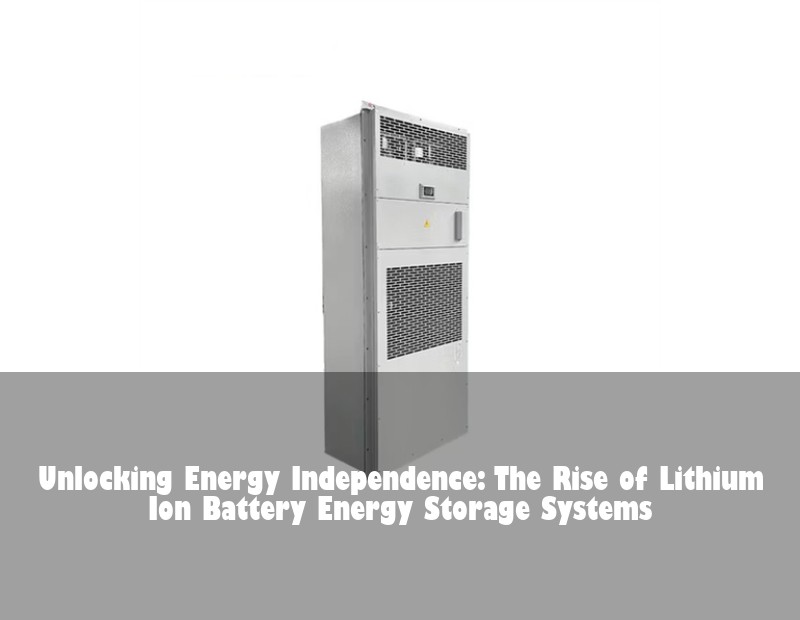
Table of Contents
Europe's Renewable Energy Shift: Challenges & Opportunities
Have you noticed how European skies are increasingly dotted with wind turbines and solar panels? From Germany's Energiewende to Spain's solar farms, Europe leads the global renewable transition. But here's the catch: solar and wind generation fluctuates dramatically. On cloudy, windless days, grid operators face the delicate balancing act of maintaining stable power supply. This intermittency challenge creates both operational headaches and financial losses across the continent. Enter the game-changer: lithium ion battery energy storage systems (Li-ESS). These technological marvels absorb excess renewable energy during peak production and release it during demand surges, acting as the continent's energy shock absorbers.

Renewable energy integration in Europe requires smart storage solutions (Source: Unsplash)
The Lithium Ion Advantage in Modern Energy Storage
Why are lithium-ion batteries dominating the storage conversation? Let's break it down:
- Energy Density: Stores 2-3 times more energy per kg than lead-acid alternatives
- Efficiency: Maintains 95% round-trip efficiency vs. 70-80% for alternatives
- Lifespan: Delivers 6,000+ cycles at 80% depth-of-discharge
- Responsiveness: Reacts to grid signals in milliseconds
Modern Li-ESS units like Solar Pro's modular systems now feature liquid thermal management and AI-driven predictive analytics. As Dr. Elena Rossi, energy researcher at Politecnico di Milano explains: "Lithium-ion chemistry has achieved the sweet spot between performance, safety, and cost – especially with new cobalt-free formulations entering the market."
German Case Study: Grid Stabilization in Action
Let's examine Bavaria's real-world success with the lithium ion battery energy storage system at the Bürgerwindpark Gaildorf. This hybrid project combines 13.6MW wind capacity with a 12MWh Li-ESS installation. During 2022-2023:
| Metric | Pre-Installation | Post-Installation |
|---|---|---|
| Grid Curtailment | 18% annual loss | 3% annual loss |
| Revenue from Grid Services | €0 | €420,000/year |
| Renewable Utilization | 67% | 94% |
"Our batteries earned more from frequency regulation than energy arbitrage during peak events," notes project manager Klaus Fischer. "The system paid back its investment in 4.2 years – 30% faster than projected." This aligns with Germany's broader strategy, where energy storage capacity is projected to reach 60GWh by 2030.
Performance Metrics That Matter
When evaluating a lithium ion battery energy storage system, focus on these critical parameters:
- Cycle Life vs. Depth of Discharge: How performance degrades at different usage levels
- Temperature Tolerance: Nordic installations require -30°C operability
- Safety Certifications: UL9540A and IEC62619 compliance is non-negotiable
Recent innovations like lithium iron phosphate (LFP) chemistry now offer enhanced thermal stability – crucial for Mediterranean installations where ambient temperatures regularly exceed 40°C. According to IRENA's 2023 report, system costs have plummeted 82% since 2013 while energy density doubled.
Future Trends in Energy Storage Technology
Where is Li-ESS technology heading? Three developments deserve attention:
- Second-Life Batteries: Repurposing EV batteries for stationary storage
- Solid-State Evolution: Promising 50% higher density and enhanced safety
- Blockchain Integration: Enabling peer-to-peer energy trading communities

Modern Li-ESS control systems enable predictive maintenance (Source: Unsplash)
Industry leaders like Northvolt are pioneering sustainable battery manufacturing with plans to deliver 150GWh annual production using 100% renewable energy by 2030. This addresses the crucial environmental considerations of lithium extraction and recycling.
Implementation Roadmap for Businesses
Considering a lithium ion battery energy storage system? Follow this phased approach:
| Phase | Key Actions | Timeline |
|---|---|---|
| Assessment | Energy audit, load profile analysis, regulatory check | 2-4 weeks |
| Design | System sizing, safety planning, grid connection approval | 4-8 weeks |
| Deployment | Site preparation, installation, commissioning | 6-12 weeks |
For commercial installations, explore available incentives like Italy's Superbonus 110% or France's MaPrimeRénov' programs. Remember to integrate your system with existing building management systems for maximum efficiency gains.
The Road Ahead
As Europe accelerates toward its 2030 renewable targets, the flexibility provided by advanced lithium ion battery energy storage systems becomes increasingly vital. What energy resilience challenges could a properly sized Li-ESS solve for your operation tomorrow? Perhaps it's time to explore how your organization can transform from passive consumer to active grid participant.
 Inquiry
 Online Chat