


Harness the Sun: Your Complete Guide to Grid Tie Solar PV System Solutions
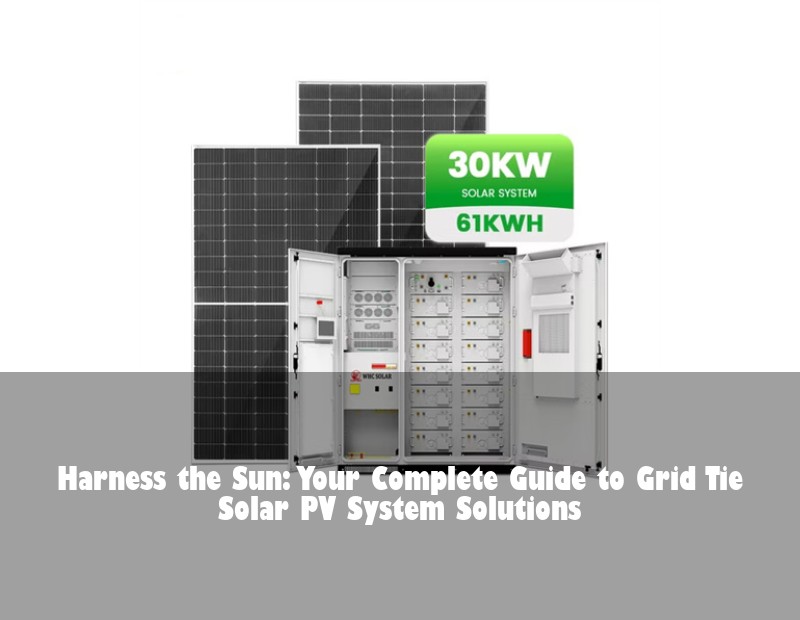
Feeling the pinch of rising electricity bills? You're not alone. Across Europe, homeowners and businesses are seeking reliable, sustainable energy independence. The solution shining brightly on the horizon? A grid tie solar PV system. This technology seamlessly integrates with your existing utility grid, turning sunlight into significant savings and reducing your carbon footprint. Let's explore how it works and why it's transforming energy landscapes globally.
Table of Contents
- How a Grid-Tied Solar PV System Works
- Essential System Components
- Real Impact in Europe: A German Success Story
- Choosing the Right System for Your Needs
- The Future of Solar & Your Role
How a Grid-Tied Solar PV System Powers Your Life
Imagine your rooftop silently converting sunlight into clean electricity. Here's the elegant process:
- Sunlight Capture: Solar panels absorb photons, generating direct current (DC) electricity.
- Conversion: The inverter, the system's brain, transforms DC into usable alternating current (AC) electricity.
- Powering Your Home: This AC electricity flows directly to power your appliances and lights.
- Net Metering Magic: When you generate more than you use, excess power flows back to the grid, spinning your meter backwards (crediting your account). At night or during high demand, you draw power from the grid as usual.
 Image Source: U.S. Department of Energy (Illustrative flow)
The Building Blocks: Essential Components
A robust grid tie system relies on core elements working in harmony:
- Solar Panels (Modules): Capture sunlight (Monocrystalline or Polycrystalline silicon are dominant in Europe for efficiency and durability).
- Grid-Tie Inverter (GTI): Converts DC to grid-compatible AC and synchronizes with the grid frequency (e.g., 50Hz in Europe). Modern inverters offer smart monitoring.
- Mounting System: Securely attaches panels to your roof or ground, designed for local weather conditions (snow load, wind).
- AC/DC Switchgear & Safety Isolators: Crucial for safe installation, maintenance, and emergency shutdown.
- Bi-Directional Meter: Installed by your utility, it measures both electricity drawn from and exported to the grid.
Why Europe is Embracing Grid-Tied Solar: Tangible Benefits
The shift towards grid-tied solar isn't just eco-conscious; it's economically smart:
- Slash Electricity Bills: Generate your own power, reducing reliance on grid purchases. Excess generation earns credits.
- High Return on Investment (ROI): Attractive feed-in tariffs (FITs) or net metering schemes in many European countries accelerate payback, often within 8-12 years, with decades of free power afterward.
- Low Maintenance: No moving parts mean minimal upkeep – primarily occasional cleaning.
- Boost Property Value: Homes with solar installations command higher market values.
- Reduce Carbon Footprint: Directly displace fossil-fuel-generated grid electricity.
Data from IRENA shows solar PV is now consistently among the cheapest sources of new electricity generation in most of Europe.
Case Study: Powering a Family Home in Freiburg, Germany
Consider the Müller family:
- System Size: 8 kWp grid tie solar PV system
- Location: Freiburg (South Germany, good solar insolation)
- Installation Date: January 2022
- Annual Production: ~7,800 kWh (matching ~90% of their consumption)
- Financials:
- Reduced annual grid electricity purchase by €1,800.
- Received €420 annually for excess fed into the grid under Germany's EEG scheme.
- Estimated system payback: 9 years.
"Our electricity bill is almost zero for most of the year," says Mr. Müller. "Knowing we're contributing to cleaner energy feels great, and the financials made absolute sense." Data reflects Germany's strong solar adoption, with over 2.5 million grid-tied PV systems installed nationwide as of 2023 (Source: German Federal Ministry for Economic Affairs and Climate Action).
Selecting Your Optimal Grid-Tied Solar Solution
Key factors to consider for your European installation:
| Factor | Considerations | Impact |
|---|---|---|
| Roof Space & Orientation | South-facing (in Northern Hemisphere), minimal shading, structural integrity. East/West also viable. | Directly affects potential system size and yield. |
| Local Regulations & Incentives | Building permits, grid connection rules, FIT/smart export guarantee rates (e.g., UK), VAT reductions. | Critical for legality and financial viability. Vary significantly by country/region. |
| Energy Consumption Patterns | Analyze your hourly/daily/annual usage (check utility bills). | Determines ideal system size to maximize self-consumption and ROI. |
| Component Quality | Panel efficiency & warranty (25+ years), inverter reliability & warranty (10+ years), certified installers. | Ensures long-term performance, durability, and safety. |
 Image Source: Wikimedia Commons (Typical European residential installation)
The Evolving Energy Landscape & Your Next Step
Grid-tied solar is the cornerstone of Europe's renewable energy transition. As battery costs decrease, adding storage later can further increase self-consumption and resilience. The technology is proven, the economics are compelling, and the environmental imperative is clear.
What specific questions do you have about how a grid tie solar PV system could fit into your home or business energy strategy in your part of Europe? Let's explore the possibilities together.
 Inquiry
 Online Chat