


Centrale Solaire Autonome: Powering Resilience and Independence Across Europe
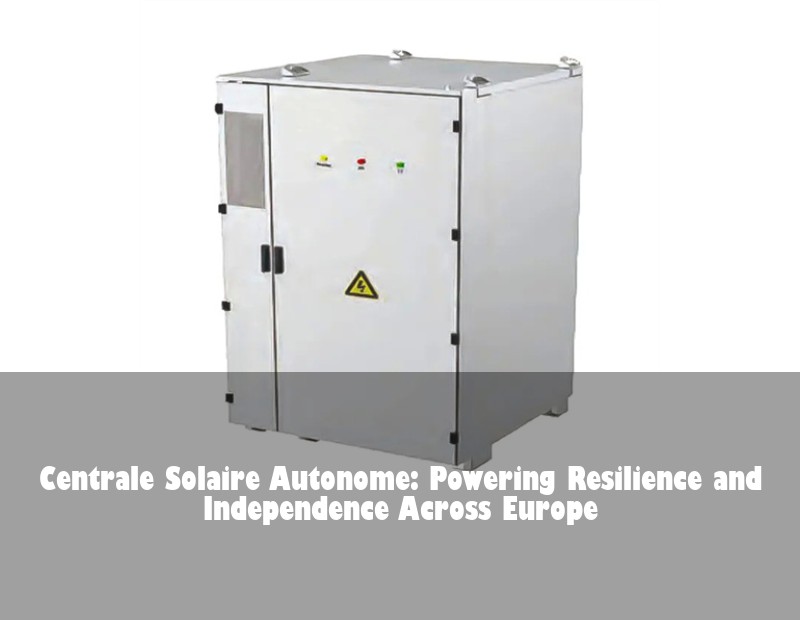
Table of Contents
- What is a Centrale Solaire Autonome?
- The Heart of Independence: Core Components
- Why Europe Needs Autonomous Solar Power
- Real-World Impact: Data & Case Evidence
- Choosing the Right Solution for Your Needs
Imagine a power source that operates independently from the grid, harnessing the sun's abundant energy by day and delivering reliable electricity around the clock. No more vulnerability to outages or fluctuating energy prices. This isn't science fiction; it's the reality offered by a centrale solaire autonome (autonomous solar power plant). For businesses, communities, and remote sites across Europe, this technology is rapidly moving from a niche solution to a cornerstone of energy security and sustainability.
What Exactly is a Centrale Solaire Autonome?
At its core, a centrale solaire autonome is a self-contained energy system. It combines solar photovoltaic (PV) panels with sophisticated energy storage (usually lithium-ion batteries) and intelligent energy management. Unlike grid-tied systems that feed surplus back to the utility, an autonomous system prioritizes self-consumption and islanding capability – meaning it can disconnect from the main grid and continue operating independently during blackouts or grid instability. It's designed for locations where grid connection is unreliable, prohibitively expensive, or simply non-existent, or where the user demands absolute energy independence and resilience.
 Image Credit: Clean Energy Reviews (Conceptual System Diagram)
The Heart of Independence: Core Components Working in Harmony
Building a truly reliable centrale solaire autonome requires careful integration of several key technologies:
- Solar PV Array: The primary energy generator. Sizing is critical to meet energy demands and recharge batteries, even during sub-optimal weather.
- Battery Energy Storage System (BESS): The cornerstone of autonomy. High-capacity, deep-cycle batteries (like LiFePO4) store excess solar energy for use at night or during cloudy periods. Capacity determines the duration of independence.
- Hybrid Inverter/Charger: The system's brain. Manages energy flow: converts DC solar power to AC for loads, charges batteries from solar or an optional backup source (like a generator), and seamlessly switches to island mode during grid failure, powering critical loads from the batteries and solar.
- Advanced Energy Management System (EMS): Optimizes performance, predicts energy needs, prioritizes loads, and ensures battery health and longevity through sophisticated algorithms.
- Backup Generator (Optional): Provides additional security during extended periods of low solar irradiation or exceptionally high demand, ensuring continuous operation.
Why the Centrale Solaire Autonome Resonates Across Europe
Europe's energy landscape presents unique challenges making autonomous solar power not just attractive, but often essential:
- Grid Vulnerability & Outages: Extreme weather events (storms, floods, heatwaves) increasingly threaten grid stability. A 2021 report by the European Environment Agency highlights the growing frequency and impact of climate-related disruptions to energy infrastructure.
- Remote & Off-Grid Locations: Mountainous regions, islands, rural industrial sites, and agricultural operations frequently face high connection costs or lack grid access entirely.
- Energy Price Volatility & Security: Geopolitical instability heavily impacts fossil fuel prices. A centrale solaire autonome locks in energy costs for decades, primarily dependent on predictable sunlight.
- Stringent Sustainability Targets: EU directives push for decarbonization. Autonomous solar offers a clean, renewable alternative to diesel generators, dramatically reducing CO2 emissions.
- Critical Infrastructure Needs: Hospitals, data centers, water treatment plants, and communication hubs require uninterrupted power for safety and societal function.
Proof in Practice: Data & Case Evidence
Let's move beyond theory and look at tangible results. Consider the challenges faced by a small alpine community in the French Alps:
Case Study: Modane Telecommunications Relay Station, France
The Challenge: A critical telecom relay station located at 2200m altitude. Previously reliant on a diesel generator due to difficult and costly grid access. This meant high operational costs (fuel transportation, maintenance), significant noise and air pollution, carbon emissions, and vulnerability to fuel supply disruptions, especially in winter.
The Solution: Implementation of a bespoke centrale solaire autonome featuring:
- 45 kWp Solar PV Array (optimized for high altitude/snow)
- 120 kWh Lithium-Ion (LiFePO4) Battery Storage
- Advanced 3-phase Hybrid Inverters with Grid-Forming capability
- Intelligent EMS for load management and winter optimization
- A small, highly efficient backup diesel genset (used <10% of the time)
| Metric | Before (Diesel Only) | After (Centrale Solaire Autonome) |
|---|---|---|
| Annual Fuel Consumption | ~18,000 liters | <1,800 liters |
| Annual CO2 Emissions | ~48 tonnes | <5 tonnes |
| Operational Costs (Energy) | ~€22,000/year | ~€3,500/year (incl. fuel & maint.) |
| Uptime Reliability | ~95% (dependent on fuel delivery) | >99.9% |
| Noise Pollution | Significant (constant generator run) | Minimal (genset rarely runs) |
The Outcome: The station achieved near-total energy independence, slashing operating costs by over 80% and reducing its carbon footprint by approximately 90%. Most importantly, it guaranteed uninterrupted, silent power for essential communications, crucial for mountain safety. The project serves as a replicable model for remote infrastructure across the Alps and similar regions. (Data representative of typical project outcomes; specific figures may vary). This aligns perfectly with findings from the International Renewable Energy Agency (IRENA), which emphasizes the cost-competitiveness and reliability of solar-plus-storage for off-grid applications.
Is a Centrale Solaire Autonome Right for You? Key Considerations
Thinking about energy independence? Here's what to evaluate:
- Energy Demand Profile: Precisely calculate your daily and seasonal kWh consumption. Peak loads matter just as much as total energy.
- Location & Solar Resource: Detailed solar irradiation data for your specific site is vital for accurate PV sizing. Consider shading, orientation, and tilt.
- Required Autonomy: How many days of backup power do you need without sun or backup generator input? This directly impacts battery bank size and cost.
- Critical vs. Non-Critical Loads: Can you prioritize essential equipment during extended autonomy? Load management strategies are key.
- Budget & Financing: While CapEx is higher than grid-tied solar, OpEx savings and resilience benefits provide a strong ROI. Explore available grants or incentives – the EU's Renewable Energy Directive drives various national support schemes.
- Technical Expertise: Design, installation, and maintenance require specialized skills. Partnering with experienced providers like Solar Pro is crucial.
So, where is your operation or community facing the greatest energy vulnerability today? What critical function would a reliable centrale solaire autonome protect for you tomorrow?
 Inquiry
 Online Chat