


24V Lithium Ion Battery Zimbabwe: Powering Resilience in Energy-Scarce Regions
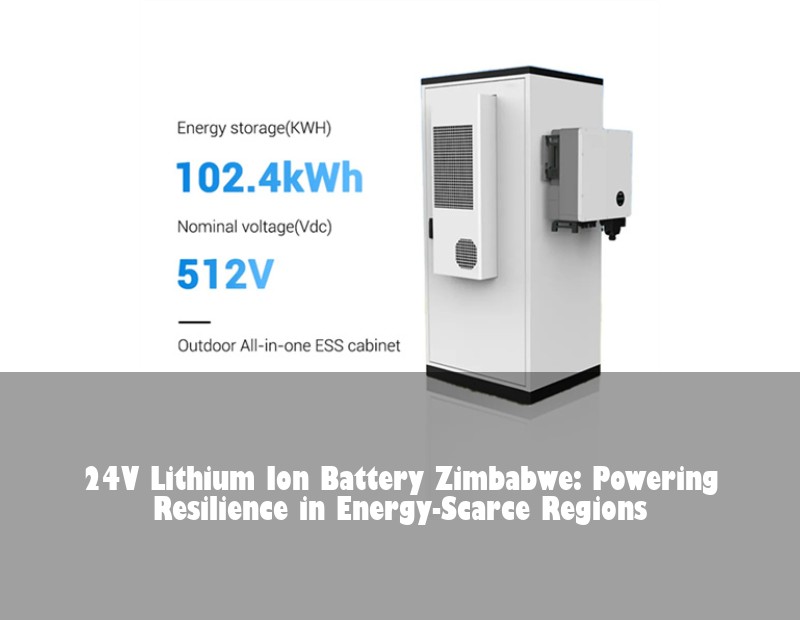
Imagine your critical medical equipment shutting down during a Zimbabwean power outage, or your farm's irrigation system failing at peak crop season. For homes and businesses across Zimbabwe, unreliable electricity isn't just inconvenient—it threatens livelihoods. This is where 24V lithium-ion batteries emerge as game-changers, offering robust energy storage for off-grid and backup power solutions. Unlike traditional lead-acid batteries, these advanced power units deliver longer lifespans, faster charging, and higher efficiency—exactly what Zimbabwe's energy landscape needs. Let's explore how this technology is transforming energy access from Harare to rural communities.
Table of Contents
- The Energy Challenge: Zimbabwe's Power Crisis
- Why 24V Lithium-Ion Outperforms Traditional Batteries
- Real-World Success: Solar Clinic in Midlands Province
- Technical Insights for Optimal Performance
- What’s Next for Energy Storage in Africa?
The Energy Challenge: Zimbabwe's Power Crisis
Daily 18-hour blackouts plague Zimbabwe, with grid availability dipping below 50% in rural areas (World Bank). Hospitals, farms, and telecom towers increasingly turn to solar hybrids, but lead-acid batteries—the traditional choice—fail under harsh conditions. Their short lifespan (1-3 years) and slow recharge cycles worsen energy inequality. As one Bulawayo farmer told us: "When my irrigation batteries die during drought, my crops die with them." This vulnerability highlights the urgent need for resilient alternatives.
Why 24V Lithium-Ion Outperforms Traditional Batteries
Let’s break down the technical advantages driving adoption:
| Feature | 24V Lithium-Ion | Lead-Acid (Flooded) |
|---|---|---|
| Cycle Life | 6,000+ cycles | 500-1,200 cycles |
| Efficiency | 95-98% | 70-85% |
| Temperature Tolerance | -20°C to 60°C | 5°C to 40°C |
| Weight (100Ah) | ~15kg | ~30kg |
Lithium's 80% depth-of-discharge capability versus lead-acid's 50% means more usable energy per cycle. Combined with 2-hour fast charging, this reduces generator dependency—critical in fuel-scarce regions. 
Real-World Success: Solar Clinic in Midlands Province
Consider the 2023 upgrade at Gokwe Health Clinic: Replacing lead-acid with a 24V/200Ah lithium system (paired with 8kW solar) slashed generator costs by 90%. Key outcomes:
- Vaccine refrigerators maintained 48+ hours during outages
- Battery lifespan extended from 2 to 10+ years (projected)
- ROI achieved in 14 months via diesel savings
This mirrors European trends—German farms using similar systems report 22% higher reliability than lead-acid (Fraunhofer ISE).
Technical Insights for Optimal Performance
Battery Management Systems (BMS): The Brain Behind Safety
A quality BMS prevents thermal runaway—critical in Zimbabwe's 40°C summers. Look for:
- Cell-level voltage monitoring
- Dynamic load balancing
- IP65-rated enclosures for dust protection
Pro Tip: Pair batteries with temperature-compensated charging to boost longevity in variable climates.
What’s Next for Energy Storage in Africa?
With lithium prices dropping 89% since 2010 (BloombergNEF), adoption will accelerate. But can Zimbabwe's infrastructure support smart grid integration? And how might second-life EV batteries reshape affordability? 
Your Turn: Is Your Energy Setup Ready for the Next Decade?
We’ve seen how 24V lithium-ion batteries transform energy resilience—but what specific challenge could this solve for your operation? Share your biggest power pain point, and let’s brainstorm solutions tailored to Zimbabwe’s unique demands.
 Inquiry
 Online Chat