


Wind Turbine and Solar Hybrid System: Revolutionizing Renewable Energy
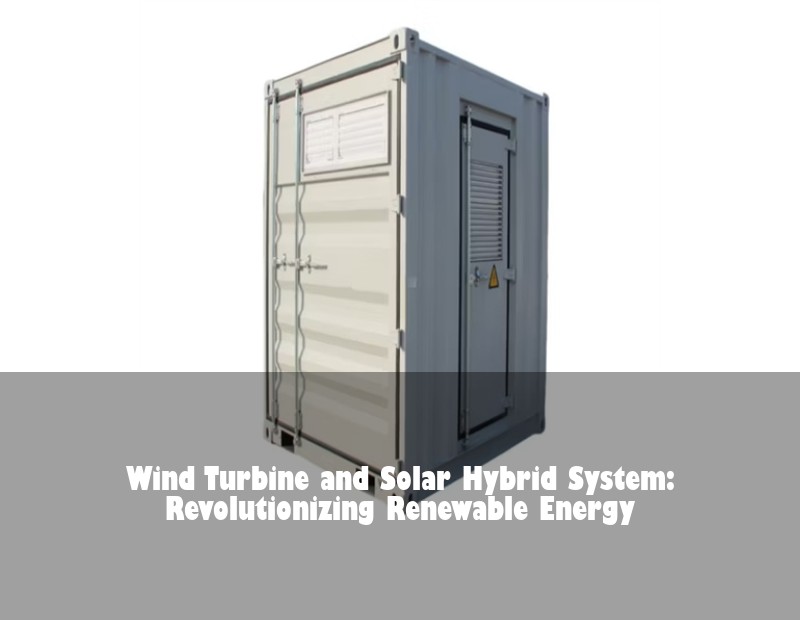
Table of Contents
The Rising Demand for Renewable Energy Synergy
Europe's ambitious decarbonization goals—like the EU's 55% emissions reduction target by 2030—are driving unprecedented innovation in renewable integration. Yet relying solely on standalone wind or solar installations reveals a critical vulnerability: intermittency. When the sun sets, solar panels sleep; when winds stall, turbines stand idle. This inherent unpredictability creates grid instability and storage challenges. But what if we could blend these technologies to create continuous, reliable power? Enter the wind turbine and solar hybrid system, where complementary generation patterns unlock a powerful solution.

Source: Unsplash - Renewable energy hybrid park in Europe
Understanding Wind-Solar Hybrid Systems
At its core, a hybrid system pairs wind turbines and solar panels with shared infrastructure—controllers, batteries, and grid connections. This isn't merely stacking technologies; it's about intelligent symbiosis. Consider how wind and solar generation profiles naturally complement each other:
- Seasonal Compensation: Europe's windier winters offset lower solar output, while summer sun compensates for reduced winds
- Diurnal Balancing: Solar peaks at midday; wind often strengthens at night, smoothing daily production curves
- Space Optimization: Turbines use vertical space, panels occupy horizontal surfaces—ideal for constrained sites
For instance, combining IRENA's cost data shows hybrid systems reduce land use by 30-40% versus separate installations—a game-changer for densely populated regions.
Performance Data: Efficiency Gains & Cost Benefits
Independent studies reveal compelling advantages when merging these technologies. Let's examine the numbers:
| Metric | Standalone Solar | Standalone Wind | Hybrid System |
|---|---|---|---|
| Capacity Utilization | 15-22% | 25-45% | 40-70% |
| Storage Requirements | High | Moderate-High | Reduced 25-50% |
| LCOE (€/MWh) | 48-85 | 32-62 | 28-52 |
Source: Journal of Renewable Energy (2022 European analysis)
By maximizing infrastructure sharing—like grid connections and monitoring systems—hybrids cut installation costs by 15-25%. More importantly, they enhance energy predictability. In Denmark, hybrid projects demonstrated 83% fewer grid-balancing interventions versus standalone farms. That reliability isn't just technical—it's economic.
Case Study: A German Hybrid System Triumph
Consider Bavaria's Hof HybridPark, commissioned in 2021. This 12MW installation (8MW wind + 4MW solar) serves 8,000 homes while overcoming region-specific challenges: limited land availability and seasonal weather extremes.
- Annual Generation: 24.7GWh (exceeding projections by 11%)
- Storage Savings: Used 40% smaller batteries than comparable solar-only setups
- Revenue Boost: Achieved 22% higher earnings through continuous peak/off-peak arbitrage

Source: Unsplash - Integrated wind-solar installation
Project manager Anja Weber notes: "Our hybrid design delivered 98% uptime during 2022's 'dunkelflaute'—those windless, overcast winter weeks that cripple single-source renewables." This resilience proves invaluable as Germany phases out nuclear power.
Key Implementation Considerations
While hybrid systems offer compelling benefits, successful deployment requires addressing three pillars:
- Tech Integration: Use AI-powered controllers (like SolarEdge's Energy Hub) to manage generation/demand cycles in real-time
- Regulatory Navigation: In France and Italy, streamlined permitting now favors hybrid projects over single-tech farms
- Financial Modeling: Leverage tools like HOMER Pro to simulate 20-year cash flows against local energy tariffs
Remember, hybrid ROI improves dramatically when customized to local conditions. A coastal Spanish system might prioritize wind, while Bavarian designs emphasize solar—yet both gain stability from the hybrid backbone.
The Future Landscape for European Energy
With the EU targeting 45% renewable penetration by 2030, hybrids are transitioning from niche solutions to grid staples. Innovations like vertical-axis wind turbines integrated directly with solar carports exemplify the next frontier. Meanwhile, EU funding mechanisms increasingly prioritize multi-technology projects—acknowledging their role in energy security.
So, as we reimagine Europe's energy infrastructure, we must ask: Which unique combination of wind, solar, and storage could unlock your region's full renewable potential? Share your vision for a tailored hybrid solution—our team is ready to help prototype it.
 Inquiry
 Online Chat