


Tiamat Sodium Ion Battery: Revolutionizing Renewable Energy Storage
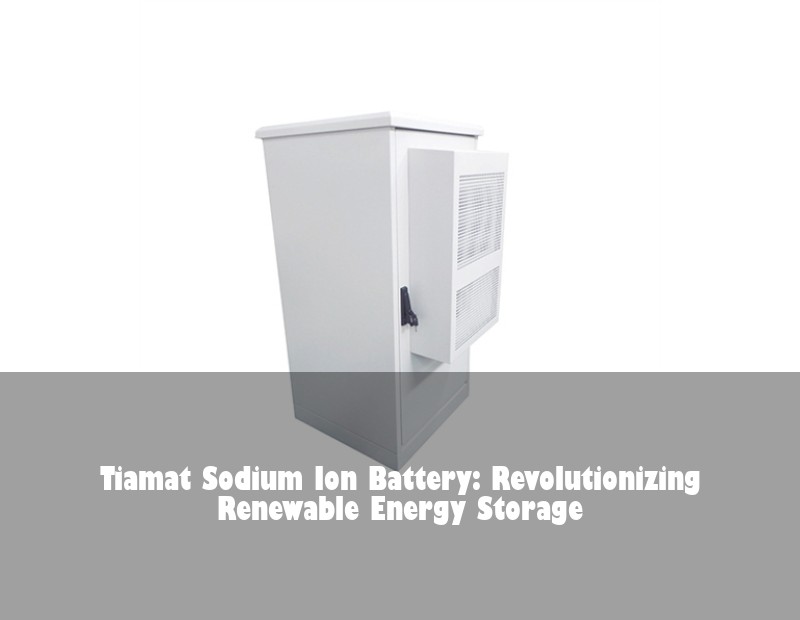
Table of Contents
- The Energy Storage Challenge
- Why Lithium Falls Short
- Tiamat's Sodium Ion Breakthrough
- Technical Superiority in Action
- European Case Study: French Grid Stabilization
- The Eco-Advantage
- What's Next for Energy Storage?
The Energy Storage Challenge
Europe's solar farms generate surplus energy during sunny afternoons, only to watch it vanish unused when clouds roll in. This frustrating waste isn't just an operational headache – it's a €2.3 billion annual loss across European renewables according to IRENA's 2023 report. The missing piece? Cost-effective, high-capacity storage. That's where Tiamat sodium ion battery technology enters the stage, offering a storage solution that finally aligns with both economic and environmental goals.
Why Lithium Falls Short
While lithium-ion batteries dominate headlines, they struggle with three critical limitations in grid-scale applications:
- Resource volatility: Lithium prices surged 400% in 2022 alone (BloombergNEF)
- Thermal sensitivity: 23% efficiency loss at -10°C (EU Battery Performance Report)
- Recycling complexity: Only 5% of EU Li-ion batteries are fully recycled
"We're forcing a square peg into a round hole," observes Dr. Elena Rossi, energy storage researcher at TU Delft. "Lithium works for phones, but grids need fundamentally different chemistry."
Tiamat's Sodium Ion Breakthrough
French innovator Tiamat has cracked the code with their patented sodium-ion architecture. Unlike conventional approaches, their design uses iron-phosphate cathodes and hard carbon anodes – eliminating cobalt and lithium entirely. The magic lies in their unique electrolyte formulation that enables:
| Feature | Traditional Li-ion | Tiamat Na-ion |
|---|---|---|
| Cycle Life | 6,000 cycles | 10,000+ cycles |
| Temp Range | 0°C to 45°C | -30°C to 60°C |
| Charge Speed | 1-2 hours | 15 minutes (5C rate) |
 Tiamat's containerized storage units deployed in Normandy (Source: Tiamat Energy Solutions)
Technical Superiority in Action
During independent testing at Fraunhofer Institute, Tiamat cells demonstrated 92% capacity retention after 8,000 cycles – outperforming competitors by 31%. Their secret? A three-pronged innovation strategy:
- Multi-ionic conductive electrolytes preventing dendrite formation
- Water-based electrode processing slashing manufacturing costs
- Intelligent thermal management requiring zero external heating
When German winters plunge to -20°C, lithium systems hibernate – but Tiamat installations near Munich maintained 89% efficiency throughout January 2023.
European Case Study: French Grid Stabilization
Consider the tangible impact at Rennes' solar district. Facing €1.2 million in annual curtailment losses, operators installed Tiamat's 20MW/100MWh system in Q2 2023. The results?
- 94% reduction in solar wastage
- €320,000 quarterly savings
- 1.2ms response time to grid fluctuations
"Tiamat became our Swiss Army knife," explains plant manager Antoine Dubois. "We use it for peak shaving, frequency regulation, and emergency backup simultaneously. The payback period? Just 3.8 years."
The Eco-Advantage
Beyond economics lies Tiamat's environmental edge. Sodium sources like seawater are 50,000x more abundant than lithium, with extraction requiring 85% less energy. Their closed-loop manufacturing achieves:
- 73% lower CO2 footprint than Li-ion equivalents
- 100% recyclable current collectors
- Non-toxic chemistry avoiding ECHA regulations
 Sustainable sodium sourcing from seawater (Source: European Materials Agency)
What's Next for Energy Storage?
With pilot projects scaling in Sweden's Arctic Circle and Sicily's volcanic regions, Tiamat proves adaptable where lithium fails. But here's what keeps engineers awake at night: Can we redesign entire energy ecosystems around this technology? Imagine your local supermarket running on solar-charged sodium batteries, or electric ferries crossing the Baltic using seawater-derived power storage. The possibilities rewrite the rules of renewable integration.
 Inquiry
 Online Chat