


Unlocking Grid Resilience: The Rise of Standalone Energy Storage Systems
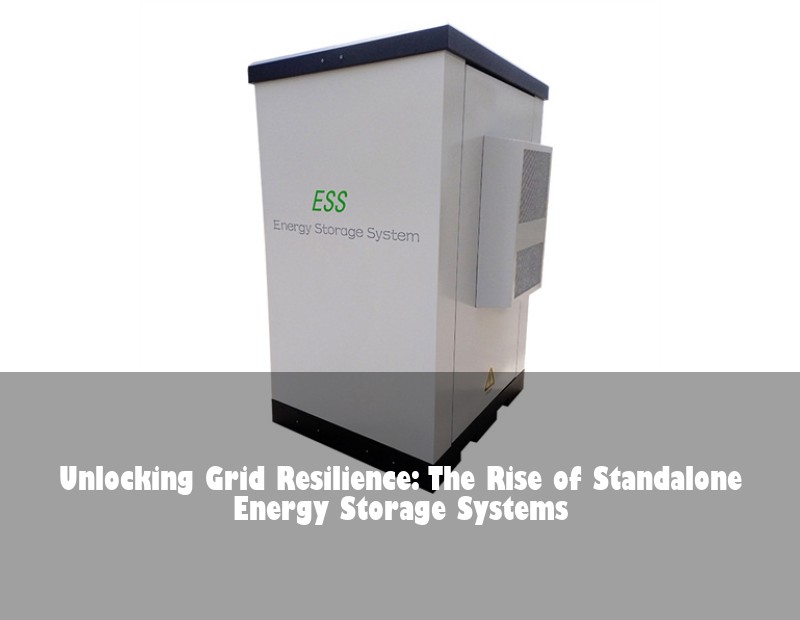
Table of Contents
Europe's Energy Shift: Beyond Solar Pairing
It's a windless winter night in Berlin, and solar panels lie dormant. Yet across the city, hospitals and factories hum with renewable energy. How? Standalone energy storage systems (ESS) are rewriting Europe's energy playbook. Unlike traditional solar-coupled batteries, these independent power reservoirs charge during low-demand periods and discharge during peaks, acting as grid-scale shock absorbers. As Europe targets 45% renewable energy by 2030, these autonomous storage solutions have become critical infrastructure. They're not just supporting the transition – they're enabling it.
Standalone Storage by the Numbers
Europe installed 4.5GW/5.2GWh of new grid-scale storage in 2023 – a 94% YoY surge. What's striking? 68% were standalone projects, signalling a strategic pivot. Let's examine why utilities are betting big:
| Feature | Solar-Paired Storage | Standalone ESS |
|---|---|---|
| Revenue Streams | 1-2 (e.g., solar shifting) | 5-7 (frequency regulation, capacity markets) |
| Grid Utilization | 40-50% | 85-95% |
| ROI Period | 7-10 years | 4-6 years |
Source: Wood Mackenzie Energy Storage Report 2024
You might wonder: "Doesn't pairing with renewables make more sense?" Actually, standalone configurations unlock higher-value grid services. By positioning near congestion points – not necessarily sun-rich zones – they relieve transmission bottlenecks more effectively.
German Grid Case Study: The Kupferzell Project
Let's examine Germany's pioneering 250MW/250MWh standalone facility in Baden-Württemberg. Developed by EnBW, this site occupies just 2 football fields yet delivers outsized impact:
 Image: EnBW Kupferzell BESS installation (Credit: EnBW)
- Problem: Regional grid constraints during nuclear phase-out
- Solution: 56 battery units providing synthetic inertia
- Results:
- Reduced grid stabilization costs by €18M annually
- 94% response accuracy in primary control reserve markets
- 2.7 sec reaction time during October 2023 grid incident
"The standalone design was crucial," explains Dr. Lena Vogt, EnBW's Grid Innovation Lead. "Co-location wasn't viable near these load centers. Our batteries ingest excess wind from the North and solar from the South – acting as a renewable energy blender for the grid."
The Multi-Layered Value Proposition
Standalone ESS generates revenue like a Swiss Army knife serves functions. The Kupferzell project exemplifies the "value stack":
- Frequency Response: Earns €45-70/MW/day by balancing grid cycles
- Capacity Markets: Secures €110k/MW/year as reliability insurance
- Arbitrage: Capitalizes on €25-€185/MWh price spreads
This versatility explains why European developers are opting for standalone configurations even when pairing seems obvious. As battery cycle life exceeds 8,000 cycles, the economics keep improving. But we must address the elephant in the room: sustainability.
Navigating Future Challenges
While standalone ESS deployments soar, three hurdles require collective action:
- Regulatory Lag: Only 11 EU members have defined storage asset classifications
- Material Sourcing: LFP batteries reduce cobalt, but recycling infrastructure lags
- Grid Integration: How do we coordinate thousands of distributed assets?
The solution lies in standardization. The European Battery Passport initiative addresses sustainability concerns by tracking carbon footprints and recycled content. Meanwhile, grid-forming inverters are enabling "islandable" microgrids – a game-changer for energy security.
Your Energy Independence Journey
As European grids face unprecedented volatility, the question isn't whether to deploy storage – it's how to maximize its potential. Standalone systems offer grid operators surgical precision in managing congestion while creating resilient revenue streams. What grid pain points could standalone storage solve in your region? Perhaps it's time to explore how these agile energy assets could transform your local infrastructure – one strategic megawatt at a time.
 Inquiry
 Online Chat