


The Essentials of Solar Power Plant Grid Connection for a Sustainable Future
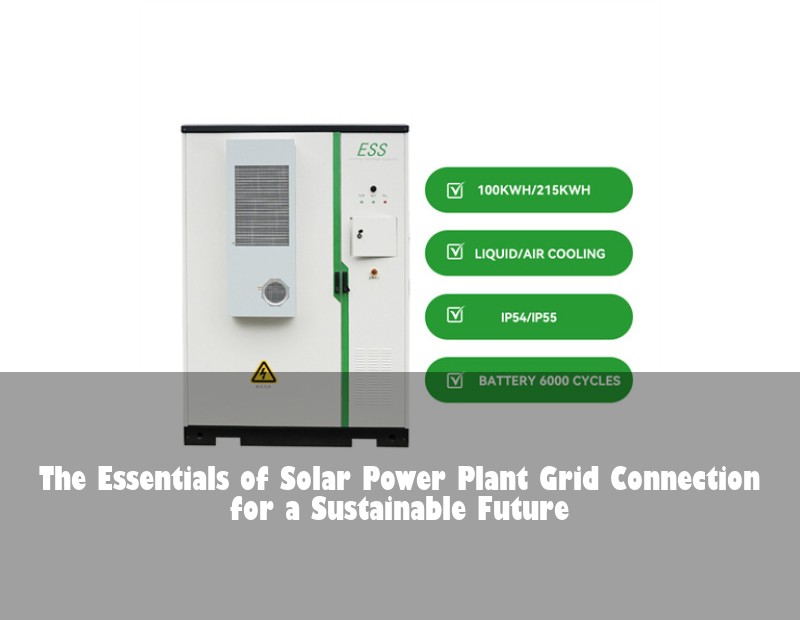
Imagine harnessing the sun's boundless energy, only to face bottlenecks when feeding it into power networks. This reality confronts solar developers worldwide as renewable capacity surges—especially in Europe, where ambitious climate goals demand flawless solar power plant grid connection. But what separates successful projects from delayed ones? Let's explore the technical, regulatory, and economic keys to seamless integration.
Table of Contents
- The Renewable Wave: Why Grid Integration Matters Now
- Navigating Grid Connection Complexities
- German Success: A Grid Integration Blueprint
- Engineered Solutions for Smoother Connections
- Beyond Today: Smart Grids and Flexible Futures
The Renewable Wave: Why Grid Integration Matters Now
Europe installed 55.9 GW of solar in 2023 alone—enough to power 16 million homes. Yet grid congestion now delays 40% of renewable projects globally. This paradox stems from aging infrastructure designed for centralized fossil fuels, struggling with decentralized solar's variable output. As one grid operator told me: "We're rewiring Europe's nervous system while it's still active."

Source: IRENA Renewable Energy Statistics 2023
Navigating Grid Connection Complexities
Connecting solar plants involves three hurdles:
- Technical: Voltage fluctuations during cloud transitions
- Regulatory: Varying grid codes across EU markets
- Economic: Connection fees ranging from €5k-€50k/MW
| Challenge | Impact | Mitigation Trend |
|---|---|---|
| Grid Stability | Frequency deviations over 0.5Hz | Advanced inverters (94% adoption) |
| Permitting Delays | 6-24 month project stalls | Digital "one-stop-shop" portals |
| Capacity Limits | 30% curtailment in congested zones | Battery hybridization (67% new EU projects) |
German Success: A Grid Integration Blueprint
Consider Bavaria's 187MW Weesow-Wilmersdorf plant—Europe's largest when connected in 2021. Facing strict grid codes, developers implemented:
- Reactive power control via Siemens SINAMICS inverters
- Dynamic thermal line rating (DTLR) sensors
- 7% oversizing to compensate for curtailment
The result? 99.2% availability despite Bavaria's volatile weather. Crucially, Germany's "Connect Before Construct" policy guarantees grid access before ground-breaking—slashing financial risks. Projects like this prove that with grid-friendly design, solar can provide 12% of Germany's baseload power on cloudy days.
Engineered Solutions for Smoother Connections
Modern grid integration relies on four pillars:
- Smart Inverters: IEEE 1547-2018 compliant devices that respond to grid disturbances within 2 cycles
- Predictive Analytics: Machine learning forecasting curtailment risks 72 hours ahead
- Hybrid Configurations: Pairing solar with 4-hour battery storage to shift peak exports
- Grid-Forming Converters: Creating "islandable" microgrids during outages
Beyond Today: Smart Grids and Flexible Futures
As solar penetration approaches 35% in markets like Spain, we're entering new territory. Phase-locked oscillators now maintain frequency during 80% solar coverage—impossible a decade ago. The next frontier? Dynamic grid codes adjusting to real-time renewable shares, and blockchain-enabled peer-to-peer trading. Imagine solar plants negotiating grid access via smart contracts!

Source: European Commission Energy Directorate
Your Next Connection Challenge
What's the biggest grid integration hurdle your solar project faces today—and how could creative engineering turn it into an opportunity? Share your experience below!
 Inquiry
 Online Chat