


Harnessing Solar Panels Electricity: Powering a Sustainable Future
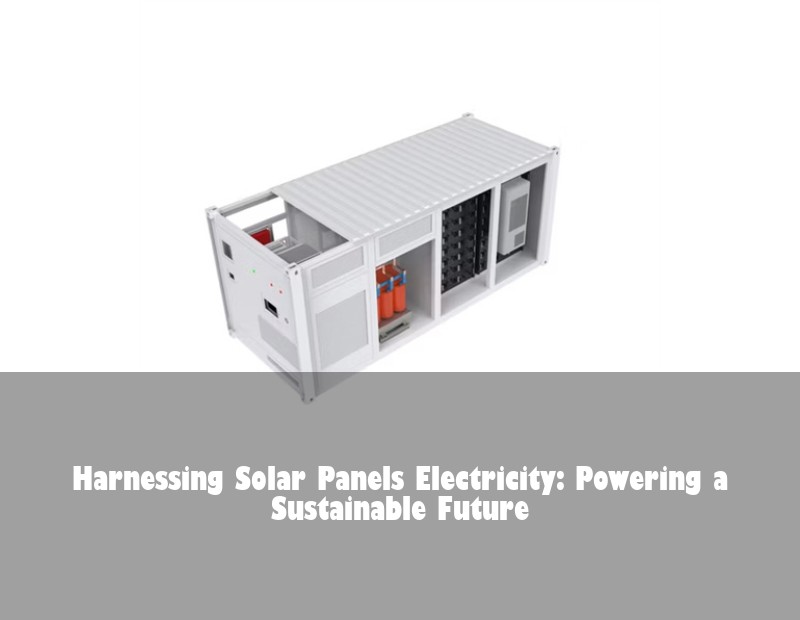
Table of Contents
- The Rising Demand for Solar Panels Electricity
- The Science Behind Solar Electricity Generation
- Maximizing Efficiency: Key Factors for Solar Panels
- Case Study: Germany's Solar Electricity Revolution
- Balancing Supply & Demand: The Role of Energy Storage
- What's Next for Solar Panel Technology?
- Begin Your Solar Electricity Journey
The Rising Demand for Solar Panels Electricity Across Europe
Have you noticed more rooftops gleaming with blue-black rectangles lately? That's Europe embracing solar panels electricity at record speed. The continent added 41.4 GW of new solar capacity in 2022 alone—enough to power 12.4 million homes! As energy prices fluctuate and climate concerns grow, households and businesses are realizing that sunlight is the ultimate democratic energy source. And here's an interesting thought: just one hour of global sunlight could theoretically power human civilization for an entire year. Now that's what I call untapped potential!

Source: Unsplash/Antonio Garcia
The Science Behind Solar Electricity Generation
Let's demystify how those sleek panels convert photons into usable power. It starts when sunlight hits photovoltaic (PV) cells, typically made from silicon. These cells contain semiconductor layers that create an electric field—think of it as a microscopic energy highway. When photons strike the cell, they knock electrons loose, creating direct current (DC) electricity. But since our homes use alternating current (AC), inverters transform DC into appliance-friendly AC. The entire process happens silently, emission-free, and with no moving parts. Pretty elegant, right?
Core Components of Solar Electricity Systems
- Photovoltaic Panels: Capture sunlight (monocrystalline panels offer 20-22% efficiency)
- Inverters: Convert DC to AC (modern microinverters optimize per-panel output)
- Mounting Systems: Secure panels to rooftops or ground installations
- Monitoring Tools: Track energy production via smartphone apps
Maximizing Efficiency: Key Factors for Solar Panels
Not all solar installations perform equally. Three critical factors determine your solar electricity yield:
| Factor | Ideal Condition | Efficiency Impact |
|---|---|---|
| Panel Orientation | South-facing (Northern Hemisphere) | Up to 30% more yield |
| Tilt Angle | 30-40 degrees | Optimizes seasonal absorption |
| Shading | Zero obstruction | Partial shading can cut output by 50% |
Modern solutions like bifacial panels (which capture light from both sides) and solar trackers can boost efficiency by another 10-25%. As our Dutch friends proved, even cloudy climates can generate substantial power—Netherlands ranks among Europe's top solar adopters despite its famous weather!
Case Study: Germany's Solar Electricity Revolution
Remember when critics said solar only worked in sun-drenched Spain? Germany shattered that myth. Through their Energiewende (energy transition) policy, they've become a solar powerhouse, generating 10.4% of national electricity from PV systems in 2022. How did they do it?
- Feed-in Tariffs: Guaranteed prices for solar electricity fed back to the grid
- Community Projects: Over 1,700 energy cooperatives allow shared ownership
- Innovative Storage: Paired 70% of new residential systems with batteries in 2023
The results speak for themselves: Bavaria's Fraunhofer Institute reports solar capacity increased 8-fold since 2010, cutting CO2 emissions by 32 million tons annually. That's equivalent to taking 7 million cars off the road!
Balancing Supply & Demand: The Role of Energy Storage
One common question I hear: "What happens when the sun doesn't shine?" That's where storage solutions become game-changers. Modern lithium-ion batteries store excess solar electricity for use at night or during peak tariff hours. Consider these advances:

Source: Unsplash/Andres Simon
Today's residential batteries like Tesla Powerwall offer 90% round-trip efficiency—meaning almost all stored solar electricity remains usable. Smart energy management systems can even predict usage patterns using AI, automatically selling surplus power to the grid during high-price periods. As European IEA reports indicate, storage costs have plummeted 70% since 2015, making solar-plus-storage viable for millions.
What's Next for Solar Panel Technology?
Our R&D labs are buzzing with breakthroughs that'll reshape solar electricity production. Perovskite solar cells promise efficiencies beyond 30%, while floating solar farms (like France's Piolenc plant) solve land-use challenges. But perhaps the most exciting development is building-integrated photovoltaics (BIPV). Imagine solar windows generating power while maintaining transparency—Swiss startup EPFL already prototypes this! These innovations aren't sci-fi; they'll hit commercial markets within 3-5 years.
Begin Your Solar Electricity Journey
Ready to transform sunlight into savings? Every roof has unique potential—why not discover yours today? What energy challenge could solar panels electricity solve for your home or business this year?
 Inquiry
 Online Chat