


Solar Energy Storage Types: Powering Europe's Renewable Revolution
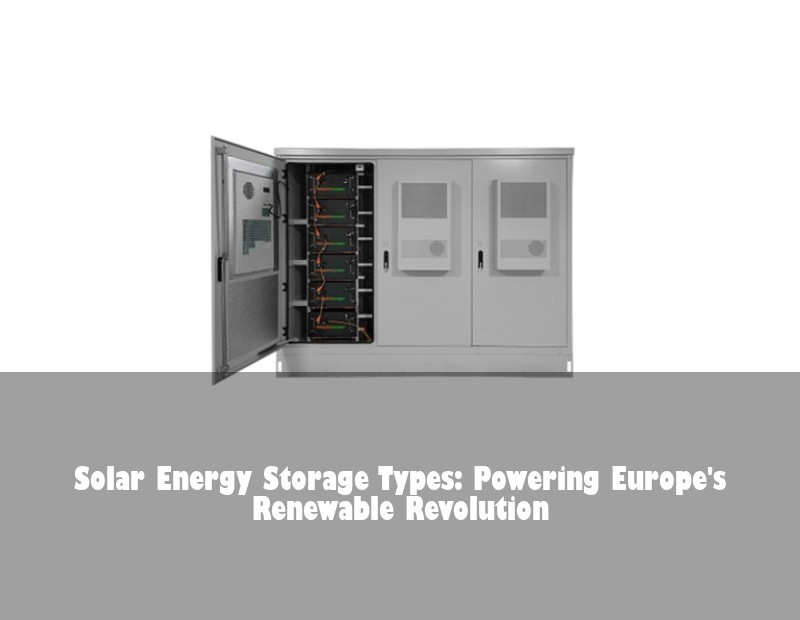
Table of Contents
The Rising Need for Solar Energy Storage
Imagine a cloudy evening in Berlin. Solar panels stop producing, yet households need electricity. Without storage, this energy gap means relying on fossil fuels. Here's where solar energy storage types become crucial. Europe's solar capacity grew 40% YoY (2020-2023), yet curtailment rates reach 7% in sun-rich regions when grids can't absorb excess power. Storage solutions transform this challenge into opportunity.

Key Solar Energy Storage Types Explained
Let's demystify five core technologies powering Europe's energy transition:
1. Lithium-Ion Batteries
Your smartphone's battery cousin – but industrial strength! Dominating 85% of home installations, they offer:
- 90-95% round-trip efficiency
- 5-15 year lifespan
- Scalability from 5kWh (homes) to MWh (grid)
Though slightly pricier upfront, their rapid response makes them ideal for frequency regulation.
2. Lead-Acid Batteries
The established workhorse. While fading in residential use, they still power:
- Off-grid industrial sites
- Backup systems
- Hybrid solar-diesel setups
Advantages? Simplicity and lower costs. But with 60-80% efficiency and 3-7 year lifespan, they require more maintenance.
3. Flow Batteries
Where liquid electrolytes circulate through electrochemical cells. Perfect for:
- Utility-scale storage (8+ hour discharge)
- Wind+solar hybridization
- Long-duration industrial backup
Vanadium flow systems dominate Europe, with German installations growing 200% since 2020. Their decoupled power/energy capacity makes them uniquely flexible.
4. Thermal Storage
Storing sunshine as heat! Molten salt systems capture solar thermal energy at 565°C. Perfect for:
- CSP (Concentrated Solar Power) plants
- Industrial process heating
- District heating networks
Spain's Andasol plant provides 7.5 hours of full-load power after sunset – a game-changer for baseload solar.
5. Emerging Technologies
Innovation never sleeps! Keep an eye on:
- Solid-state batteries: Higher energy density, no thermal runaway
- Gravity storage: Using elevation changes (like Energy Vault's Swiss demo)
- Green hydrogen: Converting excess solar to H₂ for seasonal storage
Technology Comparison
| Technology | Efficiency | Lifespan | Cost/kWh | Best For |
|---|---|---|---|---|
| Lithium-Ion | 90-95% | 5-15 years | €400-€800 | Homes, frequency control |
| Lead-Acid | 60-80% | 3-7 years | €150-€300 | Backup systems |
| Flow Batteries | 75-85% | 20+ years | €500-€1000 | Long-duration storage |
| Thermal (Molten Salt) | 40-50%* | 25+ years | €60-€100 | CSP plants |
*Electrical equivalent efficiency
Source: IRENA Storage Cost Report 2023
Case Study: Germany's Storage Success
Remember those cloudy Berlin evenings? Germany tackled them head-on. By 2023, over 500,000 German homes installed solar+storage – that's 40% of new solar systems! The secret? Their KfW 270 subsidy program offering 30% rebates.
Bavaria's Simbach municipality became a testbed. After installing community-scale lithium-ion + flow battery hybrids:
- Grid imports reduced by 73% in winter
- Renewable self-consumption reached 92%
- Payback period fell below 7 years

Data source: Fraunhofer ISE Case Study 2023
Choosing Your Solar Storage Type
Selecting storage isn't one-size-fits-all. Ask yourself:
- Duration needs: Brief outages (lithium) vs. multi-day clouds (flow)?
- Space constraints: Lead-acid needs ventilation, flow batteries require tanks
- Regulatory landscape: Spain incentivizes thermal, Scandinavia favors hydrogen hybrids
Pro tip: Hybrid systems are gaining traction. Pairing lithium-ion for daily cycling with flow batteries for seasonal shifting delivers the best ROI in Central Europe.
The Future of Solar Storage
Where are we headed? Three exciting developments:
- Second-life EV batteries entering storage markets at 40% lower cost
- AI-powered energy management predicting usage patterns for optimal charging
- Virtual power plants (like Tesla's EU projects) aggregating home batteries
With the EU targeting 600GWh of storage by 2030, innovation is accelerating exponentially. Perhaps the real question is: How will your energy choices today position you for tomorrow's smart grid?
 Inquiry
 Online Chat