


Unlocking Bangladesh's Energy Future with Solar BESS
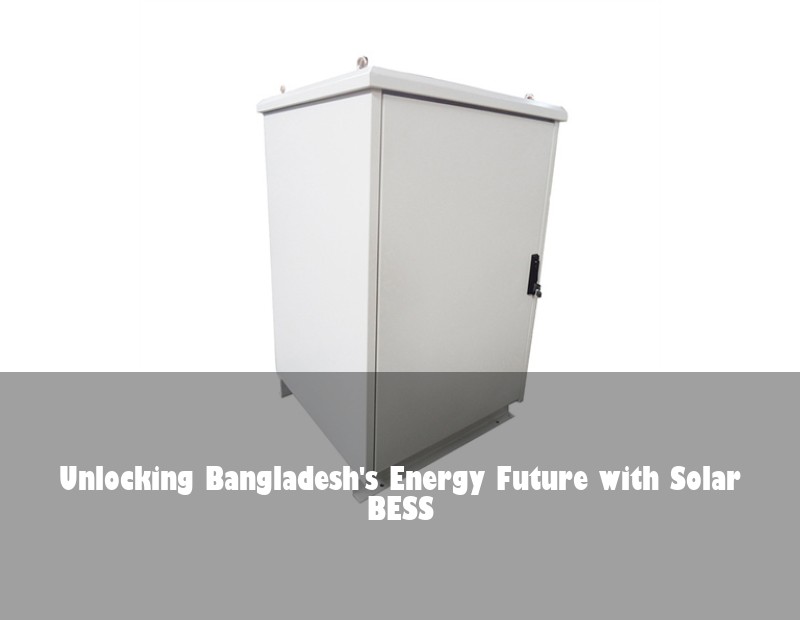
Table of Contents
Imagine a textile factory in Dhaka halting production during daily power cuts, losing $15,000/hour. Across Bangladesh, industries and homes face this reality as peak energy demand outpaces supply. But what if Europe's renewable innovations could offer a solution? Solar BESS in Bangladesh – battery energy storage systems coupled with solar panels – isn't just promising; it's becoming an economic lifeline. As Europe pioneers grid-scale storage, these technologies offer actionable blueprints for Bangladesh's energy resilience.
 Image source: Unsplash / Renewable energy installation
Bangladesh's Energy Crossroads: Why Solar BESS Matters Now
Bangladesh's energy grid faces a perfect storm: 7% annual demand growth (World Bank, 2023), fossil fuel dependence costing $5B/year in imports, and 1,400MW daily shortfalls during peak hours. Rural communities suffer most – 30% still lack reliable grid access. Traditional solutions like diesel generators emit 2.4kg CO2/kWh, worsening air quality in cities like Chattogram. But observe Germany's transition: they've proven renewables can sustain industrial economies when paired with storage.
How Solar BESS Transforms Energy Landscapes
Solar BESS works through an elegant synergy:
- Solar Generation: Photovoltaic panels convert Bangladesh's 4.8kWh/m²/day solar radiation into DC power
- Smart Conversion: Inverters transform DC to AC while optimizing for grid stability
- Intelligent Storage: Lithium-ion batteries store excess energy with >90% round-trip efficiency
Europe's Blueprint: Lessons for Bangladesh
European countries faced similar challenges: high energy costs, grid instability, and decarbonization targets. Their strategic response? Aggressive BESS deployment. The EU installed 4.2GWh of new storage in 2023 alone (European Association for Storage of Energy). Three transferable strategies:
| Strategy | European Example | Bangladesh Application |
|---|---|---|
| Peak Shaving | UK's National Grid saves £890M/year avoiding peak plants | Reduce Bangladesh's $1.2B/year capacity payments |
| Microgrids | Greece's Tilos Island: 100% renewable with Tesla Powerpacks | Power char islands without submarine cables |
| Frequency Regulation | Germany's primary reserve market using BESS | Stabilize Bangladesh's 50Hz grid during load shedding |
German Case Study: Freiamt's Renewable Triumph
Let's examine Freiamt – a 4,300-resident town in Germany's Black Forest. In 2010, they faced rising energy costs and EU emissions targets. Their solution? A community-led Solar BESS project with:
- 12MW solar capacity across farms/homes
- 8.4MWh battery storage (SMA and LG Chem systems)
- Smart grid integration software
Results after 5 years? 142% renewable self-sufficiency, 11,200 tons/year CO2 reduction, and €1.8M in annual energy exports (Fraunhofer ISE data). Crucially, their "energy cooperatives" model empowered local stakeholders – a concept now being tested by Bangladesh's IDCOL in Cox's Bazar.
 Image source: Unsplash / Community energy project
Adapting European Expertise to Bangladesh
European tech requires tropical adaptations. Humidity-tolerant battery cooling systems (like Huawei's Smart String ESS) outperform air-conditioned containers in Satkhira's monsoon climate. Bangladesh-specific considerations:
- Cyclone Resilience: Elevated battery platforms vs. flood-prone areas
- Cost Optimization: LFP batteries better suit Bangladesh's frequent cycling than Europe's NMC
- Maintenance Remote monitoring aligns with Bangladesh's technician shortage
Pioneers like Rahimafrooz show promising results: their Solar BESS units at 30 telecommunication towers reduced diesel use by 220,000 liters/year. But scalable solutions demand policy innovation...
The Future of Solar BESS in Bangladesh
Bangladesh's draft Energy Storage Master Plan targets 300MW by 2025. With Japan's JICA funding $100M for rural solar-storage microgrids, the foundation is being laid. But true transformation requires:
- Tariff restructuring to value grid services (modeled on Spain's RD 244/2019)
- Local battery assembly leveraging Bangladesh's lead-acid manufacturing expertise
- Hybrid floating solar-BESS for flood-prone haor regions
 Image source: Unsplash / Technical maintenance of energy storage
As Bangladesh aims for 4,100MW solar by 2041, what partnerships could European innovators create to co-develop tropical-specific storage solutions? The opportunity isn't just to replicate – but to leapfrog.
 Inquiry
 Online Chat