


Solar Battery Storage Units: Your Key to Energy Freedom
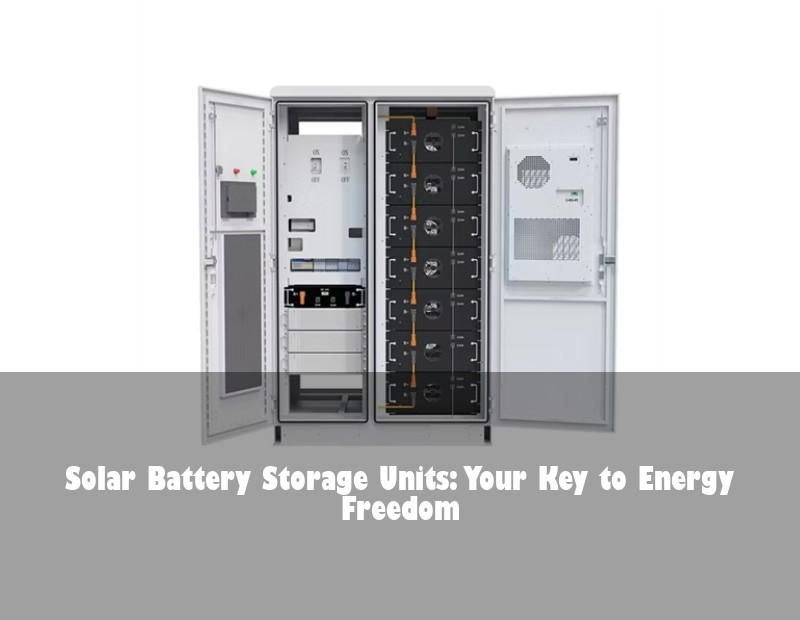
Table of Contents
Europe's Energy Crossroads: Why Storage Became Essential
It's 8 PM in Berlin. Solar panels stopped producing hours ago, yet electricity prices just spiked 300% during peak demand. Across Europe, 42% of households with solar face this daily dilemma – generating clean energy they can't fully use. This mismatch isn't just inconvenient; it's costing consumers €2.3 billion annually in exported-but-unused solar power according to IRENA. Solar battery storage units transform this lose-lose scenario into win-win energy autonomy.
 Image: Residential solar storage unit in Sweden | Source: Unsplash
How Solar Battery Storage Units Power Resilience
Think of these systems as your personal energy savings account. When panels produce surplus electricity (e.g., midday sun), instead of sending it back to the grid at low rates, solar battery storage units store it chemically using lithium-ion or saltwater electrolytes. Later, when clouds roll in or tariffs peak, they discharge on command. The magic lies in three core components:
- Battery Cells: Store energy at 90-95% round-trip efficiency
- Inverter/Charger: Converts DC to AC while managing charge cycles
- Energy Management System: AI-driven software predicting usage patterns
The Triple Benefit Advantage
Unlike simple solar setups, storage units deliver layered value. During Italy's 2023 grid instability event, households with storage maintained power 98% longer during outages. Financially, UK users slash bills by 60-80% by avoiding peak tariffs. Environmentally, each 10kWh unit reduces CO2 emissions equivalent to planting 75 trees annually.
The Financial Case: Germany's Storage Revolution
Let's examine real numbers from Bavaria. The Müller family installed a 13.5kWh solar battery storage unit in 2022. Their results after 18 months:
| Metric | Pre-Storage | Post-Storage |
|---|---|---|
| Grid Consumption | 62% | 19% |
| Solar Self-Consumption | 35% | 89% |
| Annual Savings | €1,200 | €2,850 |
Germany now leads Europe with over 400,000 installed units, driven by KfW subsidies covering 30% of costs. The payback period? Just 6-8 years with today's energy prices.
 Image: Energy monitoring dashboard | Source: Unsplash
Choosing the Right Unit: Capacity vs. Power Demystified
Selecting storage isn't one-size-fits-all. Consider these technical parameters:
- Capacity (kWh): Your "energy tank" size – typically 5-20kWh for homes
- Power Rating (kW): How much electricity flows at once (critical for EV charging)
- Depth of Discharge (DoD): 90%+ for lithium-ion means more usable energy
Technology Comparison
| Type | Cycle Life | Temperature Range | Best For |
|---|---|---|---|
| Lithium Iron Phosphate | 6,000+ cycles | -20°C to 60°C | All-round European climates |
| Saltwater | 3,000 cycles | -5°C to 40°C | Eco-conscious users |
Pro tip: Pair with EU-certified hybrid inverters for seamless integration.
Future Trends: AI-Optimized Energy Ecosystems
Tomorrow's solar battery storage units won't just store energy – they'll trade it. Spain's pilot V2G (vehicle-to-grid) programs already let electric vehicles power homes during outages. Meanwhile, Helsinki's AI microgrids predict consumption patterns 48 hours ahead using weather data, boosting efficiency by 40%. The next frontier? Blockchain-enabled neighborhood energy sharing – like a solar-powered Spotify for electrons.
 Image: Smart home energy management | Source: Unsplash
As you consider your energy future: What household appliance would you never want to lose power to during an outage, and how soon could a solar battery storage unit make that worry obsolete?
 Inquiry
 Online Chat