


The Renewable Energy Storage Roadmap: Powering Europe's Clean Energy Transition
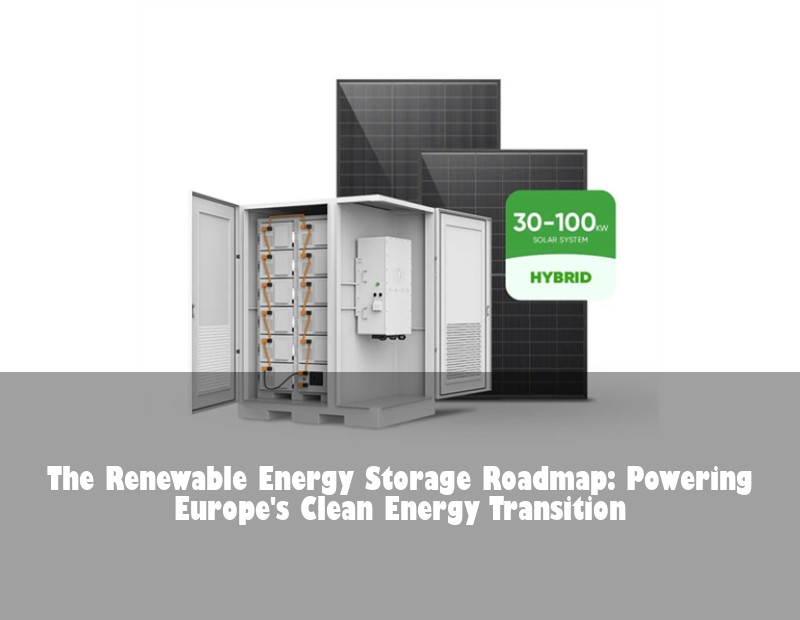
As Europe accelerates its decarbonization journey, the critical missing piece in our renewable energy puzzle is becoming clear: intelligent storage solutions. This renewable energy storage roadmap outlines how strategic deployment of storage technologies transforms intermittent solar and wind power into reliable 24/7 energy assets.
Table of Contents
- The Intermittency Challenge: When Renewables Can't Deliver
- Storage Growth Metrics: Europe's Capacity Surge
- Case Study: Germany's Grid-Scale Success Story
- Essential Roadmap Components: Beyond Lithium-Ion
- Policy & Tech Synergy: Accelerating Deployment
- Your Role in the Storage Revolution
The Intermittency Challenge: When Renewables Can't Deliver
Imagine a blustery Tuesday in the North Sea: wind turbines spin at maximum capacity while simultaneously, solar arrays across Southern Europe sit idle under thick clouds. This geographic and temporal mismatch creates a fundamental barrier - without storage, excess renewable energy literally vanishes into thin air. Our grids face two critical pain points:
- Curtaiment losses: In 2022 alone, European grid operators wasted 15.4 TWh of clean energy due to insufficient storage capacity - enough to power Denmark for a month
- Evening ramp-ups: When solar generation plummets at dusk, utilities must fire up fossil-fuel plants to meet demand surges

Image: Geographic diversity requires storage solutions. Source: Unsplash (Creative Commons)
Storage Growth Metrics: Europe's Capacity Surge
The data reveals an unmistakable acceleration. According to Energy Storage News, Europe's battery storage installations grew 94% year-over-year in 2023. Consider these projections:
| Technology | 2023 Capacity (GWh) | 2030 Projection (GWh) | Growth Factor |
|---|---|---|---|
| Utility-Scale Lithium | 18.2 | 167 | 9.2x |
| Residential Storage | 9.7 | 64 | 6.6x |
| Flow Batteries | 0.8 | 19 | 23.8x |
Source: BloombergNEF Energy Storage Report 2024
Case Study: Germany's Grid-Scale Success Story
Let's examine Bavaria's "Storage First" initiative. Facing severe solar curtailment, the region deployed 1.2 GWh of grid-scale batteries at strategic substations. The results?
- Reduced renewable wastage by 89% within 18 months
- Shaved peak electricity prices by 34% during winter evenings
- Created secondary revenue streams through frequency regulation markets
As project lead Dr. Anika Müller notes: "Our storage systems act as shock absorbers for the grid - they turn solar generation peaks from a problem into bankable assets."
Essential Roadmap Components: Beyond Lithium-Ion
A robust renewable energy storage roadmap integrates complementary technologies across different time domains:

Image: Multi-technology approaches maximize effectiveness. Source: Unsplash (Creative Commons)
The Technology Matrix
- Short-duration (seconds-hours): Lithium-ion batteries for frequency regulation
- Mid-duration (hours-days): Flow batteries for industrial solar shifting
- Long-duration (weeks+): Hydrogen storage for seasonal balancing
Policy & Tech Synergy: Accelerating Deployment
Effective roadmaps align technical capabilities with market structures. Europe's forward-thinking policies include:
- Italy's capacity market auctions guaranteeing storage revenue streams
- EU taxonomy regulations classifying storage as sustainable infrastructure
- Dynamic pricing models that reward storage operators for peak shaving services
Your Role in the Storage Revolution
As grid operators from Portugal to Poland face similar challenges, the question becomes: Which storage technologies will deliver the highest ROI for your specific region's generation mix and demand patterns?
 Inquiry
 Online Chat