


Unlocking the Future: Why Renewable Alternative Energy Sources Are Transforming Global Power Systems
The Rise of Renewable Alternative Energy Sources
A world where energy doesn't come from smoke-spewing plants but from the sun above and wind around us. That's the reality taking shape globally as renewable alternative energy sources shift from niche solutions to mainstream powerhouses. In Europe alone, renewables generated 42% of electricity in 2022 – a seismic leap from just 15% a decade ago. Why this urgency? Well, when gas prices spiked 300% during recent energy crises, homes and businesses faced brutal choices. But here's the exciting flipside: Solar and wind have become 70% cheaper since 2010. The transition isn't just eco-friendly; it's economically inevitable.
Why Europe is Leading the Charge
Europe's renewable transformation isn't accidental. It's a perfect storm of policy ambition, technological maturity, and public demand. Let's break it down:
- Policy Firepower: The EU's "Fit for 55" package mandates 45% renewable energy by 2030 – backed by €300 billion in green investments.
- Grid Evolution: Countries like Spain now enable peer-to-peer energy trading, turning homes into mini power stations.
- Citizen Engagement: Did you know 1 in 3 EU citizens could join energy communities by 2030?
Energy communities empower local solar adoption (Image: Pexels)
But here's what often gets overlooked: This isn't just about replacing coal plants. It's about redesigning energy ecosystems. For instance, the UK now has periods where wind provides over 50% of national electricity – creating both opportunities and grid challenges.
Case Study: Germany's Solar Revolution
Germany's Energiewende (energy transition) offers a masterclass in scaling renewable alternative energy sources. Back in 2000, solar contributed just 0.1% to Germany's grid. Today? It powers over 12 million homes. How did they do it?
| Year | Solar Capacity | Government Incentives | CO2 Reduction |
|---|---|---|---|
| 2000 | 114 MW | Feed-in Tariff Launch | 0.5% |
| 2023 | 67,400 MW | Digital Grid Integration | 38% |
Consider Bavaria's Wildpoldsried village: With 5x more renewable energy than it consumes, they've achieved net-positive status. But the real game-changer? Their hydrogen storage system – storing summer sun for winter use. This shows how combining photovoltaic systems with storage creates true energy independence.
The Critical Role of Energy Storage
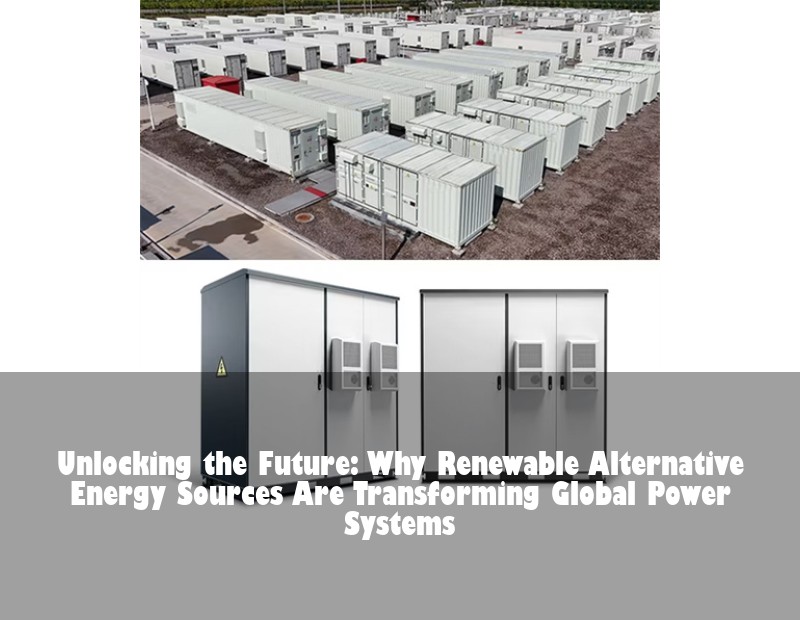
Now, let's address the elephant in the room: "But what happens when the sun doesn't shine?" Storage technology is rewriting the rules. Lithium-ion batteries have seen 85% cost reductions since 2013, while flow batteries now handle 10+ hour discharge cycles. At Solar Pro, we've witnessed how pairing solar with storage transforms outcomes:
- For homes: Storage cuts grid reliance by 70% during peak tariffs
- For businesses: Factories avoid €250,000+ in demand charges annually
- For grids: Storage smooths frequency fluctuations better than gas plants
Take Portugal's gigawatt-scale solar+storage farms – they've reduced curtailment losses by 92%, proving renewables can provide baseload power.
How Solar Pro Innovates for Tomorrow
Our AI-driven energy management systems tackle the intermittency challenge head-on. By predicting solar generation and consumption patterns, we boost self-consumption rates to 80%+. But technology is only half the battle. Installation quality determines system longevity. That's why our dual-glass panels come with 30-year performance guarantees – significantly longer than industry standards. Now, combining this with virtual power plant capabilities? That's where magic happens. Our Spanish customers already earn €0.15/kWh by feeding surplus energy into flexibility markets.

Quality installations extend system lifespans (Image: Pexels)
What's Your Energy Future?
As grid constraints emerge across Europe, the conversation is shifting from "if" to "how soon" renewable adoption occurs. So I'd love to hear from you: What barriers feel most daunting when considering solar+storage solutions? Is it upfront costs, regulatory complexity, or uncertainty about technology evolution? Drop us a line or join our monthly tech deep-dives where we tackle these questions live.
 Inquiry
 Online Chat