


Off Grid vs Hybrid Energy Storage Cabinet: Choosing Your Energy Independence Path
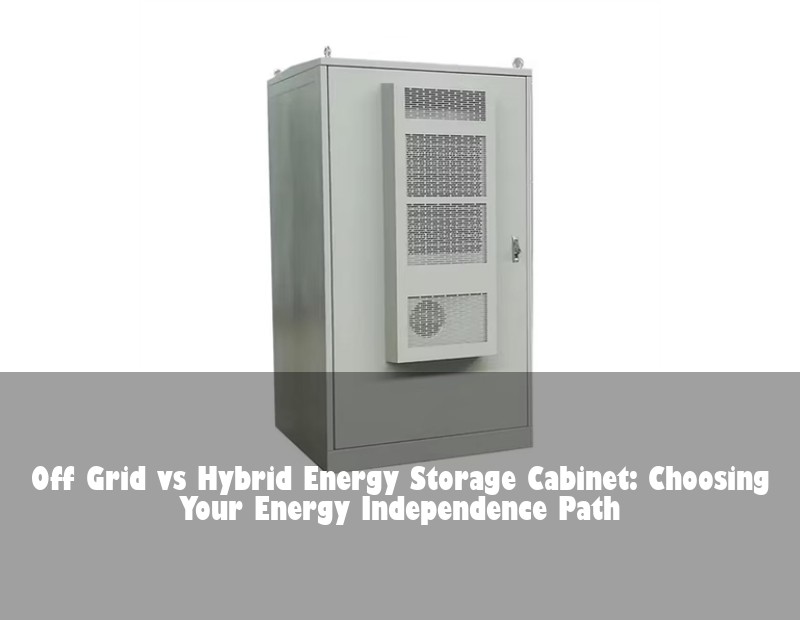
Table of Contents
- Europe's Energy Crossroads
- Off-Grid Energy Storage: Complete Autonomy
- Hybrid Energy Storage: Intelligent Grid Integration
- Technical Comparison: Off-Grid vs Hybrid Cabinets
- Real-World Case: Germany's Renewable Transition
- Key Selection Criteria for Your Project
- Emerging Innovations in Energy Storage
- Your Energy Independence Journey
Europe's Energy Crossroads: Why Storage Solutions Matter Now
It's a windless winter evening in Berlin, and grid prices suddenly spike by 300% due to supply shortages. Across Europe, businesses face similar volatility - 2022 saw electricity prices increase by 69% in Germany and 129% in Italy (Eurostat). This instability drives homeowners and businesses toward solar-plus-storage solutions. But here's the million-euro question: Should you choose complete independence with off-grid cabinets or balanced flexibility with hybrid systems? Let's illuminate your options.

Source: Professional solar installation in France (Unsplash)
Off-Grid Energy Storage Cabinets: Complete Energy Autonomy
Off-grid systems are the energy equivalent of a self-sustaining island. When our team deployed these in remote Swedish villages, they transformed communities:
- Battery banks typically range from 20kWh to 100kWh+ capacity
- Requires oversized solar arrays (30-50% larger than hybrid systems)
- Mandatory backup generators for extended low-sun periods
Consider Lars' dairy farm in northern Norway: "With zero grid access, our 48V off-grid cabinet runs milking machines 24/7. During the polar night, the generator kicks in automatically - but we've reduced diesel consumption by 80%." The trade-off? Higher initial costs but permanent freedom from utility bills and regulations.
Hybrid Energy Storage Cabinets: Intelligent Grid Integration
Hybrid cabinets act as energy orchestra conductors - seamlessly balancing solar, batteries, and grid power. Unlike off-grid systems, they maintain grid connection while prioritizing self-consumption. During my site visits to Spanish resorts, I observed their smart functionality:
- Dynamic energy routing based on electricity tariffs
- Grid support features like voltage stabilization
- 30-50% smaller battery banks than off-grid equivalents
Maria, a hotel owner in Andalusia, explains: "Our hybrid cabinet switches to battery power during peak rates, saving €400 monthly. When storms caused grid failures last winter, we had backup power without generator noise." The sweet spot? You maintain security while leveraging grid flexibility.
Technical Comparison: Off-Grid vs Hybrid Cabinets
| Feature | Off-Grid Cabinet | Hybrid Cabinet |
|---|---|---|
| Grid Connection | None | Bi-directional |
| Battery Sizing | 3-5 days autonomy | 0.5-2 days autonomy |
| Installation Cost | €15,000-€40,000 | €8,000-€25,000 |
| Grid Services | Not possible | Frequency regulation |
| Ideal For | Remote locations · Critical infrastructure | Urban homes · Businesses · Grid-tied systems |
Real-World Case: Germany's Renewable Transition
Let's examine Bavaria's energy cooperative project - a perfect hybrid implementation case. Facing frequent grid congestion, they installed 15 Solar Pro hybrid cabinets across village homes. The results after 18 months:
- Reduced grid imports by 92% during peak hours
- Collectively earned €2,300 monthly through frequency regulation
- Provided emergency power during 2023 flood blackouts
As cooperative leader Klaus Bauer noted: "We considered off-grid initially, but hybrid cabinets let us support the grid while being self-sufficient. The system paid for itself in 4 years through energy arbitrage alone." This demonstrates how hybrid solutions create value beyond simple backup.

Source: Renewable energy project in Bavaria (Unsplash)
Key Selection Criteria for Your Project
Through hundreds of installations, we've identified critical decision factors:
Location & Grid Reliability
Off-grid dominates in Scandinavia's remote areas where grid connection costs exceed €50/km. Conversely, hybrid systems shine in Central Europe where feed-in tariffs exist.
Regulatory Environment
Germany's EEG 2023 incentivizes hybrid systems through tax benefits. Always consult local regulations - they dramatically impact ROI.
Load Criticality
Medical facilities typically choose off-grid for absolute reliability. One Italian hospital's off-grid system maintained life support during a 72-hour blackout.
Emerging Innovations in Energy Storage
The landscape evolves rapidly. At last month's Energy Storage Europe conference, two developments stood out:
- AI-Powered Predictions: New hybrid cabinets forecast energy usage and weather patterns 48 hours ahead
- Modular Designs (like Solar Pro's FlexiStack): Start with 5kWh then expand as needs grow
According to IRENA's 2023 report, these innovations will reduce hybrid system costs by 33% by 2027. The future favors adaptable solutions.
Your Energy Independence Journey
We've navigated the technical terrain together - from complete off-grid autonomy to smart hybrid flexibility. But here's my final thought: Which energy challenge keeps you awake at night - unpredictable utility bills, grid instability, or carbon footprint concerns? Share your priority, and let's design your perfect storage solution. What's the first step you'll take tomorrow toward energy resilience?
 Inquiry
 Online Chat