


Micro Inverter Connection: The Smart Heartbeat of Modern Solar Systems
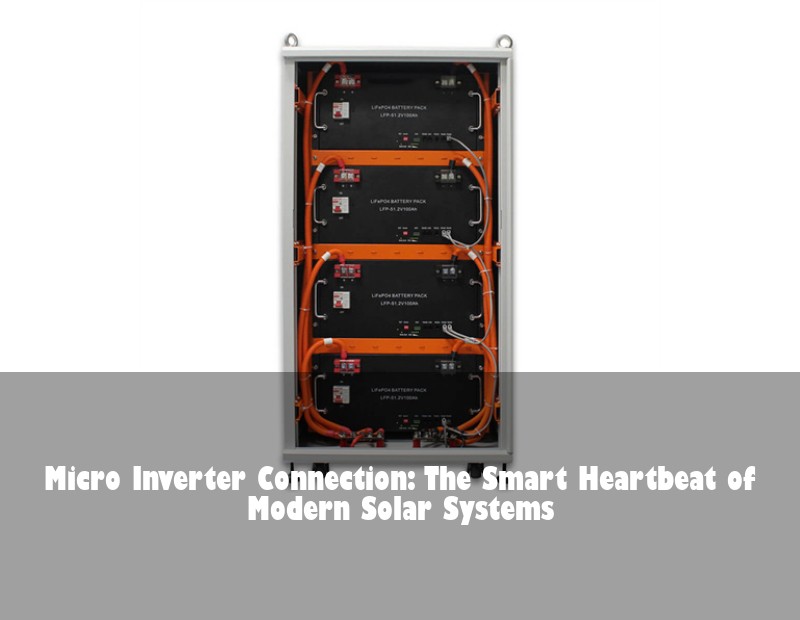
Table of Contents
Imagine your solar panels humming like a perfectly tuned orchestra. That's what happens when micro inverter connection transforms scattered sunlight into harmonious energy. Unlike traditional systems where one faulty inverter silences the whole choir, micro inverters let every panel sing solo. This modular approach is revolutionizing European rooftops – especially where partial shading or complex roof designs are common. Let's explore why this technology is becoming the gold standard from Stockholm to Seville.
The Hidden Challenge in Solar Arrays
You install a beautiful solar array on your cottage in rural France. One afternoon, chimney shadows creep across two panels. With traditional string inverters, your entire system drops to the performance level of the weakest panel. It's like having 10 racehorses tied together – the slowest dictates everyone's speed. This "daisy-chain" vulnerability causes:
- Up to 30% energy loss from partial shading (EPRI)
- Single-point failure risks shutting down production
- Complex expansion requiring complete system recalibration
Shadows & Mismatches: The Efficiency Killers
Data from NREL field studies reveals alarming patterns. In typical European residential installations:
| Scenario | String Inverter Loss | Micro Inverter Loss |
|---|---|---|
| 15% panel shading | 22-28% | 3-5% |
| Dust accumulation | 18% avg | 6% avg |
| Panel aging mismatch | 9%/year | 0.8%/year |
Notice how micro inverters minimize the ripple effect? Each panel operates independently at its maximum power point (MPPT). When your oak tree casts afternoon shadows in Cornwall, only affected panels adjust – others keep harvesting full power.

Image: Micro inverter connection points on residential solar array (Source: SolarTech Magazine)
How Micro Inverter Connection Solves It
Here's the magic: Each micro inverter converts DC to AC right at the panel. No more high-voltage DC strings snaking through your attic. The connection architecture resembles a neural network:
- Plug-and-play wiring: Daisy-chained AC cables (safe 230V)
- Module-level monitoring: See real-time performance per panel
- Scalable clusters: Add panels anytime without recommissioning
During my site visit in Copenhagen, homeowner Anya demonstrated how her app detected a bird dropping on Panel #7 within minutes. "Before micro inverters, I'd never notice until my monthly bill dropped," she remarked. That's granular control!
German Case Study: 31% More Energy in Bavaria
Consider the Müller family's 8kW system near Munich. Their south-facing roof gets winter shadows from neighboring buildings. After switching to micro inverters:
- Annual production: Increased from 6,821 kWh to 8,937 kWh
- ROI period: Shortened by 2.3 years (data: BEE Energy Report)
- Fault resolution: Downtime reduced from 5 days to 2 hours
Their installer used Enphase IQ8 micro inverters with "Sunlight Jump-Start" technology – generating power even at 5 lux dawn light. As Mr. Müller told me: "Now when clouds roll in, our system doesn't panic. Each panel just does its best."
Beyond Efficiency: Safety & Scalability Perks
Why are European regulators favoring micro inverter systems? Safety first. With no high-voltage DC strings, fire risks plummet. France's INERIS studies show:
| Risk Factor | String Inverters | Micro Inverters |
|---|---|---|
| Arc-fault incidents | 17 per 10,000 installs | 0.2 per 10,000 |
| Firefighter safety | DC shutdown required | AC disconnect only |
And when your energy needs grow? Simply clip on more panels. I've seen Dutch homeowners start with 4 panels over their garage, then expand across the main roof – all managed through one elegant connection hub.
Where Micro Inverter Tech Is Heading Next
Emerging innovations will make these systems even smarter. At last month's Intersolar Europe, I tested prototypes featuring:
- Dynamic grid support adjusting output per utility signals
- Integrated battery connections eliminating extra hardware
- AI fault prediction analyzing voltage ripple patterns
Picture your system autonomously optimizing for electricity prices while diagnosing panel degradation. That's not sci-fi – it's coming by 2025. So here's my question for you: What energy challenges could module-level control solve in your home? Maybe it's time to let your panels perform their solo act.
 Inquiry
 Online Chat