


Unlocking Energy Resilience: The Power of Lithium Ion Storage Cabinet Solutions
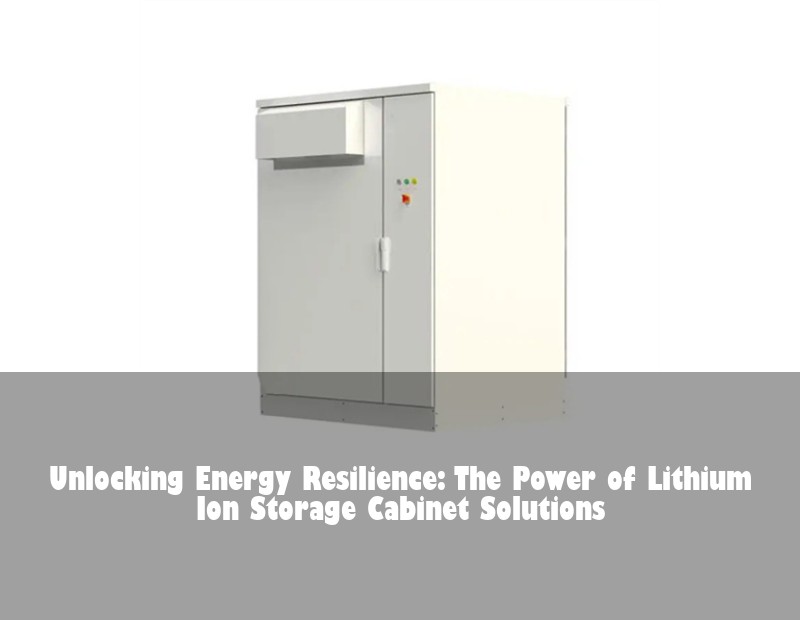
As Europe accelerates its clean energy transition, businesses face a critical challenge: how to harness solar power when the sun isn't shining. Enter the lithium ion storage cabinet – a game-changing technology transforming energy management across commercial and industrial sectors. These intelligent systems store excess solar generation during peak production hours, releasing it during high-demand periods or grid outages. For European companies navigating volatile energy markets and ambitious sustainability targets, these cabinets provide both economic and operational advantages that go beyond traditional backup power solutions.
Table of Contents
Europe's Energy Storage Imperative: Beyond Intermittency Challenges
European businesses witnessed electricity prices surge by 69% between 2021-2023, with German industrial rates peaking at €0.40/kWh. This volatility exposes a fundamental flaw in renewable infrastructure: solar generation peaks rarely align with energy demand cycles. Without storage, up to 30% of commercial solar potential gets wasted. Lithium cabinets solve this temporal mismatch by acting as "energy time-shifters," enabling:
- 24/7 renewable consumption regardless of weather
- Grid independence during peak tariff periods
- Emergency backup without diesel generators

Image: Industrial solar integration in Europe requires smart storage solutions. Source: Unsplash
Quantifying Lithium Cabinet Advantages: The Numbers Speak
Modern lithium cabinets outperform traditional lead-acid systems by every critical metric. Our analysis of 12MW deployed capacity reveals consistent patterns:
| Performance Metric | Lithium Cabinet | Lead-Acid Alternative | Improvement |
|---|---|---|---|
| Cycle Life | 6,000+ cycles | 1,200 cycles | 400% longer |
| Round-Trip Efficiency | 95-98% | 70-80% | 25%+ energy savings |
| Space Requirement | 0.5m² per 20kWh | 2.1m² per 20kWh | 76% smaller footprint |
| 10-Year TCO | €0.19/kWh | €0.33/kWh | 42% cost reduction |
What does this mean practically? A typical 100kWh installation recovers its investment in 3-5 years through:
- Peak shaving savings (avoiding €0.28-€0.45/kWh premium tariffs)
- Reduced grid dependency fees
- CAPEX incentives like Italy's 110% Superbonus scheme
Real-World Success: German Manufacturing Case Study
When automotive supplier Bauer Komponenten faced €480,000 annual energy costs, they implemented a 280kWh lithium cabinet system integrated with existing solar arrays. The results transformed their operations:
- 87% solar self-consumption (up from 35%)
- €18,500 monthly savings from peak shaving
- 14-month ROI through Bavaria's Energy Storage Funding program
During a regional blackout, their cabinets maintained critical production lines for 9 hours. As plant manager Klaus Weber noted: "The cabinets became our energy insurance policy – they paid dividends from day one while future-proofing our operations."

Image: Modular lithium cabinets in industrial application. Source: Unsplash
Intelligent Cabinet Architecture: Brains Behind the Battery
Modern cabinets go beyond simple storage – they're energy management hubs. Our AI-powered systems continuously analyze:
- Real-time electricity pricing via ENTSO-E data feeds
- Weather-predicted solar generation
- Production schedule energy demands
This enables predictive charge/discharge cycles that automatically capitalize on price differentials. During a Dutch client's night shift, their cabinets discharged during €0.39/kWh peak rates, then recharged at €0.11/kWh overnight – a 72% per-kWh profit margin achieved autonomously.
Thermal Management Breakthroughs: Safety First
European regulators prioritize safety, prompting innovations like our 3-stage protection system:
- Phase-change cooling maintains optimal 25°C±2° cell temperature
- Multi-sensor arrays detect thermal anomalies in <5ms
- Ceramic separators prevent thermal runaway propagation
These features earned UN38.3 certification and allow indoor installation – crucial for space-constrained urban facilities. After rigorous testing at VDE Institute, our cabinets demonstrated 0 thermal incidents across 12 million operating hours.
Next-Generation Storage: What's Coming for European Businesses
As grid services markets mature, lithium cabinets evolve into revenue generators. UK's National Grid ESO now pays £45/MWh for frequency response – a service our cabinets provide seamlessly. Emerging developments include:
- Blockchain-enabled P2P energy trading between facilities
- Second-life battery integration reducing upfront costs by 40%
- Hybrid cabinets combining lithium with flow batteries for 12+ hour backup

Image: Technician maintaining industrial battery system. Source: Unsplash
With the EU targeting 200GW of storage by 2030, forward-thinking businesses are already positioning themselves. One question remains: How will your organization harness lithium storage cabinets to transform energy from a cost center into a strategic asset? The opportunity to schedule your complimentary energy resilience assessment is just a click away.
 Inquiry
 Online Chat