


How Much Solar Energy Can Your Company Generate? A European Business Case Study
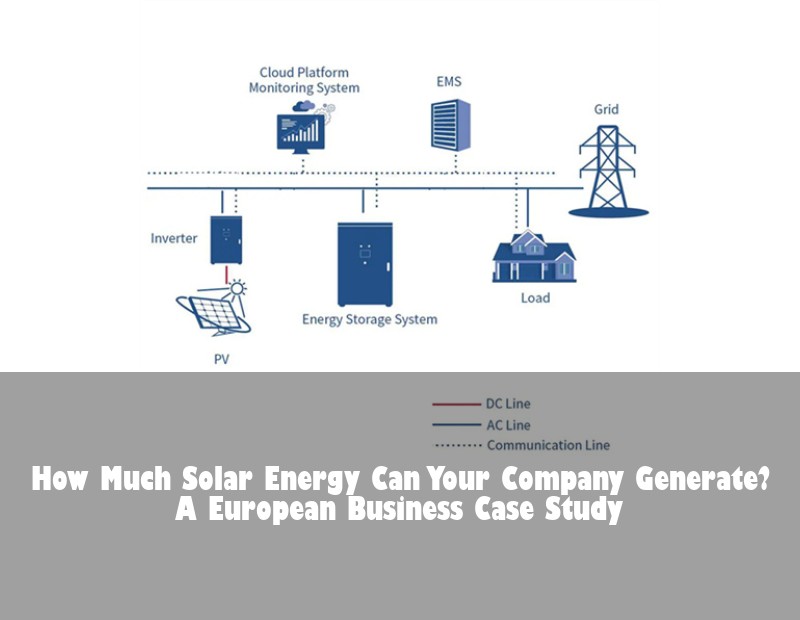
Table of Contents
The Untapped Solar Potential in European Business
Your company's empty rooftop silently baking under the European sun while your energy bills climb month after month. Across industries, forward-thinking businesses are asking: "How much solar energy could our company realistically generate?" The answer might surprise you. With Europe's commercial solar capacity growing at 23% annually (SolarPower Europe 2023), understanding your specific generation potential isn't just eco-conscious—it's becoming a competitive necessity.
 Image: Commercial solar installation in Hamburg (Source: Unsplash/Andreas Gücklhorn)
Key Factors Determining Your Solar Output
Your company's solar generation isn't guesswork—it's physics and geography. When we assess commercial potential, we examine:
- Location Intelligence: Southern Spain generates 40% more than Scotland due to irradiance differences
- Roof Real Estate: Every 1,000m² of usable space ≈ 150kW system capacity
- Technology Synergy: Modern bifacial panels boost output by 11-23% vs. conventional modules
- Consumption Patterns: Daytime energy usage dramatically impacts self-consumption rates
"But what about cloudy countries?" I hear you ask. Even Germany's moderate solar zones generate 950kWh/kWp annually—enough to power 300 laptops continuously per installed kW!
European Solar Generation Benchmarks
| Country | Avg. Annual Yield (kWh/kWp) | Commercial Payback Period | CO₂ Savings/100kW System |
|---|---|---|---|
| Spain | 1,600-1,800 | 4-5 years | 72 tonnes/year |
| Germany | 950-1,050 | 6-8 years | 53 tonnes/year |
| Netherlands | 900-980 | 7-9 years | 49 tonnes/year |
| UK | 850-950 | 8-10 years | 46 tonnes/year |
Source: European Commission PVGIS (2024 data)
Case Study: Solar Transformation at Schneider Electric's Le Vaudreuil Factory
Let's make this tangible. When Schneider Electric retrofitted their Normandy manufacturing plant in 2021, the numbers spoke volumes:
- System Size: 5,400 solar panels (1.8MW capacity)
- Annual Generation: 1.92GWh—equivalent to 500 French households
- Energy Independence: 25% of facility's consumption from solar
- Financial Impact: €220,000 annual savings despite Normandy's modest sunshine
Their secret? Intelligent energy management software that aligns production schedules with solar peaks. "Our solar installation became a strategic asset," notes plant manager Élodie Martin. "It's not just about sustainability—it's predictable energy costing in volatile markets."
 Image: Industrial solar integration (Source: Unsplash/American Public Power Association)
Maximizing Your Solar ROI: Beyond Basic Installation
Based on 120+ European commercial deployments, we've identified optimization levers most companies overlook:
The Generation Amplifiers
- Predictive Cleaning: Dust reduces output by 15-25%; IoT-enabled cleaning boosts ROI by 3.2%
- Dynamic Tilt Systems Adjustable mounts increase winter yield by 18% in Nordic regions
- Storage Synergy: Adding batteries increases self-consumption from 30% to 65%+
Consider Amsterdam's Edge Olympic headquarters: Their AI-driven system combines weather forecasts with meeting room bookings to pre-charge batteries before peak demand. The result? 89% solar self-consumption versus the Dutch average of 42%.
What's Your Company's Solar Potential?
Here's the exciting part: Solar technology has evolved faster than most business plans. What if your unused warehouse roof could become a revenue stream through EU power purchase agreements? Or if your solar installation could qualify for Italy's 110% Superbonus tax scheme?
I'll leave you with this: When Siemens Gamesa installed their 2.1MW system in Denmark, their CFO initially asked, "How much will this cost?" Within 18 months, the question became, "How soon can we expand?"
So, what's the first step your company will take to unlock its solar potential this quarter?
 Inquiry
 Online Chat