


How Much Solar PV Energy Can Your System Really Generate? A Practical Guide
Table of Contents
Key Factors Affecting Solar PV Energy Output
Ever wondered why your neighbor's solar panels seem more productive than yours? The answer lies in four critical variables:
- Location & Irradiation: Solar insolation varies dramatically across Europe - Southern Spain receives nearly double the annual sunlight of Scotland
- System Orientation (Azimuth): South-facing roofs at 30° tilt yield optimal results in most European latitudes
- Panel Efficiency: Modern monocrystalline panels convert 20-22% of sunlight vs. 15-17% for polycrystalline
- Environmental Factors: Temperature coefficients matter - panels lose 0.3-0.5% efficiency per °C above 25°C
Here's a quick reference for expected annual yields across Europe:
| Region | Avg. Annual Yield (kWh/kWp) | Peak Sun Hours |
|---|---|---|
| Southern Europe | 1,400-1,600 | 4.5-5.2 |
| Central Europe | 900-1,100 | 3.0-3.7 |
| Northern Europe | 700-900 | 2.3-3.0 |
Real European Case Study: Berlin Residential Installation
Let's examine actual performance data from a 7.4kWp system installed in Berlin (52°N latitude):
- System components: 18x 410W monocrystalline bifacial panels with microinverters
- Annual production: 7,200 kWh (973 kWh/kWp)
- Seasonal variance:
- June peak: 1,050 kWh
- December low: 210 kWh
The homeowner achieved 86% self-sufficiency despite Berlin's 1,650 annual sunshine hours - below the European average. How? Through smart load-shifting and battery scheduling verified by Fraunhofer Institute monitoring.
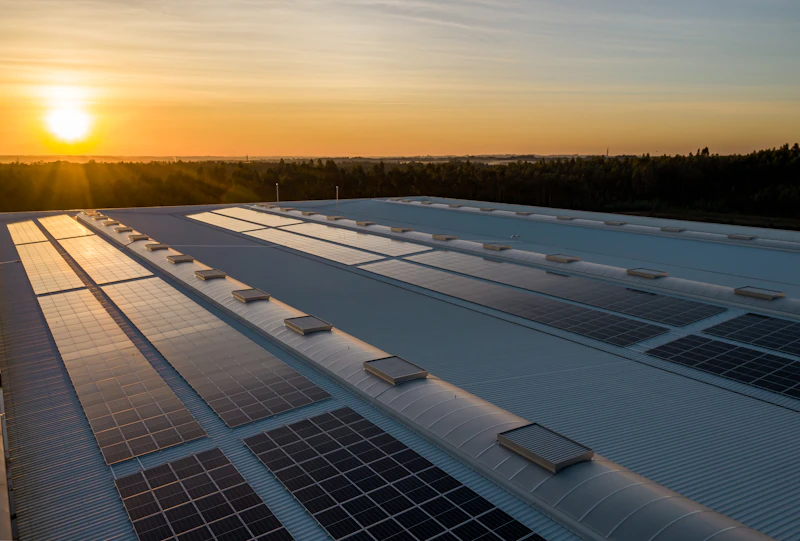 Image source: Unsplash - Professional energy monitoring system interface
How to Calculate Your Solar PV Energy Yield
Use this field-tested formula we recommend to European homeowners:
Annual Production (kWh) = System Size (kWp) × Peak Sun Hours × System Efficiency Factor
- Peak Sun Hours: Find your location's value via the EU PVGIS tool
- System Efficiency Factor (0.75-0.85): Accounts for:
- Inverter losses (4-8%)
- DC cable losses (1-3%)
- Soiling/dirt (2-5%)
- Age degradation (0.5%/year)
Example for Munich (1,150 sun hours):
5kWp system × 1,150 × 0.82 = 4,715 kWh/year
Optimization Strategies for European Climates
Based on our work with 200+ EU installations, maximize yields with these techniques:
- Winter optimization: Increase tilt angle by 10-15° over summer settings to capture low-angle sun
- Bifacial boost: Install panels 1m above light-colored roofs for 8-12% extra yield from reflected light
- Dynamic cleaning: Schedule post-pollen/post-sandstorm cleaning in Mediterranean regions
As our technical lead often says: "A well-optimized system in Hamburg can outperform a neglected one in Madrid" - we've seen this repeatedly in performance audits.
 Image source: Unsplash - Seasonal panel angle adjustment
The Evolving Landscape of Solar Energy in Europe
With new technologies emerging, what can we expect?
- Perovskite-silicon tandem cells (lab efficiency: 32.5%) entering commercial production
- AI-driven forecasting reducing energy waste by 12-18% in German pilot projects
- EU directive 2023/2413 mandating "solar-ready" buildings from 2025
These innovations promise to increase typical energy yields by 25-40% before 2030 according to IEA projections.
 Inquiry
 Online Chat