


How Much Solar Contactor: Your Guide to Cost-Effective System Protection
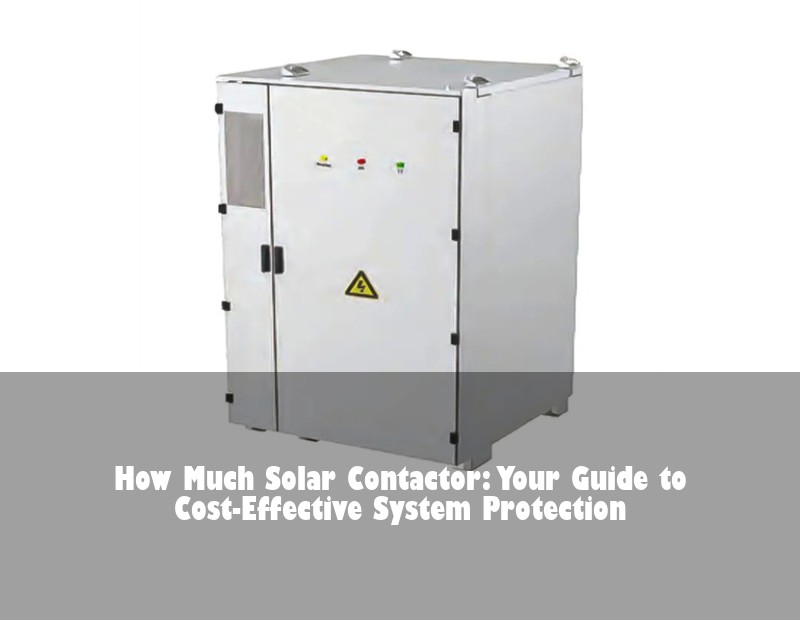
Table of Contents
- The Critical Role of Solar Contactors in PV Systems
- Understanding Solar Contactor Costs: Beyond the Price Tag
- Case Study: Optimizing Contactor Costs in a German Solar Farm
- Sizing Guide: How to Calculate Your Solar Contactor Needs
- Future-Proofing Your Investment: Smart Contactors & Cost Trends
- Take Action: What's Your Solar Contactor Strategy?
The Critical Role of Solar Contactors in PV Systems
Your solar array generates peak power on a sunny afternoon, but suddenly, your inverter shuts down. Why? Often, it's an undersized or failing solar contactor – the silent guardian of your PV system. These electromagnetic switches control current flow between panels, batteries, and inverters. When sized correctly, they prevent arc faults, reduce fire risks, and extend equipment lifespan. But how much solar contactor capacity do you actually need? The answer impacts both safety and your ROI.
 Image source: Photovoltaik.org - Typical contactor integration in grid-tied systems
Understanding Solar Contactor Costs: Beyond the Price Tag
Solar contactor pricing isn't just about the unit cost – it's a balance of specifications and long-term value. Here's what shapes the investment:
Key Cost Drivers
- Current Rating: 40A units start at €80, while 200A industrial models exceed €400
- Certifications: IEC 60947-4-1 compliant models cost 15-20% more but ensure EU compliance
- Smart Features: Contactors with IoT monitoring add €50-150 but reduce maintenance costs
- Environmental Rating: IP65-rated versions (for harsh climates) command 25% premiums
| Specification | Budget Range (€) | Premium Range (€) | Best For |
|---|---|---|---|
| 40-60A (Residential) | 80-120 | 150-220 | Home systems ≤10kW |
| 80-100A (Commercial) | 130-190 | 250-350 | Small businesses/warehouses |
| 150A+ (Industrial) | 240-400 | 450-700 | Utility-scale or storage-heavy systems |
Pro Tip: Oversizing contactors by 25% beyond nominal current reduces failure rates by up to 60% (IEA PVPS Report 2023). That upfront cost pays back in reduced downtime.
Case Study: Optimizing Contactor Costs in a German Solar Farm
When a 2MW solar farm near Munich experienced 12% annual downtime due to contactor failures, operators faced €18,000/year in lost revenue. The culprit? 100A contactors running consistently at 95% load capacity. Here's how they solved it:
Project Data & Outcomes
- Initial Setup: 22 x 100A standard contactors (€185/unit)
- Problem: 7 failures/year causing 42 hours downtime
- Solution: Upgraded to 150A smart contactors (€310/unit) with 30% derating buffer
- Results:
- Zero failures in 18 months
- ROI achieved in 14 months
- Remote diagnostics saved €5,200/year in service calls
This real-world example shows why how much solar contactor capacity you choose directly impacts operational costs. The sweet spot? 25-30% above peak operational current.
Sizing Guide: How to Calculate Your Solar Contactor Needs
Selecting the right contactor isn't guesswork – it's engineering. Follow this decision ladder:
Step-by-Step Calculation
- Measure Peak Current: (System kW × 1.25) / Operating Voltage
- Apply Safety Margin: Add 25% for surge protection
- Environmental Factors:
- High altitude? Derate by 1%/100m above 2000m
- Ambient >40°C? Add 15% capacity buffer
- Cycling Requirements: Frequent on/off cycles need heavy-duty models
Example: A 15kW UK home system at 230V:
Peak Current = (15,000W × 1.25) / 230V = 81.5A → Minimum contactor rating = 81.5A × 1.25 = 102A
Future-Proofing Your Investment: Smart Contactors & Cost Trends
The European market is shifting toward intelligent contactors. While they cost 20-30% more upfront, consider these advantages:
- Predictive maintenance alerts via integrated sensors
- Compatibility with V2G (vehicle-to-grid) systems
- 30% longer lifespan through adaptive load management
 Image source: SolarProfessional - Live monitoring interface for IoT contactors
With EU regulations pushing for smarter grid integration (see Clean Energy Package), investing in upgradable contactors now avoids costly retrofits later.
Take Action: What's Your Solar Contactor Strategy?
We've seen how proper sizing turns contactors from cost centers into reliability assets. But here's what I'm curious about: When you evaluate how much solar contactor capacity your next project needs, which factor will you prioritize – initial cost savings or long-term system resilience? Share your approach with our engineering team, and let's optimize your protection strategy together.
 Inquiry
 Online Chat