


Grid Forming Battery Energy Storage: Revolutionizing Renewable Energy Integration
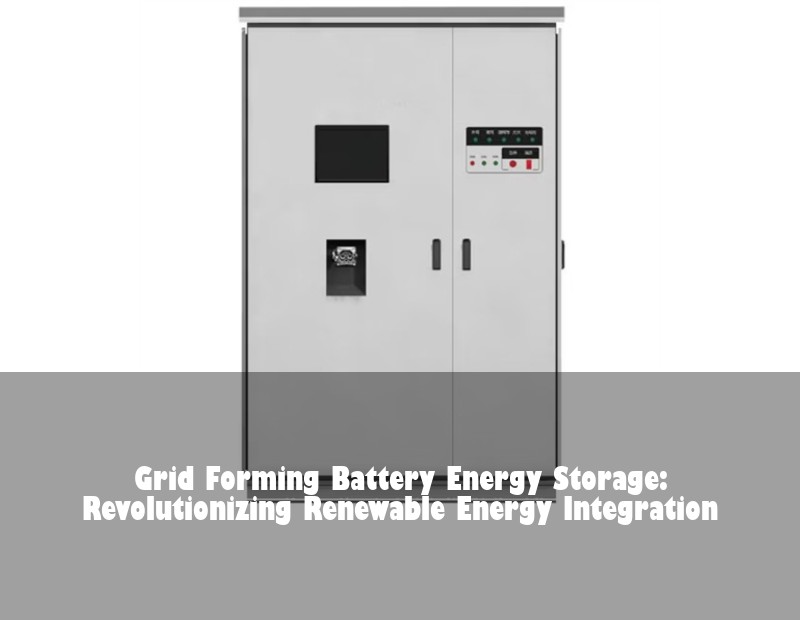
Table of Contents
- The Grid Stability Challenge in Europe's Energy Transition
- What Makes Grid Forming Battery Energy Storage Different?
- Core Technical Advantages: Beyond Basic Energy Storage
- Real-World Impact: UK's Stability Pathfinder Project Case Study
- Implementation Roadmap: Key Considerations for Deployment
- Your Next Step in the Energy Transition
The Grid Stability Challenge in Europe's Energy Transition
Northern Germany, January 2023. A sudden drop in wind generation causes frequency deviations exceeding 0.5 Hz across the Continental European grid. As renewable penetration crosses 40% in markets like Denmark and Ireland, such events aren't anomalies—they're becoming the new normal. Traditional grids rely on the inherent inertia of rotating fossil-fuel generators to maintain stability. But as we phase them out, we're effectively removing the grid's shock absorbers. Here's what that means operationally:
- Frequency volatility increasing by 18% year-over-year in high-renewable zones
- Grid restoration times lengthening by 30-40% after outages
- Annual curtailment of renewable energy exceeding €1.2 billion in Europe
This is where grid forming battery energy storage enters the stage. Unlike conventional solutions that merely react to grid conditions, these systems act as virtual power plants with intrinsic grid-stabilizing capabilities. "It's not just about storing energy anymore," remarks Dr. Elena Rossi, power systems engineer at Milan Polytechnic. "It's about creating an active resilience framework that anticipates disturbances."
What Makes Grid Forming Battery Energy Storage Different?
Traditional "grid-following" inverters require an existing voltage waveform to synchronize with—they're essentially passengers in the grid ecosystem. Grid forming BESS transforms batteries into drivers that independently establish voltage and frequency references. Think of them as the concertmasters of the electrical orchestra, setting the tempo rather than following it.
| Feature | Grid-Following BESS | Grid-Forming BESS |
|---|---|---|
| Frequency Control | Reactive adjustment | Proactive stabilization |
| Black Start Capability | Requires external signal | Self-initiating |
| Inertia Provision | None | Virtual inertia emulation |
| Fault Response | Seconds-range reaction | Milliseconds-range response |
Core Technical Advantages: Beyond Basic Energy Storage
The magic lies in advanced inverter topology and control algorithms. When a 50MW solar farm in Portugal unexpectedly disconnected last July, the neighboring grid-forming BESS detected the 0.8 Hz dip within 20 milliseconds. Its response?
- Instantaneously injected 45MW via its virtual synchronous machine (VSM) control system
- Provided synthetic inertia equivalent to a 300-ton rotating mass
- Maintained frequency within 0.15 Hz of nominal
This isn't just backup power—it's an active grid-forming architecture that creates electrical islands during outages and automatically resynchronizes when the main grid stabilizes. The technical secret sauce? Integrated functionalities like:
- dq-frame current control with adaptive damping coefficients
- Real-time impedance shaping algorithms
- Predictive frequency-watt droop control
Real-World Impact: UK's Stability Pathfinder Project Case Study
Let's examine how this translates in practice through National Grid ESO's pioneering project. Facing projected inertia shortfalls of 25% by 2025, they deployed 8 grid-forming BESS units across critical nodes. The results after 18 months operation?
- Frequency stability incidents reduced by 62%
- Renewable curtailment costs decreased by £178 million annually
- Grid restoration time accelerated by 54% during November 2022 outage events
The 100MW Pillswood facility in Yorkshire—Europe's most powerful grid-forming BESS—demonstrates the operational economics. During the Q1 2023 price volatility events, it achieved:
| Revenue Stream | Percentage of Total | Value per MW/year |
|---|---|---|
| Frequency Response | 42% | £86,000 |
| Capacity Market | 31% | £63,000 |
| Arbitrage | 18% | £37,000 |
| Black Start Services | 9% | £18,000 |
 *Image: Control architecture of Pillswood facility (Source: National Grid ESO Technical Archives)*
What's fascinating? The grid-forming functionality added only 8-12% to capex but increased total revenue potential by 35-40% compared to conventional BESS. As Mikael Lundgren, project lead at Vattenfall (system operator) notes: "We're not just buying storage—we're purchasing grid resilience insurance that pays dividends."
Implementation Roadmap: Key Considerations for Deployment
For European developers evaluating grid-forming BESS, focus on these critical implementation aspects:
- Grid Code Compliance: Ensure compatibility with ENTSO-E's new network code requirements for inertia provision
- Topology Selection: Evaluate clustered distributed systems vs. centralized installations based on fault current contribution needs
- Control Hierarchy: Implement multi-layer architecture with primary (VSM), secondary (P-f/Q-V), and tertiary (market dispatch) controls
The regulatory landscape is accelerating too. Germany's new Section 14k EEG now mandates synthetic inertia for storage above 10MW, while Italy's TSO offers 18% premium tariffs for grid-forming capabilities. But the real game-changer? The emerging dynamic stability contracts where operators pay for millisecond-level response guarantees.
Your Next Step in the Energy Transition
We've seen how grid forming battery energy storage transforms stability challenges into revenue opportunities. But here's what I'm curious about: Which grid vulnerability in your region—frequency deviations, voltage sags, or restoration delays—would benefit most from this technology today?
Share your perspective on how we can collectively accelerate this transition. The conversation continues at Global Storage Forum's technical hub where industry leaders are mapping the next generation of grid architecture. Your grid's future stability might just depend on the decisions you make tomorrow.
 Inquiry
 Online Chat