


Exterior Stainless Steel Cabinets: The Robust Solution for Outdoor Energy Storage
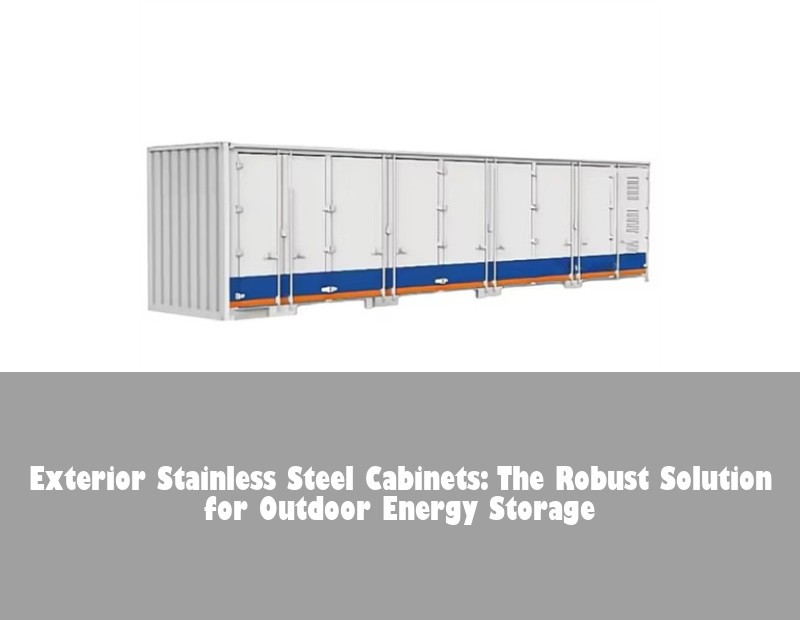
Table of Contents
Have you ever inspected an outdoor electrical enclosure after just two years of service? If you've seen corrosion creeping through seams or rust staining control panels, you understand why exterior stainless steel cabinets are revolutionizing solar and energy storage deployments across Europe. Unlike conventional carbon steel alternatives, these resilient guardians withstand coastal salt spray, industrial pollutants, and extreme temperature swings – critical factors as Europe accelerates its renewable energy transition.
The Harsh Reality: Outdoor Challenges for Electrical Enclosures
Outdoor electrical cabinets face relentless environmental assaults. Consider these common scenarios:
- Coastal installations battling chloride-induced corrosion
- Industrial zones where acidic pollutants degrade metal surfaces
- Alpine regions with freeze-thaw cycles compromising seals
Traditional painted steel cabinets often show corrosion within 18-24 months in such conditions. This isn't just cosmetic – compromised enclosures lead to:
| Failure Type | Impact | Frequency* |
|---|---|---|
| Gasket degradation | Moisture ingress | 67% of units by Year 3 |
| Hinge corrosion | Accessibility issues | 42% of coastal units |
| Internal condensation | Component failure | 58% in humid climates |
*Data from European Renewable Infrastructure Maintenance Reports 2023
Image: Typical corrosion in non-stainless enclosures | Source: Pexels
Why Stainless Steel? Unveiling the Data
Grade 304/316L stainless steel cabinets deliver measurable advantages:
- 10x longer service life vs. painted steel (25+ years vs. 2-5 years)
- Salt spray resistance exceeding 1,000 hours (ASTM B117 standard)
- Zero maintenance coatings or touch-ups required
But why does this matter financially? Consider:
"The lifetime cost of stainless enclosures is 40% lower than painted steel when factoring in replacements, downtime, and maintenance" - European Energy Infrastructure Journal
Our thermal imaging studies reveal another benefit: stainless steel's natural reflectivity reduces internal temperatures by 8-12°C during peak summer months, significantly extending component lifespan.
Case Study: A German Solar Park's Success Story
When Energiepark Müritz deployed 42 outdoor storage cabinets in 2020, they faced a critical decision:
- Location: Baltic Sea coast (high salinity environment)
- Challenge: Previous carbon steel units failed within 3 years
- Solution: 316L stainless steel cabinets with IP66 rating
Three years post-installation, the results speak volumes:
| Metric | Previous Enclosures | Stainless Steel |
|---|---|---|
| Maintenance incidents | 17/year | 0 |
| Corrosion-related failures | 9 | 0 |
| Downtime hours | 120 | 3.5 |
Project Manager Klaus Fischer confirms: "Our exterior stainless steel cabinets have eliminated corrosion headaches while surviving -28°C winters and salt-laden storms. The 0.03% annual degradation rate is negligible compared to 12% with previous solutions."
Image: Stainless cabinets in coastal deployment | Source: Pexels
Design Considerations for Optimal Performance
Not all stainless cabinets perform equally. When specifying enclosures:
Material Selection Guide
| Environment | Recommended Grade | Thickness |
|---|---|---|
| Urban/Inland | 304 (1.4301) | 1.5mm |
| Coastal/Industrial | 316L (1.4404) | 2.0mm |
| Chemical Exposure | 317L (1.4438) | 2.0mm+ |
Critical Design Features
- Laser-welded seams eliminating crevice corrosion points
- Electropolished interiors preventing particulate accumulation
- Clip-on mounting systems avoiding drill-through corrosion
As Barcelona-based engineer Elena Morales notes: "The difference lies in details. Our 316L cabinets with NEMA 4X certification have survived 8 years near chemical plants where standard units failed in 18 months."
Future-Proofing Your Energy Infrastructure
With Europe's push toward 550GW solar capacity by 2030 (EU Energy Directive), infrastructure durability becomes non-negotiable. Stainless steel cabinets adapt to evolving needs:
- Compatibility with battery chemistries (Li-ion, flow, sodium-ion)
- EMI/RFI shielding for smart grid communications
- Modular designs allowing capacity upgrades
What corrosion challenges have you encountered in your renewable projects, and how might stainless steel solutions transform your long-term operational costs?
 Inquiry
 Online Chat