


Overcoming Energy Storage Challenges in the Global Renewable Transition
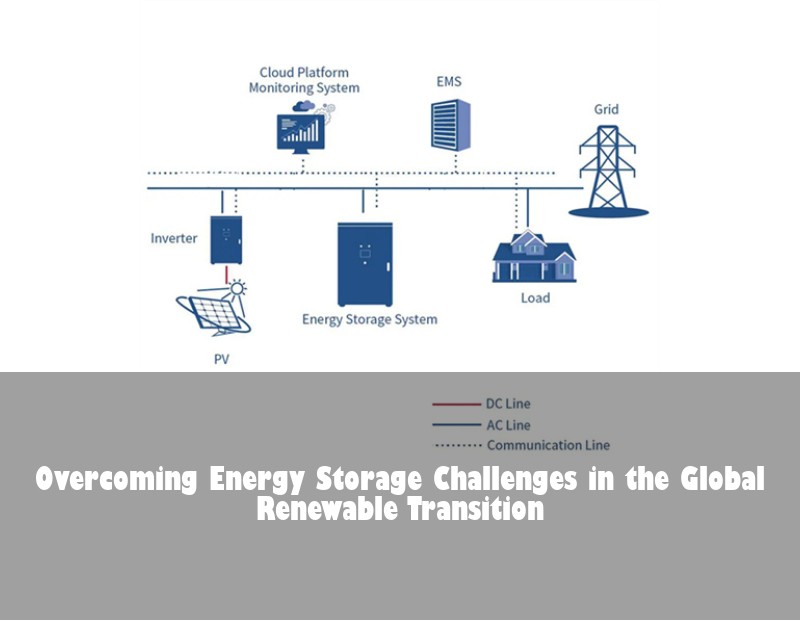
Table of Contents
The Grid Strain Phenomenon
Ever wondered why your solar panels sometimes generate power that never reaches your appliances? That's the heart of today's energy storage challenges. As Europe accelerates its renewable adoption, we're seeing a peculiar paradox: solar farms curtailing production during peak sunshine while conventional plants ramp up at dusk. This mismatch isn't just inefficient—it strains grid infrastructure and increases carbon emissions.

Image source: Pexels - Solar farm grid connection
Europe's Storage Gap: By the Numbers
Consider these revealing statistics:
- EU solar generation grew 24% YoY in 2023 (SolarPower Europe)
- Yet curtailment costs exceeded €800 million in Germany alone
- Current EU storage capacity: ~60 GWh vs estimated 2030 need: 200 GWh (Aurora Energy Research)
The data paints a clear picture: without addressing storage bottlenecks, renewable potential remains untapped. As one grid operator told me, "We're building highways with no parking lots."
Case Study: Germany's Balancing Act
Let's examine Bavaria—a solar powerhouse with 12.5 GW installed capacity. In 2023, they faced a critical juncture:
| Challenge | Impact | Solution Deployed |
|---|---|---|
| Midday solar surplus | 7.2% annual curtailment | Distributed battery networks |
| Evening demand spike | Coal plant reactivation | Virtual power plants (VPPs) |
By implementing 1.2 GWh of community-scale storage (Fraunhofer ISE data), Bavaria reduced curtailment by 41% within 18 months. Their secret? Three-layer storage architecture:
- Residential Powerwalls for rooftop solar
- Industrial flow batteries at substations
- Pumped hydro for seasonal balancing
Next-Gen Storage Solutions
While lithium-ion dominates headlines, innovation is accelerating:

Image source: Pexels - Battery storage maintenance
Emerging Technologies
- Solid-state batteries: 2x energy density (projected 2026 deployment)
- Iron-air systems: 100-hour duration at $20/kWh (Form Energy trials)
- Thermal storage using molten silicon (15x density of lithium)
"The real game-changer," notes Dr. Elena Schmidt of TU Munich, "is hybrid systems that combine multiple technologies to match discharge duration with specific grid needs."
Policy as a Catalyst
Regulation remains both barrier and accelerator. Spain's recent simplification of storage permitting saw project applications jump 300% in Q1 2024. Contrast this with France's delayed grid codes still classifying storage as "generation" rather than flexibility assets. The lesson? Policy frameworks must evolve faster than technology.
The Economic Imperative
Consider this comparison of storage ROI in different markets:
| Market | Payback Period (2022) | Payback Period (2024) |
|---|---|---|
| UK | 9.2 years | 6.8 years |
| Italy | 7.5 years | 5.1 years |
| Netherlands | 10.1 years | 7.3 years |
Falling battery costs (33% since 2020) and dynamic pricing are transforming economics. As our Solar Pro clients in Italy discovered, stacking revenue streams—frequency regulation + peak shaving + capacity markets—can boost returns by 40% versus single-use models.
So here's my question to you: What storage pain points keep you awake at night, and how might rethinking system architecture turn those challenges into competitive advantages?
 Inquiry
 Online Chat