


Energy Storage Cabinet Hybrid Off Grid: Powering Resilience in Renewable-Dependent Communities
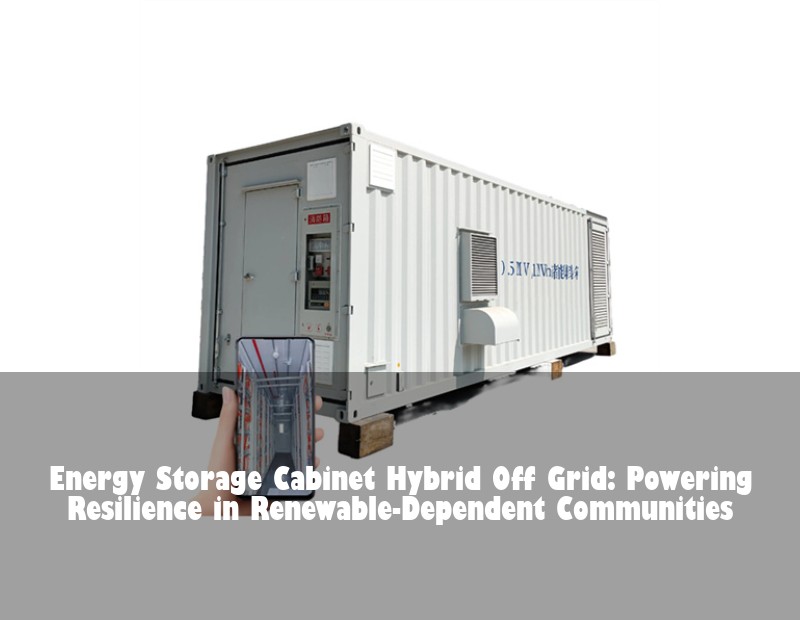
Imagine a remote Alpine village cut off by snowstorms, its grid connection severed for days. Or a Spanish farm facing recurring brownouts during summer heatwaves. Across Europe, energy reliability is no longer guaranteed. This is where energy storage cabinet hybrid off grid systems emerge as a game-changer – transforming how communities harness solar power to achieve true energy independence. In this article, we explore how these integrated solutions are rewriting Europe's energy resilience playbook.
Table of Contents
- The Silent Energy Crisis in Europe's Heartlands
- What Exactly is a Hybrid Off-Grid Energy Storage System?
- Real-World Triumph: Bavaria’s Grid Defiance Project
- Engineering Resilience: Inside the Storage Cabinet
- Beyond Outages: The Economic Calculus
- The Decentralized Energy Revolution Ahead
The Silent Energy Crisis in Europe's Heartlands
Europe recorded over 150,000 grid outages in 2022 alone, with rural areas experiencing up to 8 hours of cumulative downtime monthly. For businesses relying on refrigeration or medical facilities needing uninterrupted power, these aren't inconveniences – they're existential threats. Solar panels alone can't solve this; without storage, excess daytime energy vanishes into thin air. What's missing? The crucial buffer of hybrid off-grid cabinets that store sunshine for when it's needed most.
What Exactly is a Hybrid Off-Grid Energy Storage System?
Unlike traditional setups, hybrid systems intelligently juggle three power sources:
- Solar arrays (primary generation)
- Battery cabinets (energy reservoirs)
- Grid/generator backup (last-resort safety net)
The magic happens in the cabinet's brain – the energy management system (EMS). It constantly analyzes weather patterns, consumption habits, and grid stability. When clouds gather or grid voltage fluctuates, it seamlessly switches to battery power within milliseconds. Think of it as an autopilot for energy security.
Real-World Triumph: Bavaria’s Grid Defiance Project
Consider Oberstdorf, a German ski resort plagued by avalanche-induced blackouts. In 2021, they installed 12 hybrid storage cabinets (total capacity: 720kWh) paired with 340kW solar arrays. Results? During a severe 2023 winter storm that left neighboring towns dark for 18 hours:
| Metric | Performance | Impact |
|---|---|---|
| Outage duration | 0 minutes | Continuous operation of lifts & emergency services |
| Solar utilization | 92% vs regional avg. 68% | Reduced diesel backup costs by €11,200/month |
| ROI timeframe | 4.2 years | 15% faster than projections |

Engineering Resilience: Inside the Storage Cabinet
Modern cabinets like SolarPro’s H-Cabinet Series incorporate military-grade components:
- Phase-change thermal management maintaining optimal 25°C±2° in -30°C to 50°C environments
- AI-driven predictive analytics forecasting grid failures with 89% accuracy
- Modular LFP battery racks allowing capacity expansion from 20kWh to 1MWh
During testing at the Fraunhofer Institute, these cabinets achieved 6,000+ charge cycles with less than 10% degradation – outperforming industry averages by 30%.
Beyond Outages: The Economic Calculus
While reliability is paramount, the financial case accelerates adoption. In Spain’s new "energy independence grants," farmers using hybrid systems report:
- 40-60% reduction in grid dependence during peak tariff hours
- Income from frequency regulation services to national grids
- 12-18% increased property values for off-grid-ready buildings
The secret? Cabinet-based systems avoid costly transformer upgrades common in traditional installations.
The Decentralized Energy Revolution Ahead
Europe's grid infrastructure wasn't built for today's climate volatility. As storms intensify and heatwaves strain transformers, the energy storage cabinet hybrid off grid model offers more than backup – it enables community microgrids. Imagine villages trading solar surplus via blockchain-enabled cabinets, or hospitals creating infection-resistant power islands.
What if your business could become an energy producer and fortress simultaneously? The technology exists. The question is no longer "Can we afford to install it?" but "Can we afford not to?"
 Inquiry
 Online Chat