


The Evolving Landscape of Energy Service Companies in Europe's Renewable Revolution
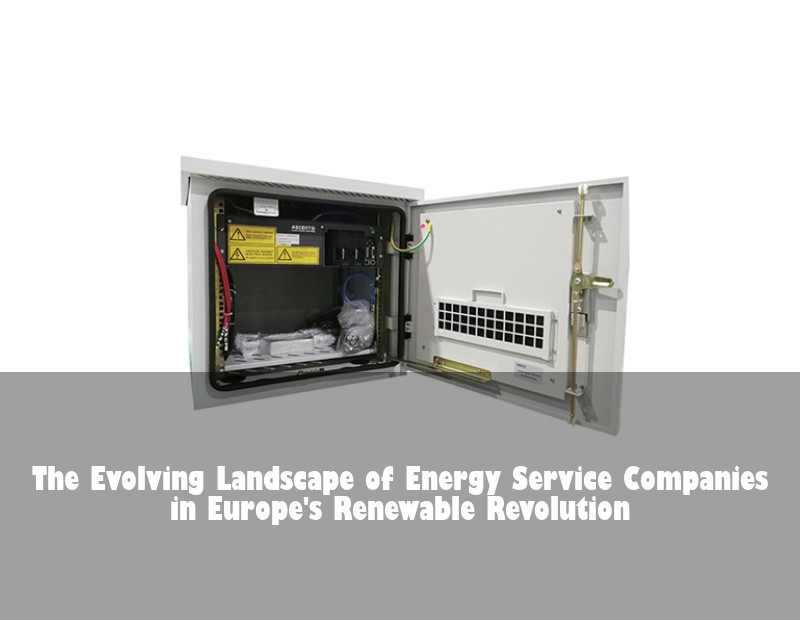
Table of Contents
The Energy Trilemma: Challenge or Opportunity?
A manufacturing plant manager in Germany stares at Q4 energy bills showing a 62% year-on-year increase. Across Europe, energy service companies (ESCOs) are fielding similar distress calls as businesses grapple with what we call the "Energy Trilemma" - balancing cost security, sustainability mandates, and grid reliability. The European Federation of Energy Service Companies reports ESCO market growth exceeding 12% annually since 2020, proving businesses aren't just complaining; they're actively seeking solutions. But here's what we've observed: Traditional energy management approaches are hitting diminishing returns. The real game-changer? Integrating solar generation with intelligent storage systems.

Image: Modern energy management requires smart monitoring. Credit: Unsplash
Solar + Storage: The New Arsenal for Energy Service Companies
Why are leading ESCOs making solar-storage hybrids their flagship offering? Three reasons:
- Demand Charge Slashing: Storage shaves peak consumption by 40-70%, directly attacking the costliest portion of commercial bills
- Grid Independence: Spanish factories using solar+storage maintained operations during 2022 grid instability events when competitors shut down
- Revenue Stacking: UK ESCOs now earn £58/MWh through frequency response markets while serving primary clients
We've moved beyond simple payback calculations. The most sophisticated models now evaluate:
| Metric | Solar Only | Solar+Storage |
|---|---|---|
| Cost Reduction | 25-40% | 45-75% |
| Carbon Reduction | 30-50% | 70-90% |
| Grid Service Revenue | None | £9-£22/kW/year |
Barcelona's Solar Transformation: A Blueprint for Success
Consider Ca l'Alier, Barcelona's innovation hub. Facing €280,000 annual energy costs and 2030 carbon neutrality mandates, they partnered with Catalan ESCO Ecoserveis. The solution:
- 863 bifacial solar modules (412 kWp)
- 564 kWh lithium-iron phosphate storage
- AI-driven energy management system
Results? A 78% reduction in grid dependence and €189,000 annual savings - achieved through EU-backed energy performance contracting. Project manager Clara Montellà reflects: "The storage component turned our solar installation from a cost-saver to a revenue generator through grid services. That transformed the ROI timeline."
Financial Models Driving ESCO Adoption
How are European ESCOs overcoming capital barriers? Three innovative approaches:
- Shared Savings Models: ESCOs fund 100% of installations, recovering costs through achieved savings (typically 50/50 split)
- PPA 2.0: Solar-as-a-service contracts with integrated storage services, like Amsterdam's Zonnepark Ruigoord
- Carbon Monetization: Bundling verified carbon offsets with energy savings certificates
At Solar Pro, we've seen French ESCOs using these models reduce client payback periods from 7+ years to under 4 - making sustainability financially inevitable rather than just desirable.
Navigating Implementation Roadblocks
During a recent Munich project, we encountered three common ESCO challenges:
- Regulatory Hurdles: German Doppelbelastung (double taxation) on stored solar energy
- Interconnection Delays: 9-14 month wait times in Italy's congested grid regions
- Technology Misalignment: Mismatched discharge rates between solar production and industrial processes
Our solution? The "3D Assessment Framework": Demand profiling (load patterns), Duration analysis (storage discharge requirements), and Dynamic tariff modeling. This pre-engineering approach prevents 80% of integration issues.
Your Next Energy Innovation
Fellow energy professionals, as you look at your project pipeline, consider this: Which client's energy profile could benefit most from transforming solar generation from a passive asset into an active grid participant? The factories calling you tomorrow won't ask for solar panels - they'll ask for energy certainty. How will your ESCO deliver it?
 Inquiry
 Online Chat