


Unlocking Grid Potential: The Strategic Value of Energy Communication Units in Solar-Storage Systems
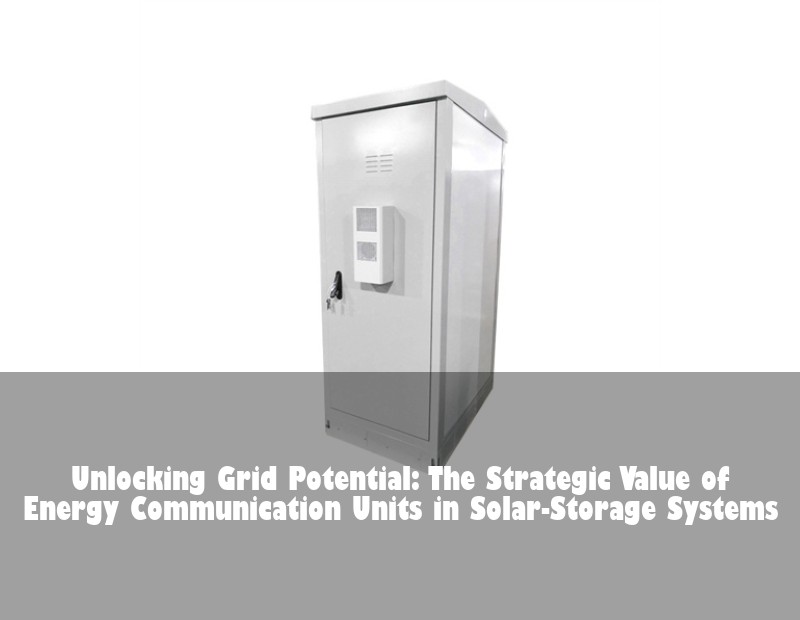
Table of Contents
- The Silent Grid Challenge: When Solar Meets Legacy Infrastructure
- Quantifying the Communication Gap: Europe's Energy Transition Reality
- Energy Communication Units: The Nervous System of Modern Energy Assets
- Case Study: Grid Stability in Bavaria Through Intelligent Communication
- 5 Critical Capabilities Your Energy Communication Unit Must Deliver
- Beyond Monitoring: The Evolving Role of Communication Units in Energy Markets
- What Communication Barriers Is Your Energy Project Facing Today?
The Silent Grid Challenge: When Solar Meets Legacy Infrastructure
Your solar panels produce abundant energy during peak sunlight, but your battery system remains half-charged while grid operators struggle with local voltage fluctuations. This frustrating scenario plays out daily across European solar installations. Why? Because energy communication units – or their absence – determine whether renewable assets operate as isolated generators or intelligent grid partners.

Image source: Unsplash - Grid modernization requires intelligent communication layers
Quantifying the Communication Gap: Europe's Energy Transition Reality
Consider these operational realities facing European solar-storage projects:
- 42% of grid constraint events trace back to communication failures between DERs and control centers (ENTSO-E 2023)
- Projects with advanced communication units achieve 18% higher revenue through ancillary services participation
- Communication latency exceeding 500ms can reduce battery response effectiveness by up to 60%
| Communication Capability | Revenue Impact | Grid Support Score |
|---|---|---|
| Basic Monitoring | €0-2k/year | 2.1/10 |
| Protocol Translation (SunSpec/Modbus) | €4-7k/year | 5.8/10 |
| Dynamic Grid Response (IEC 61850) | €12-18k/year | 9.3/10 |
Energy Communication Units: The Nervous System of Modern Energy Assets
An energy communication unit acts as your project's central nervous system, performing three transformative functions:
- Protocol Translation: Breaking down language barriers between inverters, batteries and grid operators
- Cybersecurity Enforcement: Implementing IEC 62443 standards at the edge
- Decision Intelligence: Local processing for sub-second response to grid signals
Think of it as a multilingual diplomat with lightning-fast reflexes – ensuring your solar investment speaks the right language at the right time.
Case Study: Grid Stability in Bavaria Through Intelligent Communication
When the Bavarian town of Pfaffenhofen faced recurring voltage spikes from its 23MW solar portfolio, the solution wasn't more hardware – it was smarter communication. By deploying energy communication units with dynamic voltage regulation capabilities:
- Reduced grid intervention events by 89% within 6 months
- Enabled participation in Bayernwerk's reactive power market (generating €142,000 annual revenue)
- Cut communication latency from 1.2 seconds to 180ms
"The communication units transformed our solar farms from passive generators to active grid partners," noted the project's technical director. "We're now compensated for solving grid issues we previously caused."
5 Critical Capabilities Your Energy Communication Unit Must Deliver
Not all communication units are created equal. For European projects, prioritize these non-negotiables:
- Multi-Protocol Support: Native compatibility with SunSpec, Modbus, DNP3, and IEC 61850-90-7
- Cybersecurity Certification: IEC 62443-4-2 compliance with hardware security modules
- Latency Performance: <250ms round-trip communication for frequency response
- Edge Intelligence: Local processing for autonomous grid code compliance
- Future-Proof Architecture: Field-upgradable for upcoming standards like IEC 63134
Beyond Monitoring: The Evolving Role of Communication Units in Energy Markets
As European grid codes evolve, communication units are becoming revenue engines. Consider these emerging opportunities:
- Participation in automatic frequency restoration reserves (aFRR) requiring <500ms response
- Dynamic tariff optimization through direct exchange with utility data hubs
- Blockchain-enabled P2P trading through Energy Web's decentralized protocols
The next-generation energy communication unit won't just report data – it will negotiate energy contracts on your behalf.
What Communication Barriers Is Your Energy Project Facing Today?
As grid operators from Germany's Bundesnetzagentur to Italy's Terna implement stricter communication requirements, how will your solar-storage system demonstrate compliance while maximizing revenue? Could your current communication architecture be limiting your project's financial potential and grid value? The conversation starts with understanding what your energy assets need to say – and how quickly they need to say it.
 Inquiry
 Online Chat