


EMS Smart Grid: How Much Does It Cost and Why It's Worth It?
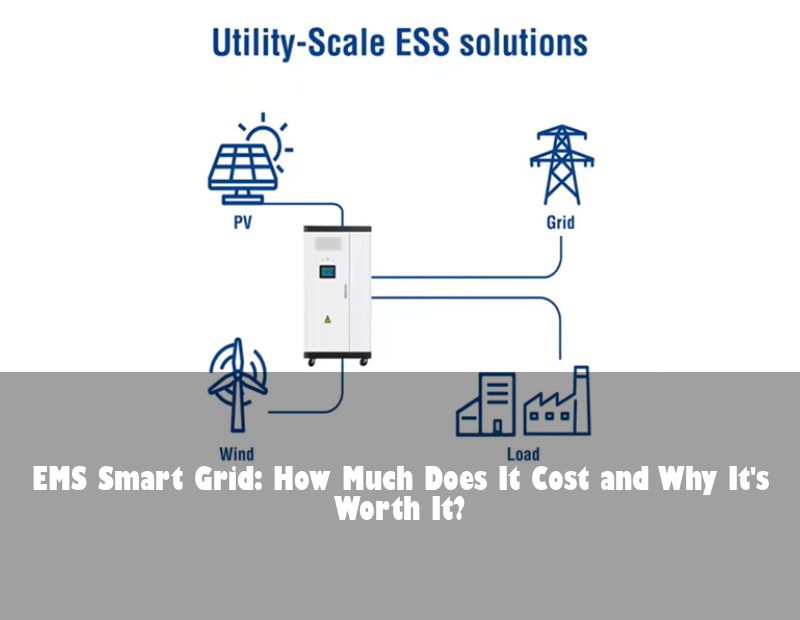
Table of Contents
- The Energy Challenge: Why Europe Needs Smarter Grids
- Cost Breakdown: What Goes Into an EMS Smart Grid Investment
- Real-World Proof: Germany's Enera Project Case Study
- Beyond Price Tags: The Hidden ROI of Smart Energy Management
- Future-Proofing: How Grid Tech Evolves (And What It Means for Costs)
- Your Energy Future: What's the First Question You Should Ask?
The Energy Challenge: Why Europe Needs Smarter Grids
It's a windless winter evening across Europe. Millions switch on heaters simultaneously, while solar panels lie dormant. Traditional grids strain under the load, risking blackouts. This isn't hypothetical – in 2022, European grid operators reported 27% more near-overload incidents than pre-pandemic levels. The culprit? Our outdated energy infrastructure struggles with renewable volatility and rising demand. That's where Energy Management Systems (EMS) transform passive grids into intelligent networks. But when considering this upgrade, the burning question is: EMS smart grid - how much investment does it really require?
Cost Breakdown: What Goes Into an EMS Smart Grid Investment
Let's demystify the pricing. A comprehensive EMS smart grid isn't a single product – it's an ecosystem. Typical components include:
- Hardware (40-60% of total cost): Smart meters, sensors, controllers, and communication nodes
- Software Platform (20-30%): AI analytics, forecasting engines, and user interfaces
- Integration & Deployment (15-25%): Grid retrofitting and workforce training
| System Scale | Avg. Installation Cost | Key Functionality |
|---|---|---|
| Residential (Single Home) | €2,000 - €5,000 | Basic load shifting + solar optimization |
| Commercial (Medium Business) | €15,000 - €50,000 | Demand response + tariff optimization |
| Municipal (10,000+ households) | €1M - €5M+ | Grid balancing + renewable integration |
Notice how costs per user decrease dramatically at scale? That's why community projects often deliver the best value. But hardware is just the entry ticket – the real magic happens in operational savings.
Image: Modern grid control center monitoring renewable integration (Source: Unsplash/Photographer: American Public Power Association)
Real-World Proof: Germany's Enera Project Case Study
Let's examine concrete evidence from Northwest Germany. The Enera Project (2017-2021) deployed an EMS across 3 regions handling 7.5TWh annually. Their €62M investment included:
- 11,000 smart sensors
- AI-driven forecasting platform
- Real-time pricing for 45,000 customers
The results? Within 18 months:
- ⚡ 22% reduction in grid congestion costs
- 🌿 17% higher wind energy utilization
- 💶 €8.3M annual savings from avoided infrastructure upgrades
As project lead Dr. Anja Weidlich noted: "The EMS paid for itself in 4.2 years – faster than any traditional grid reinforcement." This demonstrates how upfront costs translate into long-term resilience. Fraunhofer ISE's analysis confirms such projects typically achieve ROI within 3-7 years in European climates.
Beyond Price Tags: The Hidden ROI of Smart Energy Management
When evaluating "how much", consider these often-overlooked returns:
- Dynamic Pricing Benefits: Spanish households using EMS-adjusted consumption save 23% on bills by avoiding peak rates
- Grid Stability Value: UK's National Grid pays €65/MWh for frequency response – income stream for EMS participants
- Carbon Accountability: Swedish municipalities reduced emissions by 14% through EMS-optimized district heating
Think of EMS as both a shield against price volatility and a tool for sustainability compliance – especially relevant with EU's updated energy labeling requirements.
Future-Proofing: How Grid Tech Evolves (And What It Means for Costs)
Remember when solar inverters cost 3x today's prices? EMS follows similar curves. Three developments are reshaping cost structures:
- AI Democratization: Cloud-based machine learning has slashed software costs by 40% since 2020
- Modular Hardware (like Solar Pro's Stackable Grid Nodes): Pay-as-you-grow systems reduce initial outlay
- Regulatory Support: France's Energy Regulatory Commission now offers €200/kW for EMS-enabled demand response

Image: Technician installing upgradable grid modules (Source: Unsplash/Photographer: Science in HD)
The key insight? Don't view EMS as a static purchase – it's an evolving asset that gains value through software updates and market participation.
Your Energy Future: What's the First Question You Should Ask?
We've explored costs from component-level details to continental success stories. Yet the most important question isn't "how much does it cost?" but rather: What energy future do you want to build? When Danish island Samsø installed their EMS, they didn't just calculate euros – they considered energy independence and climate resilience. As you contemplate your next step, ask yourself:
Which energy challenge – whether price volatility, sustainability goals, or grid reliability – keeps you awake at night? How might an intelligent EMS turn that concern into competitive advantage?
 Inquiry
 Online Chat