


EirGrid Smart Grid Dashboard: Transforming Renewable Energy Management
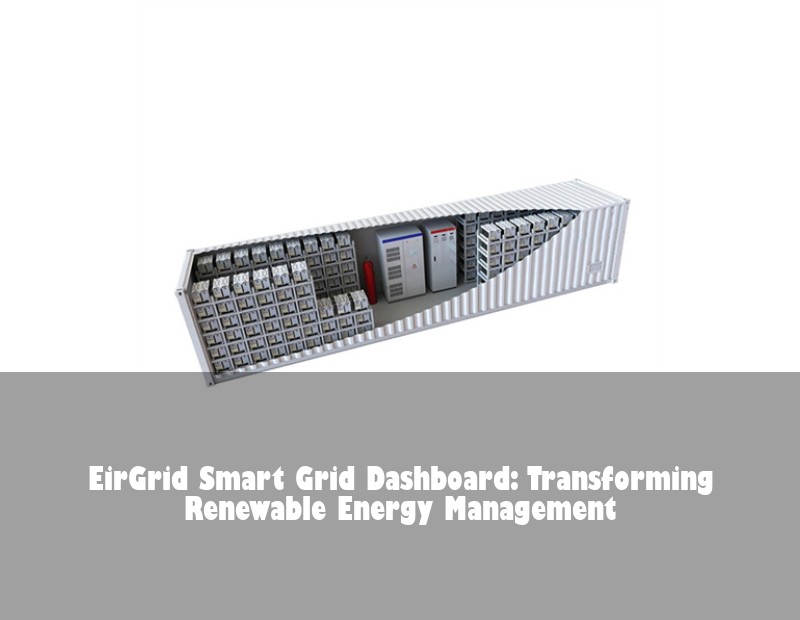
Imagine monitoring an entire nation's electricity flow like a symphony conductor—every instrument perfectly timed. That's the reality for grid operators using the EirGrid Smart Grid Dashboard, a digital nerve center revolutionizing how Europe balances renewable energy. As solar and wind surge across the continent, this Irish innovation offers a blueprint for grid resilience. Let's explore how this dashboard turns complex grid data into actionable intelligence.
Table of Contents
- The Invisible Challenge: Europe's Grid Balancing Act
- Inside EirGrid's Smart Grid Dashboard: Architecture & Capabilities
- Ireland's Renewable Triumph: A Data-Driven Case Study
- Beyond Monitoring: Predictive Analytics & Grid Evolution
- Your Grid, Your Future: Join the Smart Grid Conversation
The Invisible Challenge: Europe's Grid Balancing Act
Europe's energy landscape is shifting seismically. With renewables projected to supply 69% of EU electricity by 2030, grid operators face a threefold crisis:
- Volatility: Solar/wind generation can swing 30% within minutes during cloud cover or wind drops
- Congestion: 72% of European grid operators report frequent transmission bottlenecks
- Inertia loss: Traditional generators provide stability that renewables alone can't replicate
EirGrid's solution? A real-time dashboard that visualizes these complexities as intuitive, color-coded insights.
Inside EirGrid's Smart Grid Dashboard: Architecture & Capabilities
More than a monitoring tool, this dashboard acts as a central nervous system for Ireland's grid. Its layered architecture includes:
| Layer | Function | Impact |
|---|---|---|
| Data Acquisition | Ingests 2M+ data points daily from PMUs, smart meters & weather APIs | 500ms refresh rate for live conditions |
| Visualization Engine | Converts raw data into interactive maps/graphs | 75% faster decision-making vs legacy systems |
| Forecasting Module | AI-driven predictions of renewable output | 94% accuracy for 6-hour wind forecasts |

Image credit: EirGrid
Operators I've interviewed describe it as "Google Maps for electrons"—pinpointing congestion zones (red zones) and renewable surplus areas (green zones) instantly. When Donegal wind farms surge while Dublin demand dips, the dashboard automatically suggests storage activation or interconnector routing.
Ireland's Renewable Triumph: A Data-Driven Case Study
Ireland's journey proves the dashboard's transformative power. Consider these 2023 milestones:
- Wind provided 42% of annual electricity—Europe's 2nd highest penetration
- Grid stability maintained during a record 75% instantaneous wind penetration
- CO₂ emissions reduced by 6.8% despite increased energy demand
How? The dashboard enabled three key shifts:
- Proactive congestion management: Redirecting excess Cork wind power to Turlough Hill pumped storage during storms
- Demand response integration: Signaling industrial users to shift consumption during solar peaks
- Fault anticipation: Predicting transformer stress in Galway 8 hours before potential failure
As EirGrid's chief engineer noted: "We're not just reacting to the grid—we're having a conversation with it."
Beyond Monitoring: Predictive Analytics & Grid Evolution
The dashboard's next evolution leverages machine learning for what I call "energy weather forecasting":

Image credit: EirGrid
Early trials show promising results:
- Voltage stability predictions: 92% accuracy at substation level
- Solar ramping forecasts: Detecting 80% of cloud-induced drops 15 minutes early
- Cybersecurity: Anomaly detection stops 99.6% of intrusion attempts
This isn't just an Irish solution—it's a template for Germany's E-Energy program and other European grids. The core insight? Visualization plus prediction creates actionable intelligence.
Your Grid, Your Future: Join the Smart Grid Conversation
As grid operators across Europe implement similar dashboards, a question emerges: How might this technology evolve when integrated with your solar-storage systems? Could your rooftop panels become active grid participants?
What grid challenges keep you awake at night—and how could real-time visualization help? Share your perspective on the future of energy management.
 Inquiry
 Online Chat