


Solar Converter: How Much Does It Impact Your Energy Savings?
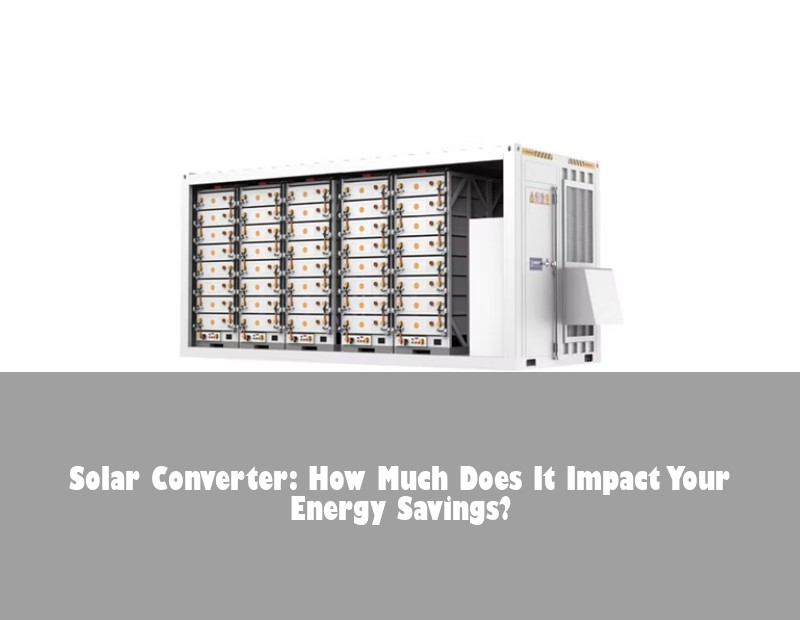
Table of Contents
The Solar Converter Cost Puzzle
Ever stared at your electricity bill while sunshine floods your rooftop? You're not alone. Across Europe, homeowners discover that solar panels alone can't unlock maximum savings - the missing key is often the solar converter. This unsung hero transforms raw solar energy into usable household electricity, but its cost remains shrouded in mystery for many. How much should you really invest? Let's demystify this together.

Image source: Unsplash - Professional solar converter installation
What Determines Solar Converter Prices?
Solar converter costs aren't one-size-fits-all. Three critical factors shape your investment:
- Efficiency Rating: Premium models (98%+ efficiency) convert more sunlight to power but cost 15-25% more
- System Compatibility: Battery-ready converters add €200-€500 for future-proofing
- Smart Features: Wifi monitoring increases costs by 10% but provides real-time savings data
| Converter Type | Average Price (EU Market) | Best For |
|---|---|---|
| String Inverters | €800-€2,000 | Simple rooftop systems |
| Microinverters | €1,000-€2,500 | Shaded roofs/complex layouts |
| Hybrid Converters | €1,500-€3,500 | Homes adding battery storage |
According to U.S. Department of Energy research, the converter typically represents 7-12% of total solar system costs. But here's what most installers won't tell you: opting for the cheapest model can reduce energy harvest by up to 20% over 10 years.
Real-World Case: Berlin Home Transformation
Meet the Hoffmanns - a family of four in Berlin's Charlottenburg district. Their 2022 retrofit shows how converter choice impacts real savings:
- System Size: 8.4kW rooftop array
- Converter Choice: Huawei SUN2000 hybrid converter (€2,100)
- Results:
- €1,180 annual electricity savings
- 4.2-year payback period
- 22% higher winter efficiency vs. budget model
As Fraunhofer Institute data confirms, German households using premium converters achieve 12-18% faster ROI despite higher upfront costs. The Hoffmanns now export surplus energy to Berlin's grid during peak hours - earning credits through EEG 2023 compensation schemes.
Image source: Unsplash - Energy monitoring interface
Choosing Your Ideal Solar Converter
Selecting your converter shouldn't feel like gambling. Follow this decision framework:
- Calculate Your Usage: Night-heavy consumption? Prioritize battery-compatible models
- Evaluate Roof Conditions: Partial shading = microinverters; south-facing = string inverters
- Future-Proof: Planning an EV charger? Ensure 20% capacity headroom
During Spain's 2023 heatwave, Valencia homeowners with temperature-resistant converters maintained 94% output while standard models dropped to 81%. As solar consultant Elena Rodriguez notes: "That 13% difference powered their air conditioning when they needed it most."
Where Solar Converter Technology Is Heading
The next generation promises revolutionary changes:
- AI-driven converters predicting weather patterns 48 hours ahead
- Modular systems allowing €200-€400 incremental upgrades
- Blockchain-enabled peer-to-peer energy trading (already piloted in Amsterdam)
UK trials show these smart converters can boost household earnings by €260/year through dynamic grid balancing. But here's my burning question for you: What energy independence milestone do you want to reach first - zero bills or complete off-grid resilience?
 Inquiry
 Online Chat