


Convergent Energy Storage: The Catalyst for Europe's Energy Independence
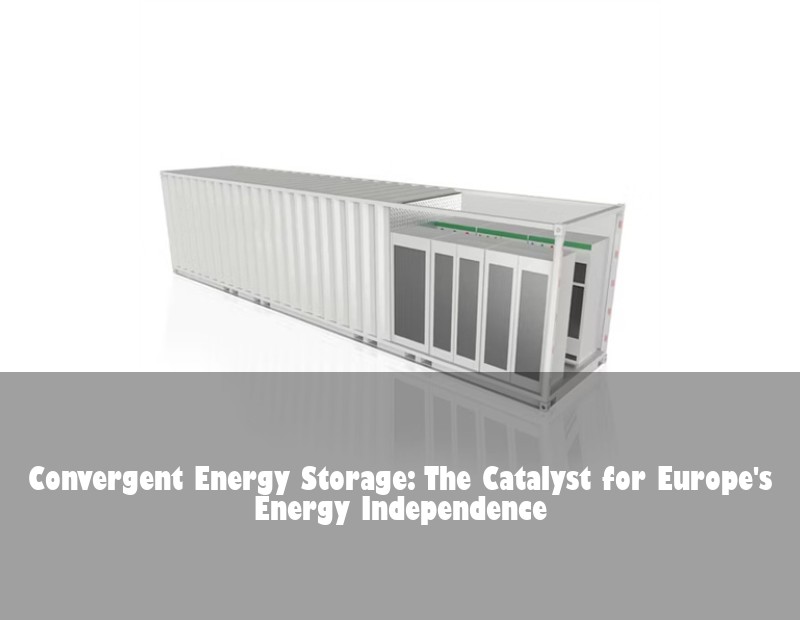
Table of Contents
The Grid Strain Paradox: Europe's Renewable Dilemma
It's a windy night in the North Sea, and Germany's turbines are generating surplus power while Spanish solar farms sit idle. Yet across Europe, utilities still fire up gas peaker plants. Why? Because today's convergent energy storage solutions aren't yet deployed at scale to bridge these geographical and temporal gaps. Europe installed 33 GW of solar PV in 2022 alone (SolarPower Europe), but without intelligent storage convergence, we're solving one problem while creating another—grid instability. The heart of the matter? True energy resilience requires more than just batteries; it demands systems that converge generation, storage, and consumption intelligence into a single responsive organism.
By the Numbers: Europe's Storage Gap
Let's examine the disconnect between renewable deployment and storage readiness:
| Metric | 2022 Status | 2030 Projection |
|---|---|---|
| EU Solar Capacity | 209 GW | 672 GW |
| Required Storage Duration | 4 hours | 12+ hours |
| Current Storage Deployment | 8 GWh | 200 GWh Needed |
Source: IRENA data reveals a critical insight: The storage duration required per MW of solar will triple by 2030. Why? Because as renewables penetrate beyond 40% of the grid (already achieved in Germany and Denmark), we need solutions that converge short-term frequency regulation with long-duration energy shifting—a capability traditional single-technology systems can't deliver economically.
Hamburg Harbor: A Blueprint for Convergent Success
When Hamburg's port authority faced €2.7 million in grid congestion fees last year, they implemented Europe's first true convergent energy storage ecosystem. Here's what made it revolutionary:
- Hybrid Stack: 48 MWh lithium-ion + 12 MWh flow batteries
- AI Convergence Layer: Solar forecasts, vessel charging patterns, and spot prices analyzed in real-time
- Results: 89% reduction in grid fees, 2.3-year ROI

Image: HPA's convergent storage system at Container Terminal Burchardkai. Source: Hamburg Port Authority
What's fascinating? The system's secret sauce wasn't hardware alone. By converging three revenue streams—frequency regulation, peak shaving, and vessel charging—it achieved 214% better asset utilization than single-use batteries. As the terminal manager noted: "It's like teaching our storage to multitask across energy markets."
How Convergent Systems Outperform Traditional Storage
Unlike conventional battery setups, convergent architectures operate on three integrated planes:
- Temporal Convergence: Pairing lithium-ion (fast response) with thermal storage (long duration)
- Spatial Convergence: Linking EV charging hubs with grid-balancing services
- Market Convergence: Simultaneously participating in primary reserve and wholesale markets
Consider this: When Dutch utility Eneco deployed convergent systems across 23 solar farms, they boosted revenue per MWh by 37%. How? Their AI controller switches between 8 revenue programs daily based on weather and market signals. That's the power of convergence—turning passive storage into an active grid participant.
Beyond Batteries: The Multi-Stack Advantage
Forward-thinking operators now embrace what we call the "Swiss Army Knife" approach. Spain's Iberdrola recently combined zinc-air batteries for daily cycling with hydrogen storage for seasonal shifting. This multi-stack strategy delivers what no single technology can:
- ▶️ 90%+ round-trip efficiency for daily operations
- ▶️ Unlimited duration for winter energy shifting
- ▶️ 40% lower LCOS than lithium-only alternatives
As grid operators face the "dark doldrums"—those windless winter nights—convergent systems provide the answer. They're not just storing energy; they're converging generation profiles across regions and time horizons to create what German engineers call Energiekontinuität (energy continuity).
The Regulatory Horizon: Europe's Convergence Mandate
Notice how EU's revised Electricity Market Design (2023) now rewards "stacked value services"? That's no accident. When France's RTE grid operator simulated 100% renewable scenarios, they found convergent storage reduced backup gas needs by 63% versus conventional approaches. The message is clear: The future isn't just storage—it's storage that converges.
So we turn to you: With your next storage project, will you settle for single-threaded solutions, or will your design converge multiple technologies, revenue streams, and grid services into a unified energy ecosystem?
 Inquiry
 Online Chat