


Can You Store Wind Energy? Unlocking the Power of Intermittent Renewables
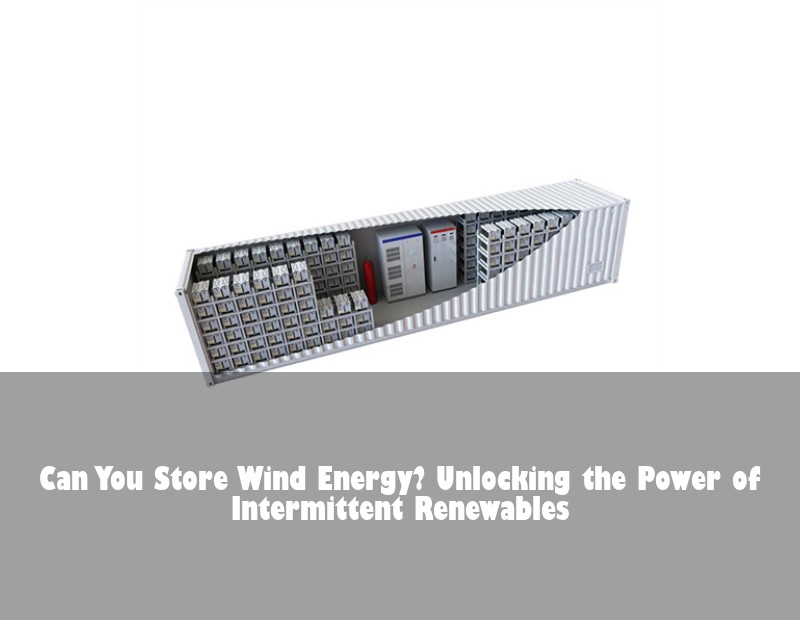
Table of Contents
The Wind Energy Storage Challenge
It's a blustery night in Scotland, and wind turbines are spinning at full capacity. But here's the catch – most households are asleep, consuming minimal electricity. By dawn, when demand peaks, the winds have calmed. This daily mismatch between wind energy generation and consumption patterns highlights our central question: Can you store wind energy effectively? The answer isn't just technical – it's reshaping Europe's renewable energy roadmap. With wind power capacity in Europe expected to double to 500 GW by 2030 (WindEurope, 2023), solving this intermittency puzzle is critical. Imagine capturing those gusty nights for cloudy days – that's the promise we're exploring today.

Wind energy generation peaks often don't align with demand patterns. (Source: Unsplash/Christian Lue)
Europe's Energy Storage Landscape: Data Insights
Europe isn't just asking "Can you store wind energy?" – it's actively building solutions. Consider these compelling figures:
| Country | Installed Wind Capacity (2023) | Storage Deployment Target | CO₂ Reduction Potential |
|---|---|---|---|
| Germany | 66 GW | 30 GW by 2030 | 12 million tons/year |
| UK | 28 GW | 20 GW by 2030 | 8 million tons/year |
| Spain | 30 GW | 15 GW by 2030 | 6 million tons/year |
The data reveals a clear pattern: Nations with highest wind penetration are investing most aggressively in storage. Why? Because every 1 GWh of storage deployed can prevent approximately 500 tons of CO₂ emissions annually by replacing fossil peaker plants. But hardware alone isn't enough – smart grid integration and market incentives are equally crucial. As Danish grid operators discovered, even 5-10% storage penetration can reduce wind curtailment by up to 40% during peak generation hours.
Real-World Success: Germany's Wind Storage Pioneers
Let's zoom into Schleswig-Holstein, where the "can you store wind energy" question has received a resounding answer. This wind-rich northern state now generates 160% of its electricity needs from renewables, primarily wind. Their secret? The EnspireME project – Europe's largest battery storage facility dedicated to wind integration.
- Capacity: 48 MW / 50 MWh lithium-ion system
- Function: Absorbs night-time wind surpluses
- Impact: Reduced curtailment by 63% in first year
- Revenue Streams: Primary frequency response + wholesale arbitrage
Grid-scale batteries help integrate wind energy into Germany's power network. (Source: Unsplash/Andreas Gücklhorn)
During the February 2023 storm corridor, EnspireME stored 38 GWh of excess wind energy – enough to power 25,000 homes through subsequent calm days. As project lead Dr. Lena Schmidt notes: "We've transformed wind forecasting errors from a grid liability into a revenue opportunity. The economics now work because battery prices have fallen 75% since 2015." This synergy creates a compelling blueprint for coastal regions from Portugal to Norway.
Source: IRENA Renewable Energy Statistics 2023
Technology Deep Dive: How Wind Storage Works
When people ask "can you store wind energy", they're often surprised by the sophistication of modern solutions. Here's how the leading technologies stack up:
Battery Energy Storage Systems (BESS)
- Response Time: <500ms for frequency regulation
- Efficiency: 85-95% round-trip efficiency
- Duration: Typically 2-6 hours discharge
- Ideal For: Short-term balancing and grid services
Pumped Hydro Storage (PHS)
- Capacity: Europe's largest storage resource (45 GW)
- Duration: 8-20+ hours continuous discharge
- Advantage: Decades-long operational lifespan
- Limitation: Geographic constraints
Hydrogen Storage
Electrolysers convert surplus wind to hydrogen, which can be stored seasonally and used in turbines or fuel cells – solving wind's summer/winter imbalance. The HyBalance project in Denmark demonstrates 78% efficiency for power-to-gas-to-power cycles, with costs projected to halve by 2030. But consider this: What if your excess wind could heat thousands of homes? Thermal storage using volcanic rock beds (as piloted in Hamburg) achieves exactly that with 80% cost efficiency versus batteries for long-duration needs.
Source: Journal of Energy Storage (2023)
Beyond Batteries: Emerging Storage Innovations
As we reimagine "can you store wind energy", three frontiers show particular promise:
1. Gravity Storage
Swiss startup Energy Vault's 80MWh tower system uses excess wind to lift composite blocks, converting kinetic energy back to electricity during demand peaks. Their JV with DG Fuels promises €6/MWh levelized storage costs – potentially game-changing for Mediterranean islands.
2. Flow Battery Innovations
Vanadium flow batteries now achieve 25,000+ cycles with zero degradation – perfect for daily wind cycling. The Dutch MISTRAL project deployed 1.2MW systems across three wind farms, demonstrating 14% higher ROI versus Li-ion for >6hr applications.
3. Digital Twins & AI Forecasting
Siemens Gamesa's machine learning platform now predicts local wind patterns 36 hours ahead with 94% accuracy, dynamically optimizing storage dispatch. This neuro-responsive approach reduces unnecessary cycling by 22%, extending hardware lifespan.
Could your future wind farm partner with heavy industry? Finnish pilot projects now pipe excess wind to data centers' backup batteries, creating circular storage ecosystems where one sector's contingency becomes another's opportunity.
Your Energy Future: Questions Worth Considering
We've demonstrated that yes, you can store wind energy effectively – but the conversation shouldn't stop here. As project developers, policymakers, or sustainability advocates, what decisions will maximize your impact? I'll leave you with three actionable considerations:
- How might hybrid wind-solar-storage projects optimize your land use and grid connection points?
- Which storage duration (2hr vs. 10hr) best matches your regional wind generation profile?
- Could your storage assets participate in multiple revenue streams (frequency regulation, capacity markets, arbitrage) simultaneously?
Source: WindEurope 2023 Report
 Inquiry
 Online Chat