


Finding the Best Solar Battery Storage in the UK for Energy Independence
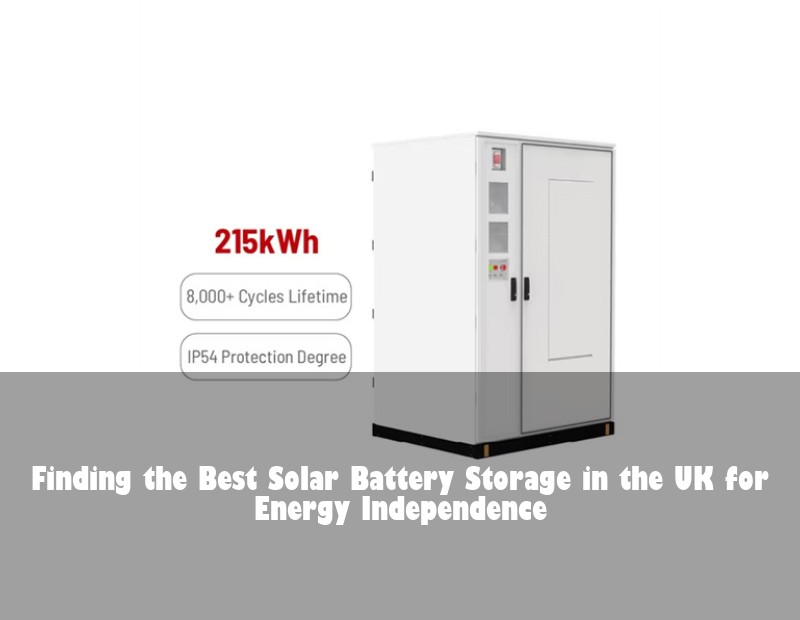
Table of Contents
The UK's Energy Crunch: Why Storage Matters Now
You've installed solar panels, but when clouds roll over Manchester at 5 PM, your system stops generating. Meanwhile, electricity prices spike to 40p/kWh during peak hours. This frustrating gap between solar production and consumption patterns is why the best solar battery storage UK solutions have become non-negotiable for energy-savvy homeowners.

Image: Sleek home battery systems integrate seamlessly with UK solar setups (Source: Unsplash)
The Hidden Costs of Solar-Only Systems
Without storage, UK households typically export 50% of their solar energy to the grid for measly 4p/kWh feed-in tariffs, only to buy it back hours later at 10x the price. As Ofgem's price cap shifts quarterly, this inefficiency costs the average 3-bedroom home £300-£500 annually. Battery storage transforms this equation by:
- Capturing surplus solar for nighttime/peak use
- Shielding against grid outages (increasing by 15% since 2020)
- Enabling participation in demand response schemes like Octopus Agile
Solar Battery Adoption: What the Data Reveals
UK battery installations surged 89% in 2023 alone, with over 150,000 homes now storing solar energy. Why this boom? The numbers speak for themselves:
| Battery Type | Avg. Capacity (kWh) | Efficiency | Payback Period |
|---|---|---|---|
| Lithium-Ion | 5-14 | 95-98% | 6-8 years |
| Lead-Acid | 3-10 | 80-85% | 10+ years |
| Saltwater | 8-16 | 85-90% | 8-10 years |
*Source: BEIS 2023 Storage Report
The Efficiency Imperative
Not all storage is created equal. While entry-level batteries might tempt with lower upfront costs, their round-trip efficiency (how much energy survives storage/discharge cycles) directly impacts long-term savings. Premium lithium-ion systems like SolarEdge or GivEnergy retain 98% efficiency versus 80% for budget models - meaning for every 10kWh stored, you lose just 0.2kWh versus 2kWh!
Case Study: Birmingham Home Slashes Bills by 78%
Meet the Hughes family in Birmingham, who installed a 9.6kWh GivEnergy battery with their existing 4kW solar array in early 2023. Their pre-battery electricity bills averaged £110/month. Post-installation results:
- Energy bill reduction: £86/month → £19/month
- Solar self-consumption: Increased from 48% to 92%
- Grid dependence: Reduced from 52% to just 8%
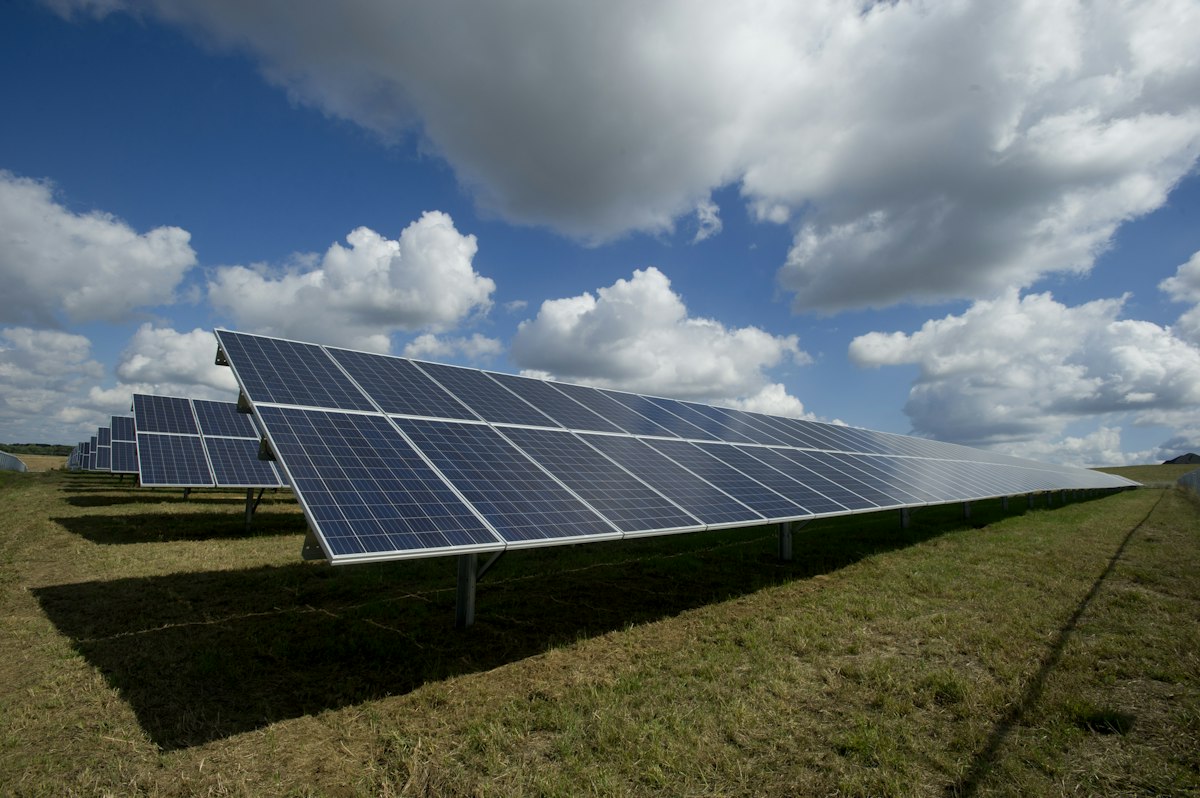
Image: Real-time monitoring helps optimize battery usage patterns (Source: Unsplash)
"Our battery starts charging at noon when solar production peaks," explains Sarah Hughes. "It powers our evening cooking and TV time, plus our overnight EV charging. During the October storms when grid power flickered, we didn't even notice." Their system earned £230 annually through Octopus Energy's demand flexibility scheme by exporting stored energy during high-price events.
4 Key Specs for Choosing Your Battery
1. Capacity vs. Usable Energy
Many manufacturers advertise total capacity while hiding the usable portion. For example, a "10kWh battery" might only offer 8.5kWh usable after accounting for depth of discharge (DoD) limits. Always compare usable kWh ratings.
2. Scalability Matters
Opt for modular systems like Tesla Powerwall or Huawei Luna that let you add capacity later. Starting with 5kWh? Expand to 15kWh when adding an EV without replacing hardware.
3. UK-Specific Certifications
Ensure your battery carries MCS certification and complies with G98/G99 grid connection standards. Batteries without these cannot legally connect to UK networks.
4. Smart Features Pay Dividends
Top-tier batteries like Sonnen integrate weather forecasting to optimize charging cycles. On cloudy days, they'll prioritize grid charging during off-peak hours (e.g., 2-5am at 7.5p/kWh) ahead of predicted high-demand periods.
Beyond Savings: Grid Stability & Future Trends
National Grid's Future Energy Scenarios predict 14GW of UK home storage by 2035 - equivalent to 6 Hinkley Point nuclear plants! This collective capacity forms "virtual power plants" that:
- Absorb excess renewable energy during sunny/windy periods
- Inject power during the 4-7 PM "carbon peak"
- Reduce strain on ageing infrastructure
The Midlands Pilot Project demonstrated how 5,000 connected home batteries reduced local grid upgrade costs by £8 million. As UK feed-in tariffs phase out, services like grid balancing may soon deliver larger revenue streams than solar exports alone.
Is Your Home Ready for Energy Independence?
How much could the best solar battery storage UK solution save you? Consider these three factors: your daily energy consumption patterns, existing solar setup, and local grid tariffs. Use the Solar Energy UK Battery Savings Calculator for personalized projections. When evaluating installers, ask: "Can you show me real performance data from systems you've deployed in my postcode area?"
What energy freedom milestone would matter most for your household - zero blackout anxiety, eliminating peak-rate charges, or becoming a net energy contributor?
 Inquiry
 Online Chat