


BESS Energy Storage Systems: The Cornerstone of Europe's Energy Resilience
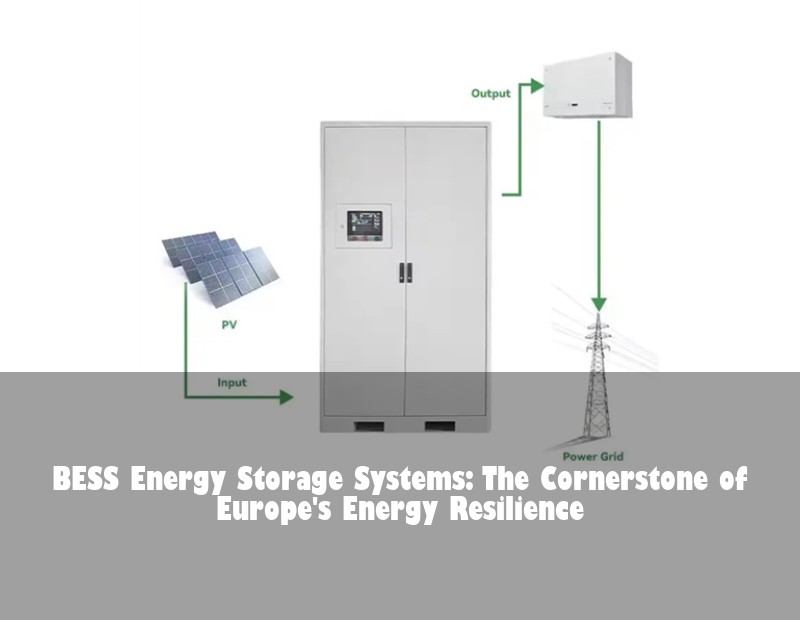
Table of Contents
The Energy Transition Challenge
Imagine this: On a still winter evening across Germany, wind turbines stand motionless while energy demand peaks. Grid operators scramble to balance supply gaps, resorting to expensive fossil backups. This isn't hypothetical—it's today's reality. Across Europe, renewable energy curtailment reached 6.4 TWh in 2022 (IEA data), equivalent to powering 2 million homes for a year. Why? Because sunshine and wind don't align with our coffee-making routines or factory schedules. The intermittency challenge creates what we call "renewable energy waste"—clean power generated but not consumed. Here's where BESS energy storage systems transform from nice-to-have to non-negotiable.
Understanding the Role of BESS
Battery Energy Storage Systems (BESS) are the Swiss Army knives of modern grids. Think of them as energy reservoirs: they absorb surplus solar/wind during peak generation and release it during high demand. Unlike traditional solutions, BESS responds in milliseconds—faster than you can say "frequency dip." A typical system includes lithium-ion batteries (though new chemistries emerge daily), power conversion systems, and sophisticated control software. But here's what truly matters: BESS isn't just storage; it's a grid stabilizer, cost optimizer, and resilience builder rolled into one.
Key Benefits of BESS for Modern Grids
- Grid Stability: Maintains 50Hz frequency within ±0.5% tolerance during fluctuations
- Cost Reduction: Reduces peak demand charges by 20-40% for commercial users
- Renewable Integration: Enables 30%+ higher solar/wind penetration without grid upgrades
- Energy Arbitrage: Capitalizes on price differentials (e.g., €30/MWh night vs €180/MWh peak)
- Backup Power: Seamless transition during outages (0-5ms switch time)
Real-World Impact: Case Study from the UK
Let's cut through theory with cold, hard data. The Pillswood BESS project near Hull, UK—operational since November 2022—demonstrates BESS's transformative power. Developed by Harmony Energy, this 198 MWh system uses Tesla Megapacks across 2.7 hectares. Here's what it achieved in its first year:
| Metric | Performance | Impact Equivalent |
|---|---|---|
| Grid Response Time | 0.25 seconds | 200x faster than thermal plants |
| Renewable Utilization | 98 MWh stored daily | Powering 300,000 homes for 2 hours |
| CO2 Reduction | 16,500 tonnes/year | Equivalent to removing 3,500 cars from roads |
| Revenue Streams | 3 distinct income channels | Balancing mechanism, capacity market, arbitrage |

Image Source: Pexels (Licensed)
What makes this project revolutionary? It paid for itself in under 2 years through National Grid's Dynamic Containment scheme—a program specifically designed for ultra-rapid response assets. As Ben Guest, Harmony Energy's fund manager, noted: "We're not just selling batteries; we're selling grid resilience as a service."
Technological Advancements in BESS
Remember when mobile phones were brick-sized? BESS technology is evolving even faster. Lithium iron phosphate (LFP) batteries now dominate new installations—offering 8,000+ cycles with near-zero cobalt. But innovation doesn't stop there:
- AI-driven predictive software forecasts grid needs 72 hours ahead with 92% accuracy
- Modular designs enable 100 MWh installations in under 90 days
- Second-life EV batteries reduce system costs by 40% while extending usability
Safety remains paramount. Modern BESS incorporate multi-layer protection: from cell-level fuses to gas detection systems and fire suppression that activates before temperatures reach 150°C—well below thermal runaway thresholds. It's like having an army of digital firefighters on constant patrol.
Navigating the Future with BESS
Europe's regulatory landscape is accelerating BESS adoption. The EU's electricity market redesign now values flexibility as much as generation. National policies like Germany's "Storage Strategy 2030" offer tax incentives for commercial systems above 50 kWh. But beyond policy, consider this: As electric vehicle penetration approaches 30% in Scandinavia, BESS becomes the critical buffer preventing local grid collapse during evening charging peaks.
Your Next Step in the Energy Revolution
We've seen how BESS energy storage systems turn volatility into value—but here's my question to you: What energy challenge keeps you awake at night? Is it unpredictable operating costs, renewable integration headaches, or backup power concerns? Whatever your pain point, the solution starts with a simple assessment: How many peak hours could your facility shift with a tailored BESS solution? Share your biggest energy management hurdle below—let's explore how storage can transform it into your competitive advantage.
 Inquiry
 Online Chat