


Battery Distribution System: The Backbone of Modern Energy Resilience
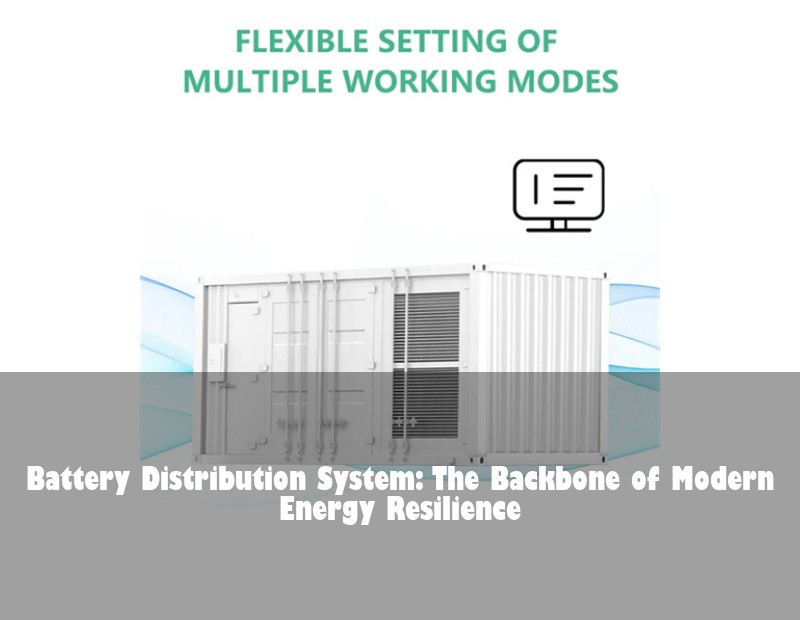
Table of Contents
The Silent Energy Revolution
It's a stormy Tuesday evening in Bavaria, and traditional grids are faltering. But down the street, the Meyer household barely notices – their lights stay on, their heat pumps hum steadily. What's their secret? A Battery Distribution System (BDS) working silently in their basement. Across Europe, millions are waking up to energy independence, and it's not just about having batteries – it's about how they're intelligently distributed and managed.

Image: Residential energy independence through solar and storage (Source: Unsplash/EnergySolutions)
What Exactly is a Battery Distribution System?
At its core, a Battery Distribution System isn't just a battery bank – it's the nervous system of energy resilience. Unlike standalone units, a BDS integrates:
- Modular battery units (scalable from 5kWh to multi-MW configurations)
- AI-driven energy routing software
- Grid-interactive inverters
- Real-time monitoring dashboards
Think of it as traffic management for electrons. When your solar panels overproduce, the BDS doesn't just store energy – it makes millisecond decisions about whether to power your EV charger, feed back to the grid during peak pricing, or reserve capacity for the evening peak. "It's about making every watt work smarter, not harder," as our engineering lead often says.
Europe's Energy Storage Boom: By the Numbers
The data tells a compelling story about battery distribution systems transforming Europe's energy landscape:
| Region | Annual BDS Growth (2023) | Avg. Payback Period | Peak Demand Reduction |
|---|---|---|---|
| Germany | 127% | 6.2 years | 34% |
| Spain | 89% | 7.1 years | 28% |
| Scandinavia | 68% | 8.3 years | 41% |
Source: European Energy Storage Market Report 2023
Real-World Success: Germany's Schönau Community Microgrid
When the town of Schönau faced recurring grid instability, they didn't just upgrade transformers – they implemented a community-scale BDS. The results?
- 42 participating households with shared 1.2MWh capacity
- 73% reduction in diesel backup usage
- €18,000 annual savings through grid-balancing incentives
During the 2022 winter energy crisis, when neighboring towns experienced brownouts, Schönau's decentralized system kept lights on and even supported regional hospitals. Their secret? The BDS prioritized critical loads automatically during shortages.
Intelligent Management: Where BDS Gets Smart
Modern battery distribution systems shine through their brains, not just brawn. Three game-changing features:
- Weather-AI Syncing: Integrates with local forecasts to pre-charge before cloudy days
- Dynamic Tariff Optimization: Automatically sells stored energy during €0.42/kWh peak periods
- Health Algorithms: Extends battery lifespan by 30% through intelligent charging cycles
As Clara Müller, a Hamburg resident, shared: "Our system texted us suggesting we run the dishwasher at 3pm to use solar surplus – it saved €12 that week alone!"
Why Solar + BDS = Unbeatable Duo
The magic happens when photovoltaic systems meet intelligent battery distribution. Consider this:
- Solar-only systems typically use 40-60% of generated energy
- Solar + BDS configurations achieve 85-95% utilization
- BDS extends solar ROI by 2-4 years through better arbitrage

Image: Industrial-scale solar integration with BDS (Source: Unsplash/RenewableTech)
Tomorrow's Grid: 3 Innovations Coming Your Way
The battery distribution revolution is accelerating with European-led innovations:
- Vehicle-to-Grid (V2G) Integration: Your EV becomes part of the BDS network – BMW's pilot in Munich shows 60kW bidirectional charging
- Blockchain Energy Trading: Neighbors selling excess storage via apps, like Netherlands' Powerpeers
- Self-Healing Microgrids: BDS clusters that automatically reconfigure during outages
What Could Your Energy Future Look Like?
Imagine your business avoiding €15,000 in demand charges next quarter. Or your town becoming energy-independent before 2030. The technology exists – the question is, when will your energy infrastructure start working smarter for you?
 Inquiry
 Online Chat