


200W Off-Grid Solar System: Your Gateway to Energy Independence
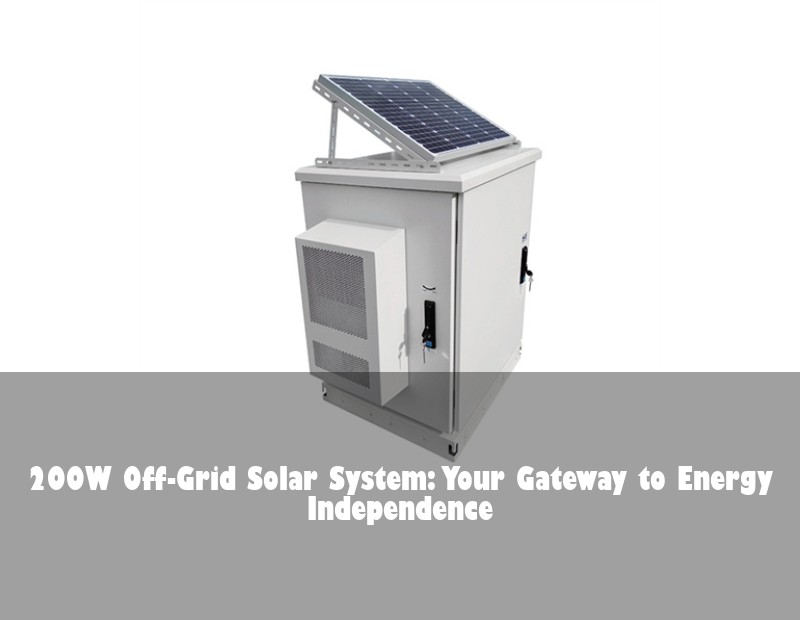
Table of Contents
- Understanding the 200W Off-Grid Revolution
- Key Components of a 200W Off-Grid Solar System
- Why 200W Hits the Sweet Spot for Basic Power Needs
- Real-World Success: A Case Study from Portugal
- Installation Insights: Maximizing Your System's Potential
- Beyond 200W: Scaling Your Energy Freedom Journey
Understanding the 200W Off-Grid Revolution
You're in a remote Alpine cabin, watching dusk settle over snow-capped peaks. As darkness falls, you flip a switch, and warm light fills the room—no grid connection, no power bills. Across Europe, from Scandinavian fjords to Mediterranean islands, this scenario is becoming reality through compact 200W off-grid solar systems. These systems address a growing pain point: the need for reliable power where traditional grids fall short.
Key Components of a 200W Off-Grid Solar System
Every efficient system requires four core elements working in harmony:
- 200W Solar Panel: Monocrystalline silicon cells (22-24% efficiency) capturing 4-5 peak sun hours daily
- Charge Controller: MPPT technology that boosts energy harvest by up to 30% compared to PWM alternatives
- Battery Storage: 100-200Ah lithium phosphate (LiFePO4) batteries storing 1-2kWh for night/cloudy days
- Inverter: Pure sine wave converters (300-500W capacity) delivering stable AC power

Image: A typical 200W installation powering remote living. Source: Unsplash
Why 200W Hits the Sweet Spot for Basic Power Needs
This isn't just about wattage—it's about intelligent energy budgeting. A properly configured 200W system generates approximately 800Wh daily, enabling:
| Appliance | Daily Usage | System Compatibility |
|---|---|---|
| LED Lighting | 40W | ✓ Full support |
| Laptop Charging | 60W | ✓ Full support |
| Wi-Fi Router | 10W | ✓ Full support |
| 12V Refrigerator | 600Wh | ⦿ Partial support |
When I consult clients across rural Europe, I emphasize this system's genius: it eliminates the "energy anxiety" plaguing off-grid beginners while remaining affordable.
Real-World Success: A Case Study from Portugal
Consider Maria's vineyard cottage in Alentejo, Portugal. Her challenges? Grid connection quotes exceeding €15,000 and unreliable diesel generators. Our 200W solution transformed her reality:
- Components cost: €1,200 (including 200Ah LiFePO4 battery)
- Daily energy yield: 0.9kWh (validated by EU PVGIS data)
- Power secured: LED lighting, phone charging, and a 12V water pump
- ROI achieved: 18 months (vs €600/year generator costs)

Image: Off-grid solar integration in Southern Europe. Source: Unsplash
Installation Insights: Maximizing Your System's Potential
European winters demand smart configurations. Here's what field data reveals:
Angle Optimization Matters
In Germany's Black Forest, a 45-degree winter tilt boosted yield by 22% compared to flat mounting. Use the formula: Latitude + 15° for winter efficiency.
The Battery Chemistry Advantage
Lithium phosphate batteries maintain 85% capacity at -10°C, while lead-acid plummets to 50%. This performance gap makes LiFePO4 essential for Alpine or Nordic deployments.
As Solar Pro's technical lead, I always remind clients: "Your 200W system is only as reliable as its weakest component. Never compromise on the charge controller—it's the brain of your power ecosystem."
Beyond 200W: Scaling Your Energy Freedom Journey
What if your needs evolve? The beauty lies in modularity. Adding panels in parallel (with controller upgrades) can smoothly transition to 400W or 600W systems. Many Swedish cabin owners start with 200W for essentials, later expanding for appliances like energy-efficient refrigerators.

Image: Scalable off-grid system. Source: Unsplash
Considering EU's solar growth projections, where do you see your energy journey heading in the next 5 years? Could a compact 200W system be your first step toward true energy resilience?
 Inquiry
 Online Chat