


Unlock Energy Independence with a 150Ah Battery Solar Panel System
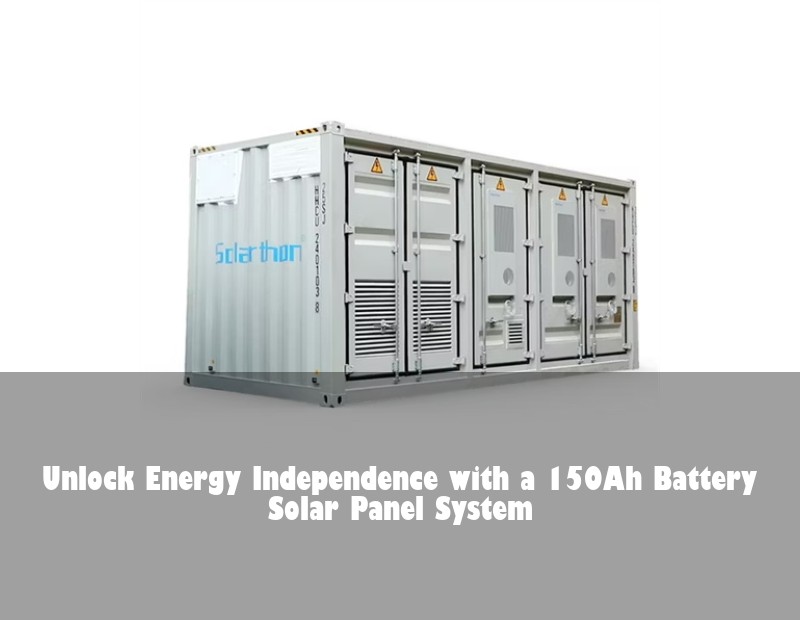
As European households increasingly seek energy resilience, pairing solar panels with robust storage like 150Ah batteries has become a game-changer. Imagine powering your home through blackouts or selling excess energy back to the grid—all while reducing carbon footprints. This guide explores how this dynamic duo transforms renewable energy from aspiration to everyday reality.
Table of Contents
- Why 150Ah Batteries Are Europe’s Solar Sweet Spot
- The Science Behind Solar Battery Storage
- Real-World Application: A German Case Study
- Optimizing Your 150Ah Solar Battery System
- Future Trends in Solar Energy Storage
Why 150Ah Batteries Are Europe’s Solar Sweet Spot
Europe’s energy landscape faces unique challenges: fluctuating electricity prices, grid instability, and ambitious decarbonization goals. A 150Ah (ampere-hour) battery strikes the perfect balance for residential solar systems—large enough to store meaningful energy (typically 1.8-2.4kWh per unit), yet compact for urban homes. Unlike smaller batteries, it can power refrigerators, routers, and lights for 12+ hours during outages. For context:
- Cost Efficiency: 20% lower €/kWh than smaller 100Ah alternatives
- Space Optimization: 30% fewer units needed vs. 100Ah systems for equivalent storage
- Scalability: Modular design allows expansion as energy needs grow
The Science Behind Solar Battery Storage
Solar panels convert sunlight into DC electricity, but without storage, excess energy vanishes. Here’s where your 150Ah battery intervenes:
| Component | Role | Compatibility Note |
|---|---|---|
| Solar Panels | Generate DC power | Require 20-30% higher wattage than battery capacity |
| Charge Controller | Regulates voltage | MPPT type boosts efficiency by 25% |
| 150Ah Battery | Stores energy | Lithium-ion lasts 3x longer than lead-acid |
| Inverter | Converts DC to AC | Hybrid models enable grid feedback |
Did you know? Lithium iron phosphate (LiFePO4) 150Ah batteries maintain 80% capacity after 6,000 cycles—ideal for Europe’s variable weather. Source: U.S. Department of Energy
Real-World Application: A German Case Study
In Bavaria, the Schmidt family cut grid dependence by 92% using a 5kW solar array + dual 150Ah batteries. Their setup:
- Annual Savings: €1,300 on electricity bills
- Backup Duration: 18 hours during winter grid failure
- ROI Period: 4.2 years (vs. national average of 6-8 years)
 Image: Typical German residential solar setup (Source: Unsplash/Photographer)
Key takeaway? Their system exports surplus to the grid via Germany’s EEG 2023 feed-in tariff, turning storage into revenue.
Optimizing Your 150Ah Solar Battery System
Maximize performance with these pro tips:
- Panel Sizing: 600W solar per 150Ah battery (e.g., 3 x 200W panels)
- Temperature Management: Keep batteries at 15-25°C—efficiency drops 20% below 0°C
- Smart Monitoring: Apps like SolarEdge track discharge cycles in real-time
Remember: Depth of discharge (DoD) matters. Limiting discharge to 80% extends battery life by 3 years!
Future Trends in Solar Energy Storage
Europe leads in battery innovation. Solid-state 150Ah batteries (entering markets in 2025) promise 40% higher density. Meanwhile, IEA reports predict a 50% cost reduction by 2030 through recycling initiatives. Imagine your future system: smaller, cheaper, and more powerful.
Ready to Transform Your Energy Journey?
What’s the first appliance you’d power during a blackout with your 150Ah solar battery? Share your vision for a resilient home!
 Inquiry
 Online Chat