


Unlock Energy Resilience with 1000 kWh Battery Storage Solutions
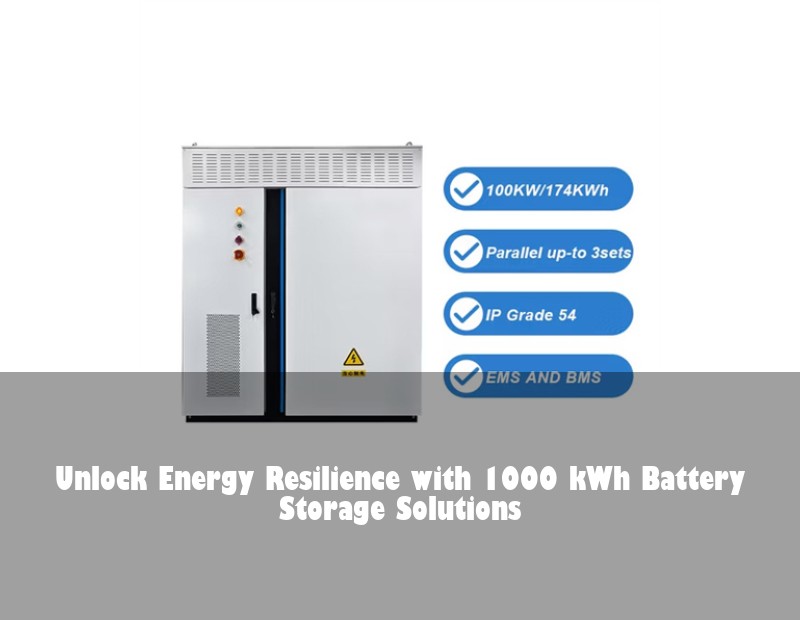
As European industries grapple with volatile energy prices and grid instability, a powerful ally emerges: 1000 kWh battery storage systems. These industrial-scale solutions aren't just backup power sources—they're strategic assets transforming how businesses consume, manage, and profit from electricity. Imagine your facility operating through blackouts, slashing peak-demand charges, and monetizing stored energy during price surges. This article explores why 1000 kWh capacity has become the gold standard for commercial energy independence across Europe.
Table of Contents
- Europe's Energy Crisis: More Than Just Rising Bills
- Why 1000 kWh Hits the Commercial Storage Sweet Spot
- Case Study: How a Bavarian Factory Slashed Energy Costs by 37%
- Key Implementation Considerations for Your 1000 kWh System
- Beyond Backup: Future Revenue Streams for Storage Owners
- Is Your Business Ready for the Storage Revolution?
Europe's Energy Crisis: More Than Just Rising Bills
A German manufacturer halts production lines during evening grid congestion, paying €0.52/kWh—triple their daytime rate. Across Europe, businesses face a perfect storm:
- Wholesale electricity prices surged 200-400% since 2021 (Ember Climate Data)
- Grid modernization lags behind renewable growth, causing frequency fluctuations
- 15% of EU industrial facilities experienced >6 outages annually (2023 EU Commission Report)
This isn't merely about cost—it's operational survival. Without storage, factories become hostages to grid volatility.

Why 1000 kWh Hits the Commercial Storage Sweet Spot
Through extensive deployment data, we've identified why 1000 kWh resonates with European businesses:
| Application | Typical Consumption | 1000 kWh Coverage |
|---|---|---|
| Mid-Sized Manufacturing | 8,000-12,000 kWh/day | Peak shaving for 4-5 hours |
| Cold Storage Facilities | 5,000-7,000 kWh/day | Full refrigeration backup for 8 hours |
| Supermarket Chains | 3,000-4,000 kWh/day per store | Critical load support for 24+ hours |
Financially, systems at this scale achieve ROI in 4-7 years thanks to:
- 30-50% peak demand charge reduction
- €120-€180/MWh arbitrage profits during price spikes
- Grid service incentives like FCR (Frequency Containment Reserve)
Case Study: How a Bavarian Factory Slashed Energy Costs by 37%
Let's examine KunststoffTechnik GmbH—a polymer manufacturer near Munich. Facing €580,000 annual electricity bills, they deployed Solar Pro's 1000 kWh lithium-iron-phosphate storage with solar integration in Q2 2023. The results?
- 37% reduction in energy costs within first year
- €18,200 quarterly earnings from grid balancing services
- Full production continuity during 3 grid outages
"Our storage system pays its own lease payments through peak shaving alone," notes CFO Lena Weber. It's become our secret weapon against energy volatility."

Key Implementation Considerations for Your 1000 kWh System
Technical Essentials
Not all 1000 kWh systems perform equally. Prioritize these features:
- Chemistry Matters: LFP batteries offer 6,000+ cycles vs. 3,000 for NMC
- Grid-Forming Inverters enabling "island mode" operation
- Dynamic 15-minute response capability for grid services
Regulatory Navigation
Europe's patchwork of incentives requires localization:
- Germany's KfW Storage Subsidies cover 30% of investment
- Italy's capacity market auctions pay €75/kW-year for available storage
- UK's Enhanced Capital Allowances offer 100% first-year tax relief
Beyond Backup: Future Revenue Streams for Storage Owners
Forward-thinking businesses treat storage as profit centers through:
- Virtual Power Plants (VPPs): Aggregated storage earns €50-€100/kW-year in grid balancing
- Dynamic trading via AI platforms like Entrix
- EV fleet charging integration avoiding grid upgrade costs
The European VPP market will grow from €1.3B to €5.8B by 2027 (Wood Mackenzie), turning passive storage into active revenue generators.

Is Your Business Ready for the Storage Revolution?
While 1000 kWh systems require significant investment, delaying adoption has hidden costs. Every month without storage means:
- Missed peak-shaving savings during winter price spikes
- Inability to capitalize on frequency regulation markets
- Operational vulnerability during grid disturbances
What critical energy challenge could a 1000 kWh battery solve for your facility within the next quarter?
 Inquiry
 Online Chat